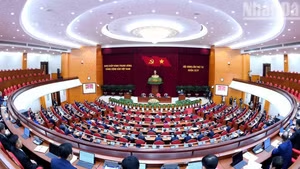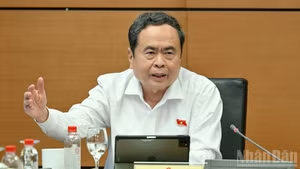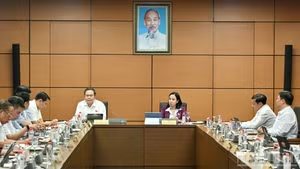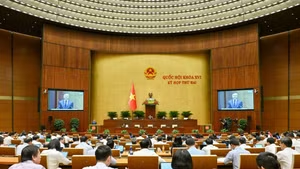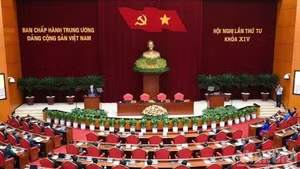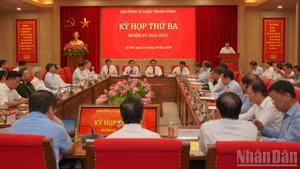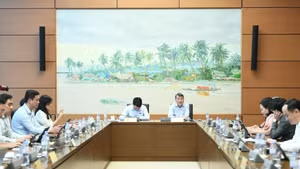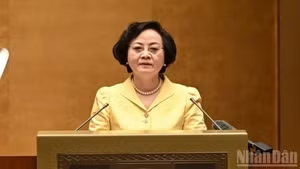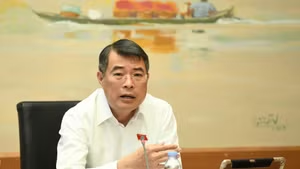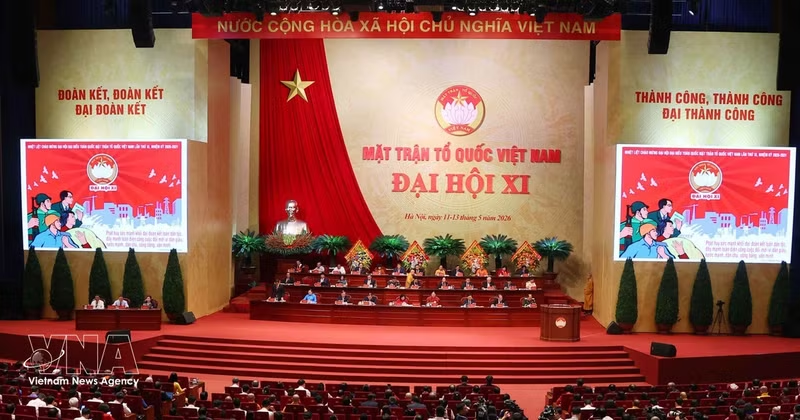
At the afternoon sitting of the ongoing event, which opened on May 12 morning, representatives from local VFF committees and socio-political organisations nationwide reaffirmed the VFF’s role as a vital bridge between the Party, State and the people, helping strengthen the great national solidarity and mobilise public participation in national development. They stressed that under the Party’s clear-sighted leadership and the State’s effective governance, the VFF and its member organisations will continue working alongside the entire political system and the people to build a strong, prosperous, civilised and happy nation steadily advancing in a new era of development.
Y Giang Gry Nie Knong, Vice Secretary of the Party Committee and President of the VFF Committee of Dak Lak province, said following the merger with Phu Yen province, Dak Lak now covers more than 18,000 sq.km and is home to nearly 3.5 million people from 49 ethnic groups.
He said the merger represents more than a change in administrative boundaries, stressing that the real strength of the new locality lies in the convergence of trust, aspirations and solidarity among the people. The expanded province combines forests, highlands and coastal areas, creating significant potential for development but also requiring stronger social cohesion to ensure sustainable development.
VFF bodies at all levels have become trusted platforms connecting local people with authorities through social welfare programmes, disaster recovery efforts and grassroots development initiatives, he went on, noting that "leaving no one behind" is not merely a policy but concrete action in reality.
The official stressed the growing role of the VFF in social supervision and policy consultation. Thousands of monitoring and opinion collection activities have been conducted during the past term on issues directly affecting people’s lives.
The people are not only beneficiaries but have also become active participants in policymaking, he said, adding that mass movements have become increasingly practical and impactful.
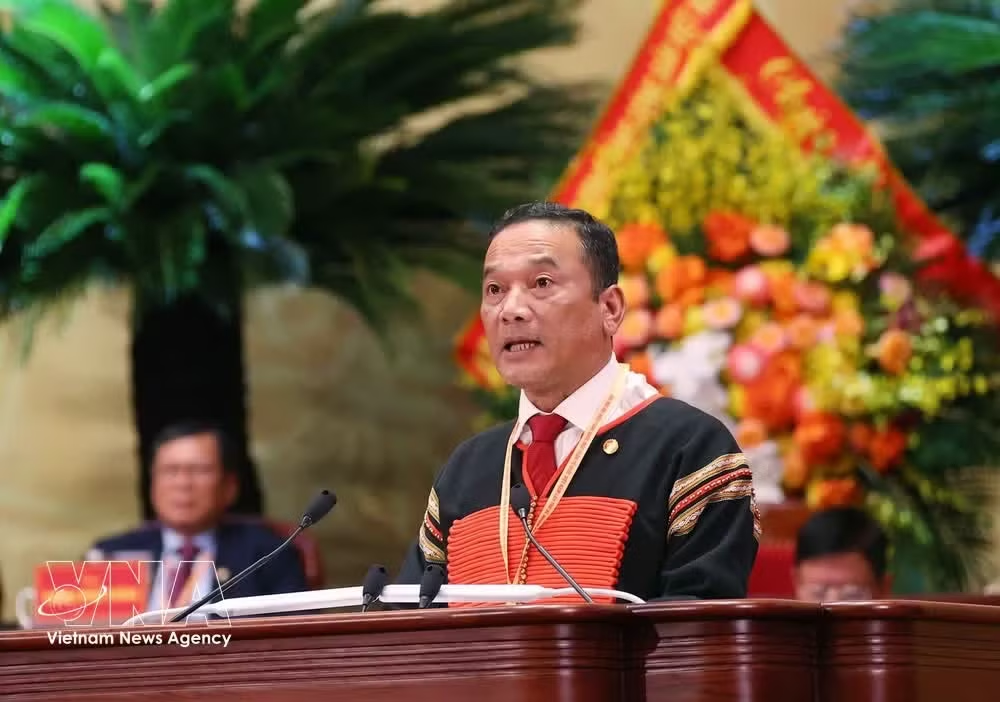
Highlighting achievements in new-style countryside development and digital transformation, he said more than 75% of communes in Dak Lak have met new-style rural area standards, while hundreds of community-based digital technology groups have been established to help residents access digital services and engage in developing the digital economy.
The official called for stronger efforts to enhance the great national solidarity, promote grassroots democracy, accelerate digital transformation within the VFF system, reduce poverty in remote and ethnic minority areas, and encourage public participation in green and digital economy development as well as ethnic culture preservation.
When the Party’s vision aligns with the people’s aspirations, no challenge is insurmountable, and no goal is beyond reach, he remarked.
At the congress, Most Venerable Thich Thanh Nhieu, member of the Presidium of the VFF Central Committee and Permanent Vice Chairman of the Viet Nam Buddhist Sangha (VBS)'s Executive Council, gave a presentation on the role of Buddhism in strengthening the great national solidarity and safeguarding the nation.
He said Buddhism in Viet Nam has remained closely linked with the nation’s development for more than 2,000 years and continues to play an important role in fostering moral values, social harmony and patriotism.
By the end of 2025, Viet Nam had nearly 19,544 places of Buddhist worship, close to 60,000 monks and nuns, and around 60 million followers and supporters of Buddhism.
The VBS reported that between 2021 and 2025, it organised more than 3,680 retreats and religious events with over 4.2 million participants, helping promote social consensus and strengthen public trust in the leadership of the Party and State.
The VBS also expanded social welfare programmes, contributing about 4.85 trillion VND (over 184 million USD) to charity and community support activities by late 2025. These included building thousands of charity houses, rural bridges and water wells, as well as providing scholarships and vocational training programmes nationwide.
The dignitary proposed a strategic partnership between the State, the VFF and religious organisations in socio-economic development. He also called for greater international engagement to promote Viet Nam as a Buddhist centre in the region and the world, thus making positive contributions to the country’s economic, cultural, social and tourism development.
He affirmed that the VBS aims to continue serving as a strong spiritual pillar of the great national unity solidarity during the 2026–2031 period.