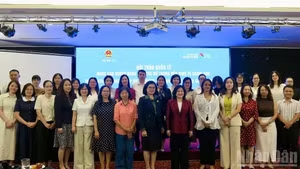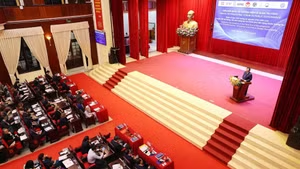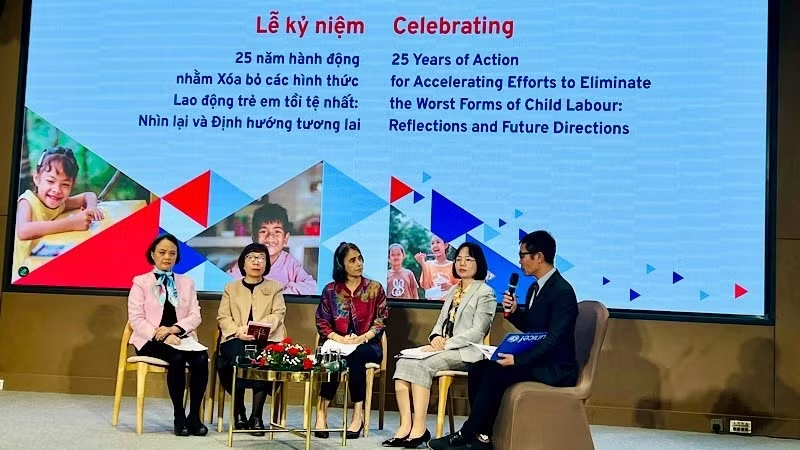
The event marked an important milestone, demonstrating Viet Nam’s strong commitment to protecting children from exploitation and safeguarding their rights. It also reaffirmed Viet Nam’s sustained efforts in child care and protection, contributing to the promotion of inclusive and sustainable socio-economic development in line with international labour standards.
Twenty-five years on from the ratification of Convention No. 182 in 2000, Viet Nam has made significant progress in preventing and eliminating child labour, including its worst forms.
Through refinements to the legal framework, the roll-out of national programmes, and stronger coordination across sectors and levels, Viet Nam has strengthened its child protection system, widened access to education, and intensified monitoring and supervision of children’s participation in economic activities.
Speaking at the ceremony, Sinwon Park, ILO Country Director for Viet Nam, said: “Ending child labour is not only about protecting children’s rights; it is also an investment in Viet Nam’s future workforce and inclusive economic growth. When children can go to school and develop skills, and when adults have decent, productive jobs, the benefits extend to families, businesses, and the wider economy. Ending child labour is a strategic investment in the value and sustainability of Viet Nam’s economic future.”
As Viet Nam develops its National Programme on the Prevention and Reduction of Child Labour for the 2026–2030 period, this 25-year milestone offers an important opportunity to accelerate progress towards Sustainable Development Goal 8.7 – ending child labour in all its forms.
As Viet Nam becomes increasingly integrated into supply chains, relevant agencies stressed that ending child labour requires ongoing attention and regular monitoring.
Nguyen Thi Nga, Deputy Director of the Department of Mother and Child under the Ministry of Health, emphasised that protecting children is a shared responsibility of families, communities, state agencies, workers, employers, and businesses. “No single actor can end child labour alone. This requires the joint efforts of all parties – from strengthening social protection policies for vulnerable families, to law enforcement and enhanced corporate responsibility. Only through collective action can we build a firm foundation for the long-term, healthy development of future generations.”
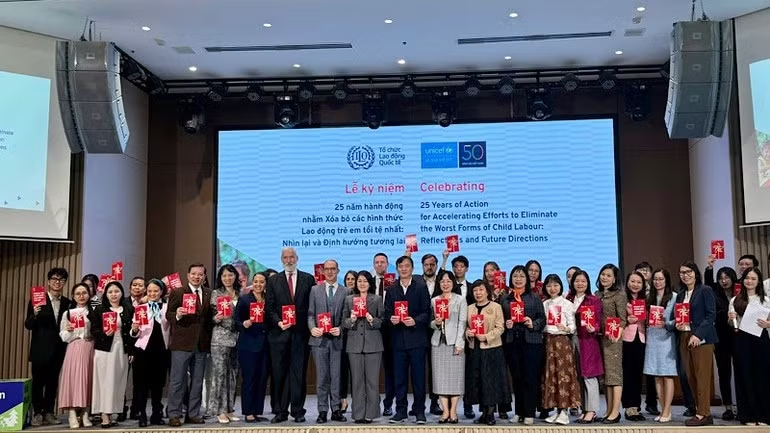
At the event, the ILO, UNICEF, and the United Nations in Viet Nam reiterated their commitment to working alongside Viet Nam in implementing national programmes and strengthening enforcement of labour and social legislation.
As Viet Nam develops its National Programme on the Prevention and Reduction of Child Labour for the 2026–2030 period, this 25-year milestone offers an important opportunity to accelerate progress towards Sustainable Development Goal 8.7 – ending child labour in all its forms.