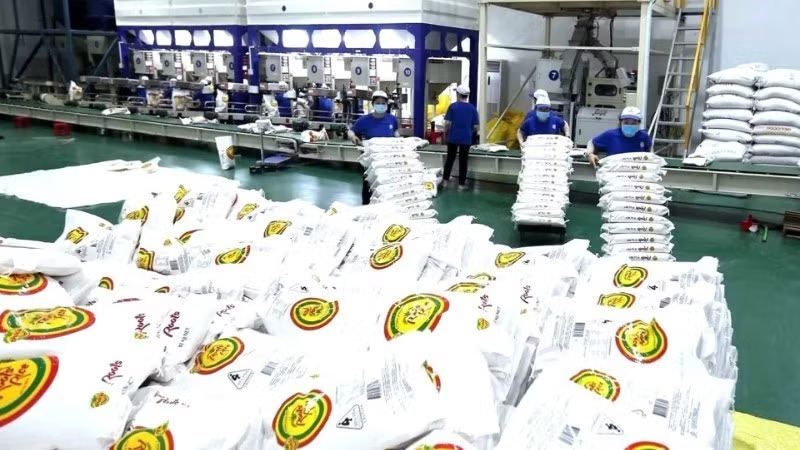
Of this, exports of agricultural, forestry and fishery products hit 58.13 billion USD, an increase of 12.9%, while imports reached 40.5 billion USD, up 11.5% year-on-year, generating a trade surplus of 17.59 billion USD, almost equivalent to the economy’s overall trade surplus. This shows that agriculture not only maintains stable import-export performance but also serves as the key sector underpinning Viet Nam’s trade surplus.
The double-digit growth in agricultural exports also reflects the positive outcomes of restructuring the sector towards higher added value. Many product groups such as coffee, fruit and vegetables and seafood have posted strong growth, continuing on course to set new export records. Notably, the increase in export value has been driven mainly by higher export prices.
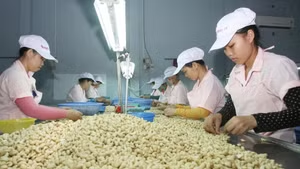
Specifically, export prices rose by 42.5% for coffee, 16.1% for cashew nuts and 33.7% for pepper. Progress in meeting green standards and expanding low-emission cultivation areas is opening doors for Vietnamese agricultural products to secure a stronger foothold in high-quality markets such as the EU, the US and Japan.
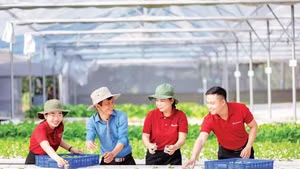
This not only aligns the sector with new export trends but, more importantly, lays the foundation for building agricultural brands and contributes to Viet Nam’s commitment to achieving net-zero emissions by 2050.
Alongside export growth, the 11.5% rise in imports, mainly input materials, animal feed, fertilisers and agricultural supplies, also clearly reflects the recovery of production, processing and export activities.
Despite significant global market pressures affecting several industry and service sectors, agriculture continues to show stable growth and demonstrates strong resilience. This reaffirms that the sector is gradually becoming a major source of foreign currency earnings and added value, truly transitioning from agricultural production to an agricultural economy.
To sustain the trade surplus, the agricultural sector should take advantage of the year-end peak season to boost exports of products with high demand such as processed seafood, fresh fruit and vegetables, and speciality coffee.
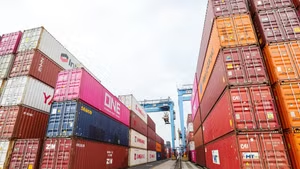
However, exporters must pay close attention to optimising logistics to ensure on-schedule delivery, as the year-end period typically sees rising logistics costs, frequent shortages of refrigerated containers and congestion at border crossings - factors that can delay shipments and reduce the competitiveness of Vietnamese agricultural products.
In addition, measures are needed to ensure supply, accelerate agricultural processing and enhance growth quality through product value. These efforts will help increase export revenue and profit, creating sustainable value for agriculture, farmers and rural areas.