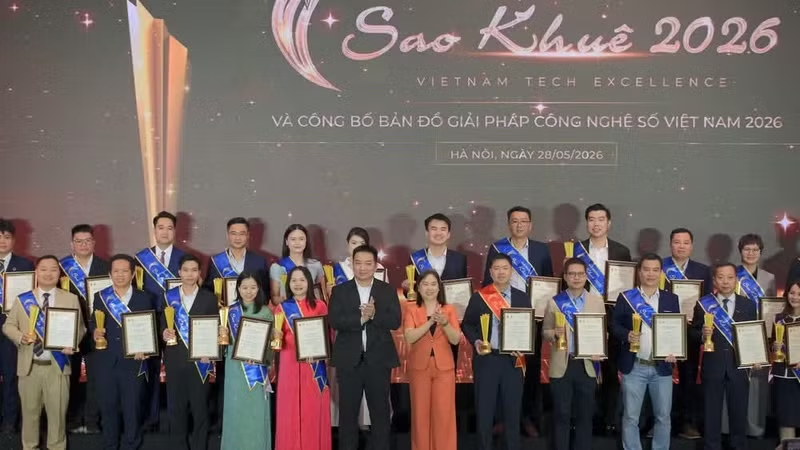
The Viet Nam Software and IT Services Association (VINASA) held the 2026 Sao Khue Awards ceremony under the patronage of the Ministry of Science and Technology in Ha Noi on the afternoon of May 28. Sigma OTT End-to-End, developed by Thu Do Multimedia Joint Stock Company, was among this year's honourees in the Media Tech category under the Digital Content and Experience group, a recognition that also earned the company a place on the Viet Nam Digital Technology Solutions Map. The award reflects the growing technical maturity of Vietnamese technology companies in the broadcast infrastructure space.
Full ownership of core technology - no longer dependent on third parties
Sigma OTT End-to-End is a fully integrated digital broadcasting platform that covers the entire content delivery chain, from signal ingest to the end-user screen, consolidating the functions of five to six separate foreign solutions into a single system built and maintained entirely by Vietnamese engineers. The platform has been deployed across a number of major broadcasters and network operators in Viet Nam, helping these organisations operate more independently, reduce costs tied to foreign vendor contracts and strengthen their control over their own digital infrastructure. Among its most prominent clients are VTV Go and VTVcab - two of the country's largest digital content platforms, each serving millions of users.
The broader Sigma ecosystem has built a consistent track record of institutional recognition. Both Sigma OTT and Sigma DRM - the platform's integrated content protection solution were consecutively named Key Industrial Products of Ha Noi in 2024 and 2025 respectively. Sigma Smart Detect was also listed among the Top 10 Make in Viet Nam solutions of 2024 in the emerging technology category.
Stopping revenue loss from piracy
Within the Sigma OTT End-to-End ecosystem, Sigma Multi-DRM plays a particularly critical role. It is currently the only digital rights management solution in Viet Nam to have been certified by Cartesian, an internationally recognised content security auditing body. The system encrypts and protects digital content in real time, preventing unauthorised access and distribution across all devices and platforms. For broadcasters and rights holders investing in premium sports, films or exclusive programming, content piracy represents a direct and quantifiable loss of revenue. Deploying a DRM system that meets international certification standards is a meaningful step toward building a commercially sustainable digital content economy.
Looking further ahead, the underlying video infrastructure of Sigma OTT E2E is also being extended into adjacent sectors, including T-commerce - transactional commerce integrated within television content and security camera systems, demonstrating the platform's potential applicability across a broader digital economy.
Reaching viewers across every screen
Today's audiences move constantly between devices - from the television in the evening to a smartphone during the commute, to a tablet at the weekend. A broadcasting platform optimised for only one type of device is no longer adequate. Sigma OTT End-to-End is built to operate seamlessly and simultaneously across smart TVs, smartphones, tablets and web browsers, supporting more than 90% of connected devices currently in circulation globally. For broadcasters and operators, this translates directly into expanded audience reach without the cost and complexity of managing multiple separate delivery systems.
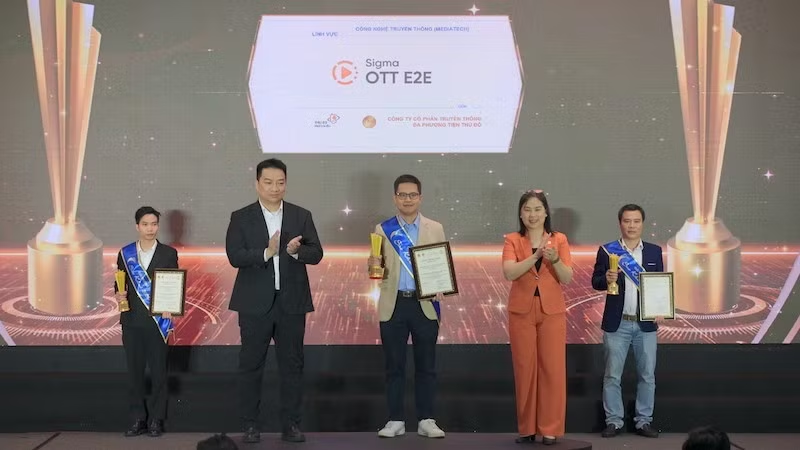
A measured journey with regional markets in view
Alongside its established domestic deployment record, Thu Do Multimedia is actively pursuing expansion into India and Southeast Asia - markets where demand for OTT and IPTV infrastructure is growing rapidly, and where the challenge of building scalable, locally controlled streaming operations without reliance on fragmented foreign vendor ecosystems closely mirrors the problem the company originally set out to solve at home.
The 2026 Sao Khue Award is a well-earned recognition of Thu Do Multimedia's sustained commitment to building technology it owns and controls. It also serves as evidence that Vietnamese technology companies are increasingly capable of contributing to the global technology value chain, not as implementers of foreign solutions, but as developers of platforms with genuine relevance beyond their home market.