Laying foundation for national agricultural data ecosystem
After six months of piloting traceability for durian products, the system’s operation demonstrates the determination of the Ministry of Agriculture and Environment to use data as a foundation for quality management, food safety assurance, market development and the building of a national agricultural data ecosystem.
In addition to helping people and businesses easily look up and verify product information, the system also forms a shared data platform, ensuring connection, sharing and interoperability with ministries, sectors, localities, businesses and providers of traceability solutions.
According to testing results, the system is capable of handling around 1,000 search requests per second; 30,000 users scanning traceability stamps simultaneously; more than 85 million stamp scans per day; and about 50 data messages of 2 MB per second, creating a technical foundation for nationwide expansion.
To date, the system has integrated traceability data for more than 18,500 products across 181 product groups from 170 businesses in 24 out of 34 provinces and cities. For exported durian products, 16 businesses have joined the pilot scheme; initially, six containers were successfully exported to the Chinese market through the application of electronic traceability on the ministry’s system.
To date, the system has integrated traceability data for more than 18,500 products across 181 product groups from 170 businesses in 24 out of 34 provinces and cities. For exported durian products, 16 businesses have joined the pilot scheme; initially, six containers were successfully exported to the Chinese market through the application of electronic traceability on the ministry’s system.
The system is also being connected with businesses engaged in the production, processing, export and import of agricultural products; localities that already have traceability systems; while also meeting requirements for connection and interoperability with ministries, sectors and the National Data Centre under the Ministry of Public Security in accordance with regulations on information safety and cybersecurity.
Representing the system developer, To Nguyen Thanh from Technology Convergence Corporation (Netacom), said the system had been handed over, installed, assessed for information safety and fully transferred to the Ministry of Agriculture and Environment for management from July 1, 2026.
According to Thanh, all data on the system are assets of the state and the Ministry of Agriculture and Environment; the system’s operation affirms the determination to implement national digital transformation and elevate Vietnamese farm produce in the international market.
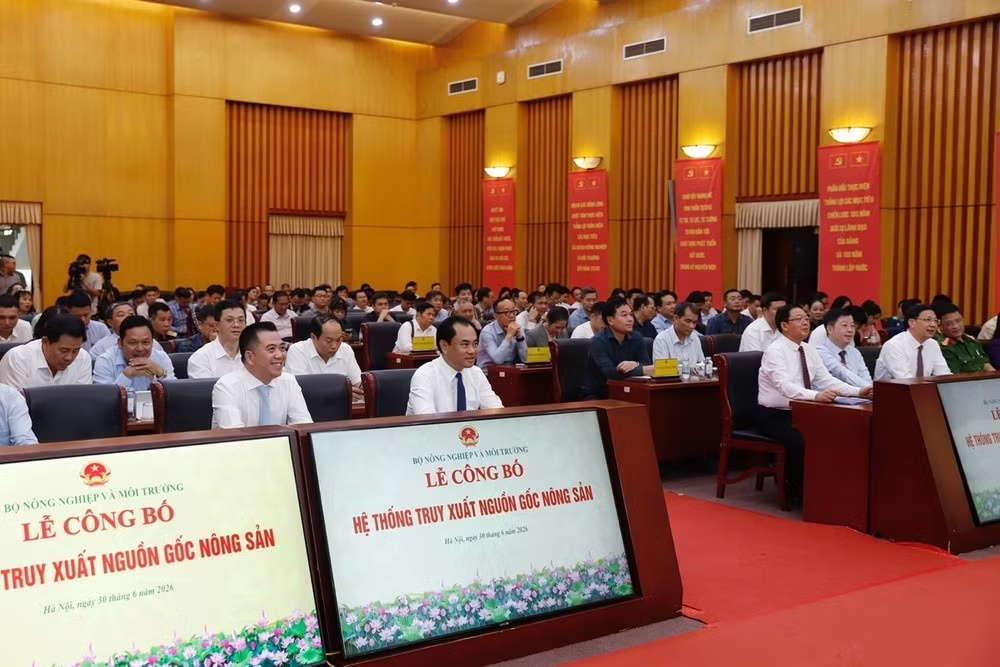
According to the Ministry of Agriculture and Environment, traceability is an inevitable requirement as domestic and international markets increasingly attach importance to quality, transparency, supply chain responsibility and food safety. The system’s operation will help protect consumer rights; support businesses and producers in standardising data and increasing product value; while strengthening the state’s management capacity in monitoring, warning, tracing and handling issues related to quality and food safety.
The system also creates a foundation for localities, businesses, cooperatives and production households to gradually standardise, update and share data on growing areas, production, packaging, processing, distribution, export and product consumption, contributing to the formation of a unified agricultural data ecosystem serving the digital transformation of the agricultural sector and the development of the agricultural digital economy.
In the coming time, the Ministry of Agriculture and Environment will continue to coordinate with ministries, sectors, localities, industry associations, businesses and technology providers to expand the scope of implementation; prioritising key agricultural, forestry and fishery product groups, export products and products with high requirements for quality, food safety and origin transparency. At the same time, it will strengthen guidance and support for localities, businesses, cooperatives and people to effectively exploit and use the system.
Contributing to elevating position of Vietnamese farm produce
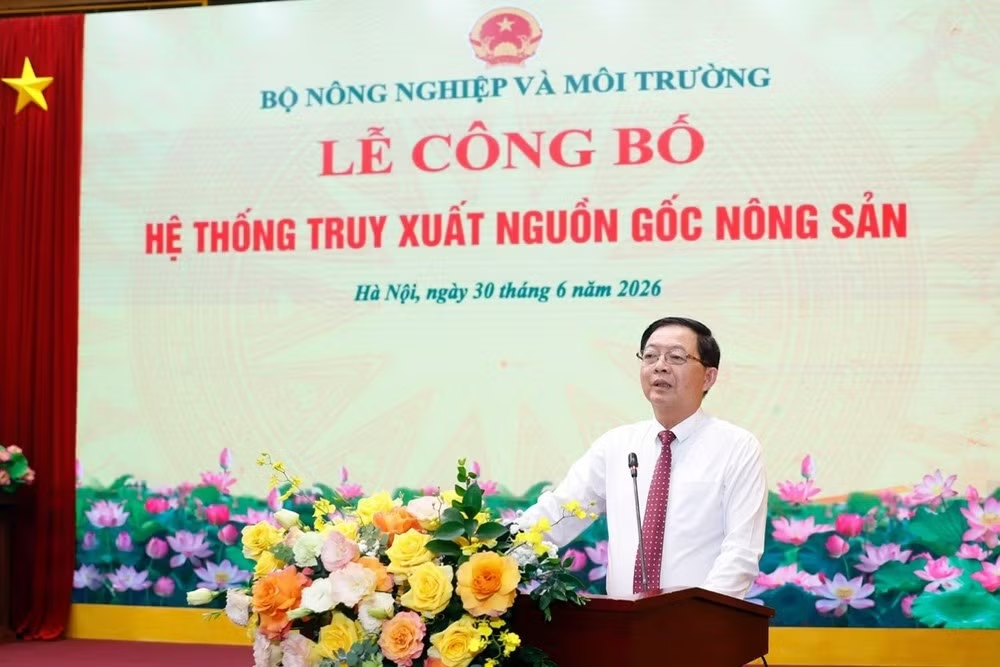
Speaking at the ceremony, Deputy Prime Minister Ho Quoc Dung highly appreciated the efforts of the Ministry of Agriculture and Environment in building and putting the system into operation in line with the direction of the Party Central Committee’s Secretariat and Resolution No 57-NQ/TW of the Politburo on breakthroughs in the development of science, technology, innovation and national digital transformation.
According to the Deputy Prime Minister, this is an important step forward in the digital transformation of the agriculture and environment sector, contributing to making the entire production chain more transparent and enabling the origin of agricultural products to be traced, thereby ensuring quality, maintaining reputation and enhancing the value of Vietnamese farm produce.
The Deputy Prime Minister said that, as agriculture continues to serve as a pillar of the economy, export turnover of agricultural, forestry and fishery products reached nearly 31 billion USD in the first five months of the year, up 9.2%, with a trade surplus of more than 8.4 billion USD. However, the target of more than 74 billion USD in exports in 2026 places increasingly high requirements on information transparency and traceability.
According to the Deputy Prime Minister, traceability is no longer a separate requirement but has become an inevitable trend in quality management and consumer protection. To develop sustainably, Vietnamese farm produce must build brands and meet the increasingly stringent standards of international markets.
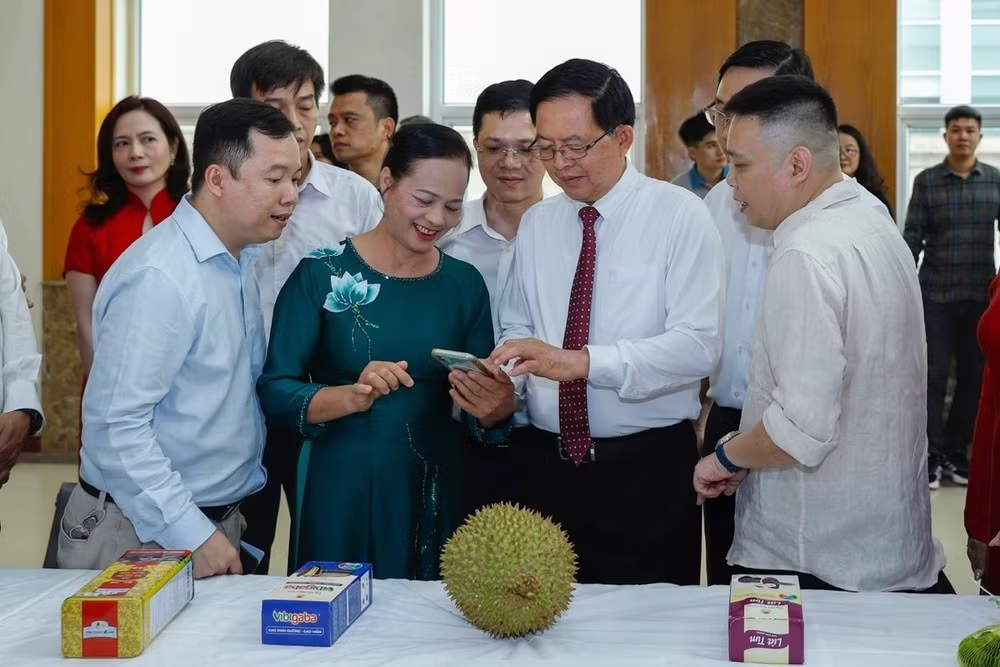
Alongside favourable conditions, the system’s implementation also faces many difficulties as domestic agricultural production remains mainly small-scale and scattered. Therefore, an appropriate roadmap is needed, with implementation moving from focus areas to broader expansion to ensure efficiency and feasibility.
In the immediate future, the Deputy Prime Minister proposed prioritising traceability for key sectors and products with large output and high economic value, serving domestic consumption and export, especially targeting key markets such as China, the European Union (EU) and the US. At the same time, it is necessary to continue improving mechanisms, standards, data infrastructure and the traceability system; gradually expanding to product groups with high management requirements or those that must comply with strict regulations of specific markets.
He also asked the Ministry of Public Security, the Ministry of Science and Technology, the Ministry of Industry and Trade, the Ministry of Finance and localities to strengthen coordination, standardise mechanisms for connecting, sharing and verifying data; support businesses, cooperatives and production households in joining the system, regarding traceability as a tool to improve the quality, value and competitiveness of Vietnamese farm produce, rather than allowing it to become an additional administrative procedure.
The Ministry of Agriculture and Environment, together with ministries and sectors, should continue reviewing and simplifying administrative procedures and avoid “administrativising” technical conditions and internal processes.
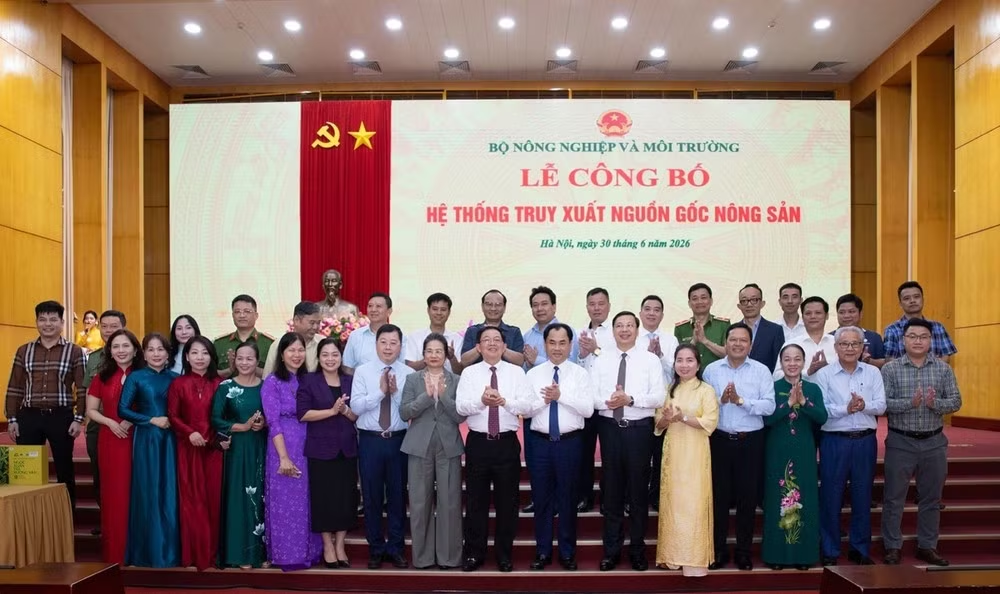
Initial implementation has shown that the system has delivered clear results. In Ha Noi, more than 3,000 production and business establishments have been granted accounts; more than 12,000 products have been labelled with QR codes, helping management agencies control quality, businesses ensure information transparency and consumers easily trace product origin.
A representative of Masan MEATLife said the company has applied traceability to 100% of its meat products, digitised all data across its production chain and is ready to connect with the ministry’s system to enhance transparency and improve product value.
The agricultural product traceability system has been built with three components: a lookup portal for the public; a management system serving regulatory agencies, businesses and actors participating in the chain; and a mobile application. Developed with a modern, service-oriented architecture and flexible scalability, the system ensures continuous operation and meets the requirements of a national shared platform in the agricultural sector.
A new feature of the system is its ability to authenticate and ensure data integrity through electronic digital signatures and blockchain technology; product identification under international GS1 standards; QR codes under the GS1 Digital Link standard; and data exchange under unified standards, enabling solution providers to participate without dependence on a single technology provider.