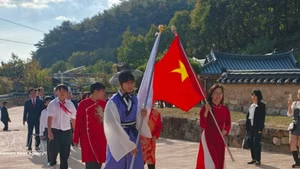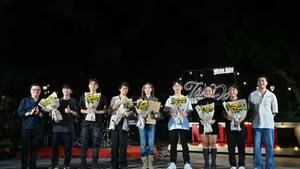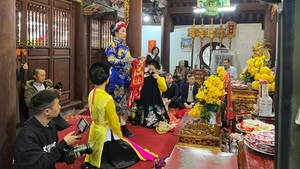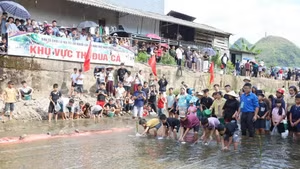
Bac Ninh–Kinh Bac is a land steeped in historical and cultural depth. Over thousands of years, it has built up a rich repository of intangible cultural heritage, making a significant contribution to the cultural identity of Viet Nam. To safeguard and illuminate this heritage stream, artisans in Bac Ninh have continually created and taken part in promotional and experiential initiatives, helping to connect heritage more closely with the public.
Passing on and spreading heritage values
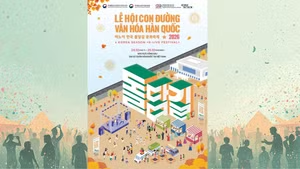
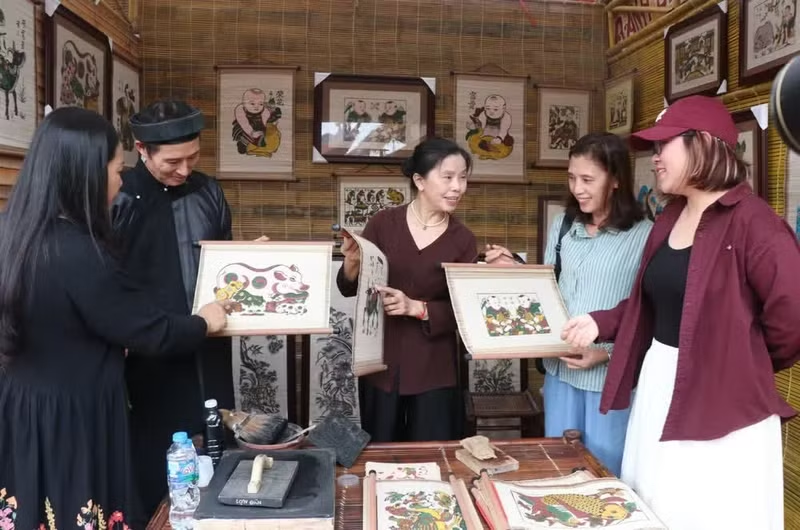
The festival “Returning to the Heritage Region – 2026”, featuring more than 30 distinctive cultural, sporting and tourism activities, has become a space for connection, dissemination and the awakening of heritage potential in contemporary life. Notably, the exhibition space for Dong Ho folk painting—recently inscribed by UNESCO on the List of Intangible Cultural Heritage in Need of Urgent Safeguarding—alongside interactive experiences connecting craft village artisans with visitors, stood out as a major highlight.
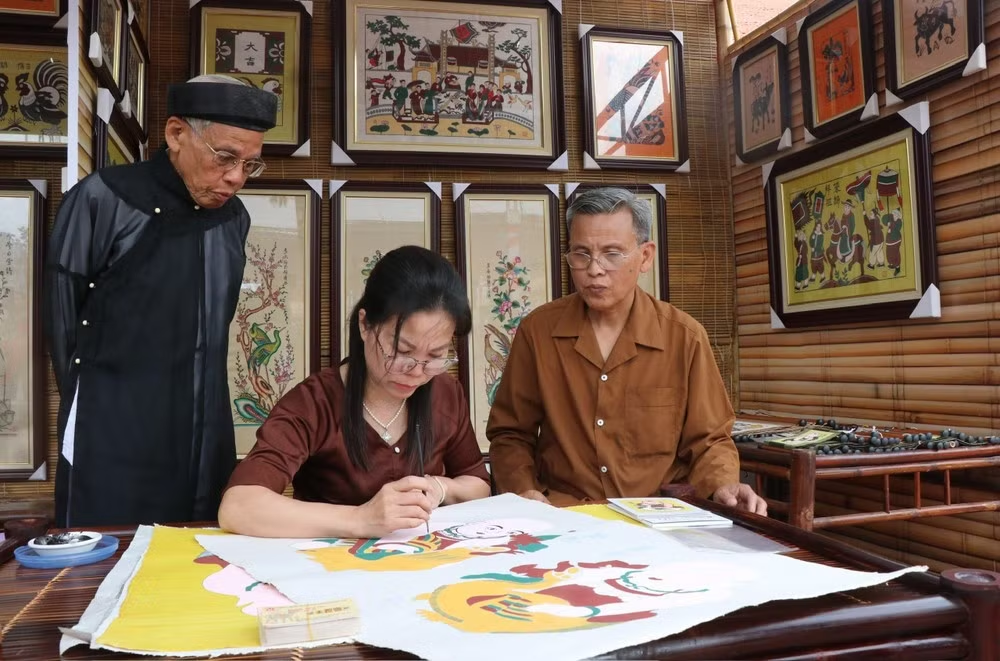
Actively participating in the festival’s series of activities, Meritorious Artisan Nguyen Dang Tam, a native of Dong Ho Village, meticulously guided visitors through the process of printing paintings on do paper, while introducing the unique natural colours derived from flowers, leaves and seashells used in Dong Ho paintings.
Tam shared: “In the face of the challenges of modern life, passion and enthusiasm alone are not enough. It is essential to preserve the ‘soul’ of the paintings—from drawing techniques and colours to production methods. Equally important is that artisans bring the beauty and essence of the craft to the wider public through storytelling and interactive activities, allowing visitors to experience and immerse themselves in the heritage. I believe that with transmission, continuity and dissemination, Dong Ho folk painting will be revived.”
As the 21st generation in a family devoted to the craft, with 35 years of experience, Nguyen Dang Tam has brought Dong Ho paintings to many countries through events organised at both national and provincial levels. Currently, three generations of his family remain committed to the craft, regularly innovating designs, promoting and selling products on digital platforms, and collaborating with schools, organisations and brands to expand opportunities for introducing and sharing stories about techniques, materials and the philosophies embedded in Dong Ho paintings.
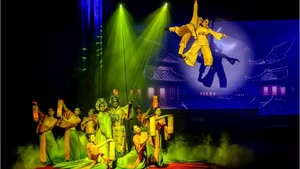
Recognised by UNESCO as an Intangible Cultural Heritage of Humanity on September 30, 2009, Bac Ninh quan ho (love duet) folk singing has evolved from a village-based cultural practice into a wider cultural space, appearing on artistic stages and at exchange and promotional events. Many artisans and performers actively participate in exhibitions, presentations and storytelling about the heritage.
Devoting her life to quan ho, People’s Artisan Nguyen Thi Them (born in 1959, from Viem Xa Ward, Kinh Bac) serves as a central figure in preserving numerous ancient and complex quan ho melodies and passing them on to younger generations.
To preserve these values for future generations, Nguyen Thi Them and her sister, artisan Nguyen Thi Sang, established the Sang Them Quan Ho Library in 2022.
They have painstakingly collected and displayed hundreds of documents, preserved quan ho melodies and artefacts used in performances—such as costumes, betel trays and teapots—and organised traditional-style quan ho exchanges right at the library.
“It is not just a passion; we hope to make a small contribution to preserving and helping future generations better understand traditional quan ho. We will continue for as long as we can,” artisan Nguyen Thi Sang shared.
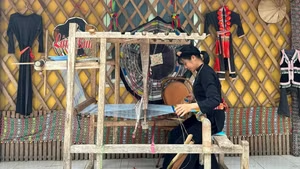
Bac Ninh currently has 240 artisans working across fields of folk culture and traditional crafts. With talent, dedication and perseverance, generations of artisans have quietly preserved, practised and passed down this invaluable heritage, encouraging their descendants to continue, sustain and enrich the cultural identity of their homeland.
Ensuring the continuity of heritage
Bui Thi Thu Thuy, Director of the Bac Ninh Department of Culture, Sports and Tourism, stated that Bac Ninh currently has eight UNESCO-recognised heritage elements, 27 items listed as national intangible cultural heritage, and nearly 4,000 historical sites.
In addition, the province boasts a vibrant cultural space with nearly 1,400 traditional festivals and around 200 craft villages. These tangible and intangible cultural heritages combine to form the unique cultural identity of Kinh Bac, serving as a powerful spiritual resource and contributing to the province’s internal strength in its development process.
Notably, Bac Ninh has been a pioneer in awarding titles and providing monthly support mechanisms for artisans involved in UNESCO-recognised heritage. Meritorious and People’s Artisans receive financial support ranging from 1.5 million to 4.6 million VND (57–175 USD) per month.
According to Plan No. 36/KH-TU dated April 6, 2026 issued by the Bac Ninh Provincial Party Committee to implement Resolution No. 80-NQ/TW dated January 7, 2026 of the Politburo on developing Vietnamese culture, the province clearly identifies cultural and human development in Bac Ninh as a foundational and vital internal resource, a major driving force and a pillar regulating rapid and sustainable development.
Cultural values must be closely and harmoniously integrated into all aspects of social life, becoming a form of soft power that creates competitive advantages and enhances Bac Ninh’s position and image in the new development era. Importantly, to ensure adequate resources for cultural development, Bac Ninh will allocate at least 4% of its annual budget expenditure, with increases in line with practical needs.
Pham Hoang Son, Chairman of the Bac Ninh Provincial People’s Committee, stated: “To effectively implement the action programme for heritage protection, Bac Ninh will continue to improve mechanisms and policies to support craft-practising communities and artisans. We will promote training and transmission of skills, and systematically incorporate heritage education into schools. At the same time, the province will carry out systematic inventory, digitisation and research of heritage, enhance promotion, raise public awareness of heritage values, and diversify products linked to market expansion.”
Following administrative consolidation, Bac Ninh is now home to 45 ethnic groups, creating a diverse cultural landscape with numerous unique festivals and customs. Many of these cultural values have been recognised as world heritage, such as the practice of the Mother Goddess worship of the Three Realms of the Vietnamese, Then practices of the Tay, Nung and Thai ethnic groups, ca tru (ceremonial singing), and the rituals and folk game of tug of war in Huu Chap Village.
However, the province faces the challenge of an ageing artisan workforce, with highly skilled and experienced artisans growing older, while younger generations are either not sufficiently capable or less interested in pursuing traditional crafts. Therefore, stronger policies and well-structured plans are needed to enable artisans to make a living from their crafts, continue creating and teaching, and contribute to the enduring flow and vitality of heritage.