Viet Nam is currently among the world’s leading agricultural exporters, with many products ranking among the global frontrunners, including rice, coffee, pepper, cashew nuts, fruit and seafood.
Yet behind the impressive figures for output and export value lies a concerning reality: although many Vietnamese agricultural products are comparable in quality to those of foreign competitors, they continue to compete primarily on price. Their added value remains far below their potential, and brand strength is still limited.
In practice, brand differentiation can create a substantial gap in product value. Malaysia’s Musang King durian, when grown in Viet Nam, fetches prices several times higher than Viet Nam’s RI6 variety, despite many experts judging the latter to be of comparable quality.
The same can be seen in the case of Korean ginseng. Its value lies not only in the ginseng root itself but also in a carefully developed promotional ecosystem that combines culture, tourism, communications and trade.
Thanks to a consistent national branding strategy, Korean ginseng has become an iconic product recognised by consumers around the world. These examples demonstrate that, in an increasingly integrated global economy, branding is no longer merely a decorative element but a decisive factor in creating added value and strengthening competitiveness.
Building a national brand must begin with businesses themselves. According to Lai Tien Manh, a branding expert at Mibrand Viet Nam, companies seeking to represent the national brand must possess a range of strengths, including sufficient scale, financial capacity, human resources, strategic execution capabilities and effective brand management.
Brand management, he noted, is far more than communications or promotion. It is the long-term process of building, maintaining and developing brand value consistently over time. Above all, the determination of business leaders is critical. Only when those at the helm regard branding as a strategic asset and are prepared to invest in it over the long term can companies establish a strong presence in international markets.
The experience of Binh Dien Fertiliser Joint Stock Company illustrates this clearly. According to Phan Van Tam, Deputy General Director, the Dau Trau brand was not built overnight but is the result of more than half a century of sustained investment. The company has based its branding strategy on three core pillars: product quality, innovation and social responsibility.
Amid constant changes to global supply chains, Binh Dien has also proactively invested in technology, digital transformation, artificial intelligence, stronger corporate governance and a solid financial foundation to adapt to changing market conditions. According to Tam, only businesses with strong internal capabilities can withstand fluctuations in the global economy and contribute to enhancing the national brand.
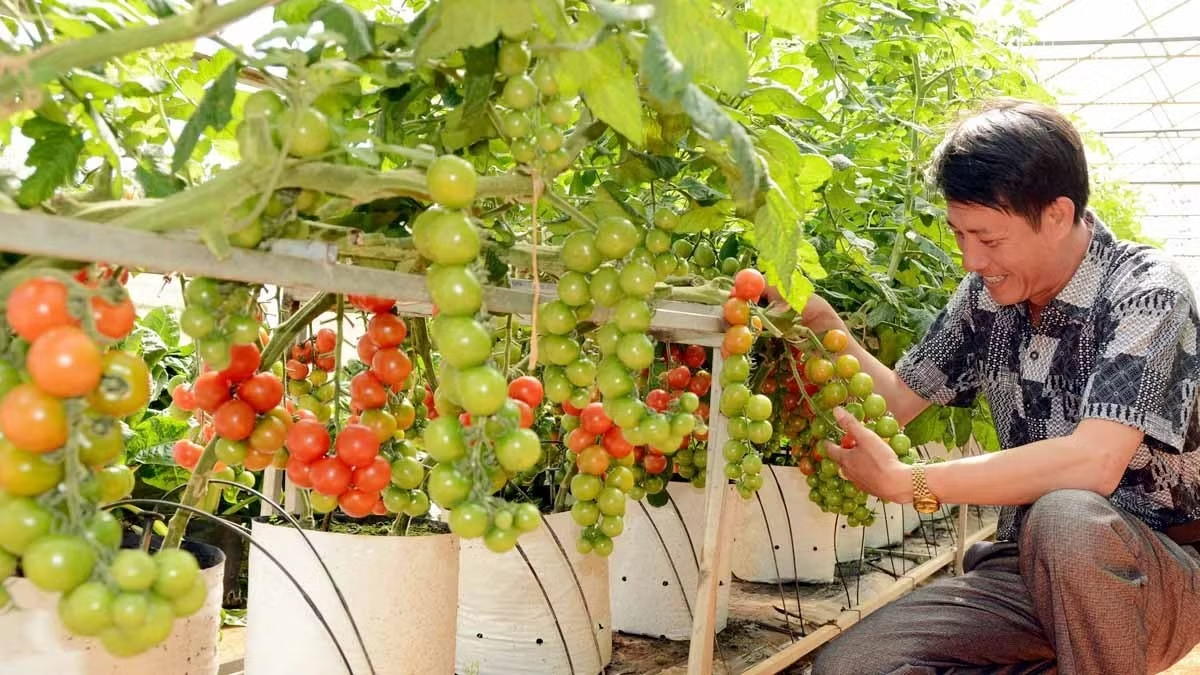
According to Le Minh Hoan, former National Assembly Vice Chairman and former Minister of Agriculture and Rural Development, there must be a shift in thinking from agricultural production to an agricultural economy, in which farmers create not only products but also value. That value lies not only in quality or output, but also in the culture, history, locality and story behind each product.
He believes that a mango, a grain of rice or a purple onion is not merely an agricultural commodity, but can become an “ambassador” introducing the image of the Vietnamese people and the country's identity to the world if properly branded.
“Don’t just sell the product; sell the story behind it” is not merely an inspirational message but a development strategy for the modern economy, where consumers are increasingly willing to pay more for products that embody cultural value and identity.
If businesses are the building blocks, the government plays the role of creating an ecosystem in which brands can develop together under a unified direction. According to Ta Hoang Lan at the Viet Nam Trade Promotion Agency, a national brand cannot exist in isolation. It must be built through the synergy of the national brand, corporate brands, product brands and sectoral brands. This approach helps prevent Vietnamese businesses from competing against one another in international markets while creating a unified image for Vietnamese goods.
At the same time, the Ministry of Industry and Trade is promoting stronger links between trade promotion and science and technology, diplomacy, culture and digital transformation to develop a comprehensive national branding strategy.
The development of national brand stores on cross-border e-commerce platforms such as Alibaba, along with expanded cooperation with Amazon and other digital platforms, not only enables businesses to reach international customers directly but also enhances the global recognition of Vietnamese products.
According to Lan, national brand communications serve as a trusted “passport”, enabling international consumers and business partners to recognise Viet Nam not as a manufacturing base, but as a country that creates high-quality, innovative and sustainable products.
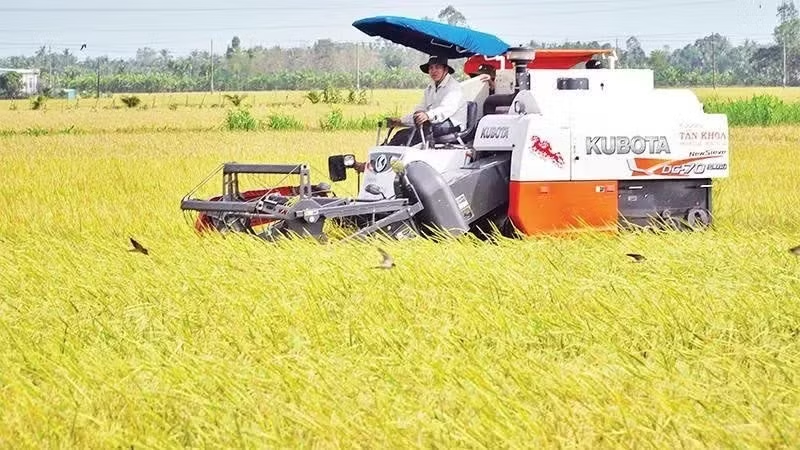
Encouraging signs are already emerging. A An rice has gradually gained a foothold in the Japanese market and is expanding into Europe. Loc Troi’s Com Viet Nam rice is now available in several major retail chains in France. VIFON products have also entered Carrefour hypermarkets, opening access to millions of European consumers.
What these businesses have in common is not only their ability to meet stringent quality standards, but also their long-term branding strategies and systematic investment in image, reputation and product storytelling. This demonstrates that, with the right approach, Vietnamese agricultural and food products are fully capable of winning over even the most demanding markets.
As the global economy increasingly competes on value, innovation and sustainable development, building a national brand is no longer a choice but an imperative.
A stronger national brand will enhance the credibility of every business and every agricultural product, enabling them to reach further into international markets.
This is the path that will allow Vietnamese agricultural products not only to sell in greater quantities, but, more importantly, to command higher value, raising farmers’ incomes, strengthening business competitiveness and affirming Viet Nam’s position on the global agricultural map.