Effectively operating the two-tier local administration model
The Resolution of the 1st Congress of the Da Nang Party Organisation for the 2025–2030 tenure identified three breakthrough tasks: effectively implementing special mechanisms and policies, removing bottlenecks, strongly developing the private sector, mobilising investment resources for infrastructure development, and promoting rapid and sustainable growth; advancing science and technology, innovation, and digital transformation in tandem with developing high-quality human resources to create strong improvements in productivity, quality, and efficiency across sectors; and building Da Nang into a modern city with rich identity, humane values, and a high quality of life, with a focus on improving living standards in mountainous areas.
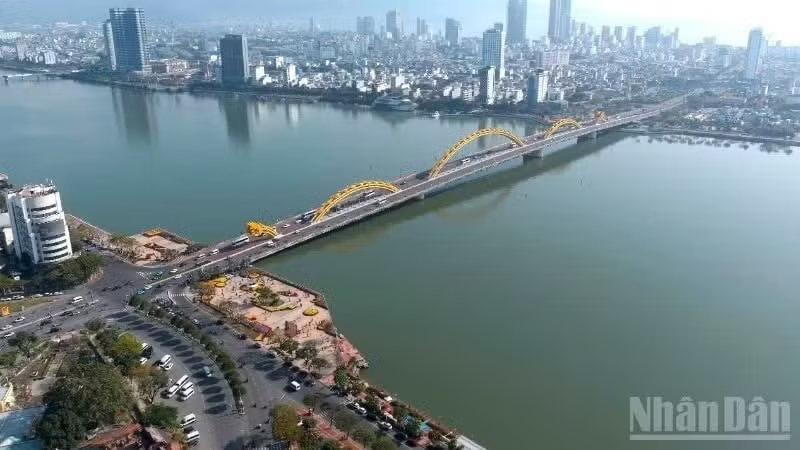
Da Nang has designated 2026 as the “Year of enhancing the effectiveness of the two-tier local administration model and special mechanisms and policies, accelerating investment attraction, promoting economic development, and ensuring social welfare.” Accordingly, the city has proactively implemented special mechanisms and policies issued by the central government to create a foundation and momentum for rapid and sustainable development.
The study and implementation of central and local policies have focused on new and core issues, major targets, and breakthrough tasks and solutions, while closely linking them to local, sectoral, and field-specific realities.
In particular, the Standing Board of the Da Nang Municipal Party Committee directed a shift in mindset from merely “studying and disseminating” policies to “deep understanding, correct action, and thorough implementation”, requiring policies to be translated into practical and feasible action programmes and plans.
Following the merger, the city’s development space and economic scale have expanded, while economic growth has met planned targets. In 2025, the city’s Gross Regional Domestic Product (GRDP) grew by 9.18%, surpassing the target and ranking ninth among the country’s 34 centrally governed provinces and cities.
Many major and key projects have achieved required implementation progress and high disbursement rates. State budget revenue reached 63.624 trillion VND, exceeding estimates by 25.4%. GRDP in the first quarter of 2026 is estimated to have grown by 8.45%, ranking second among six provinces and cities in the South Central Coast region and third among six centrally governed cities nationwide. The city’s economic scale reached 75.594 trillion VND, an increase of 8.013 trillion VND compared to the same period last year.
Da Nang’s economic structure in the first quarter of 2026 shifted positively towards services-industry-agriculture, accounting for 57.59%, 24.50%, and 5.49%, respectively. Total state budget revenue in the first months of 2026 reached an estimated 19.762907 trillion VND as of March 31, up 38.11% year on year and equivalent to 29.77% of the annual estimate.
Le Ngoc Quang, Member of the Party Central Committee, Secretary of the Da Nang Municipal Party Committee, and Head of the city’s National Assembly Deputies Delegation, said that despite numerous difficulties since the beginning of the term, the city’s Party Organisation had closely followed central directives, promoted unity, and implemented the resolution in a flexible and resolute manner.
As a result, Party building work has been renewed, discipline strengthened, and anti-corruption efforts intensified, while the new administrative apparatus has basically operated effectively and social consensus has increased significantly.
The achievements in operating the two-tier local administration model continue to affirm the city’s role and position as an important growth pole, and a centre for services, tourism, high technology, and innovation. At the same time, they also pose requirements for faster and more sustainable development to meet the expectations of the central government and the people.
Creating growth breakthroughs from new drivers
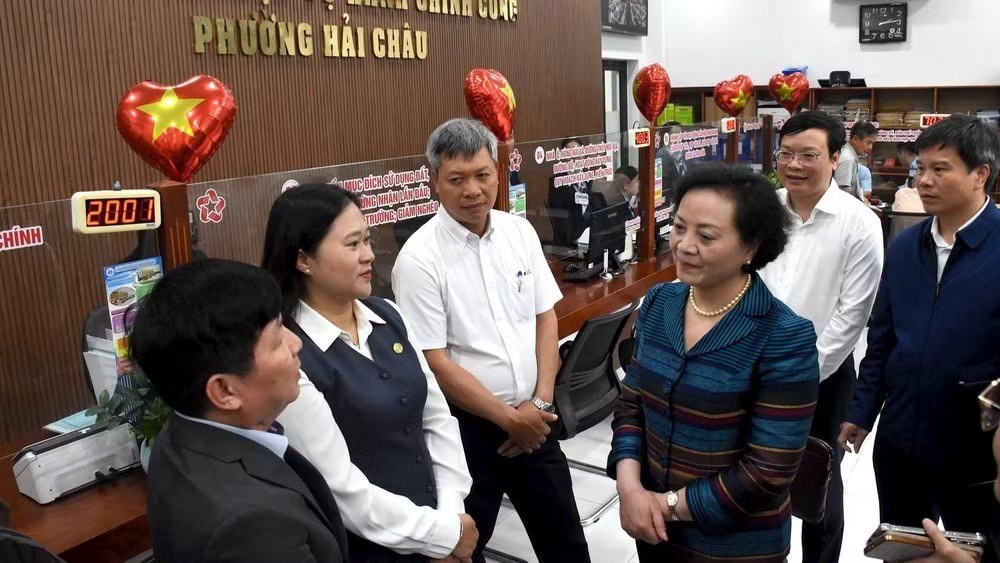
Tam Ky Ward is among the 12 communes and wards recognised by Da Nang City as having achieved excellent results in administrative reform in 2025. Nguyen Thi Thu Lan, Member of the Standing Board of the municipal Party Committee, Secretary of the Ward Party Committee, and Chairwoman of the Ward People’s Council, said that leadership and direction in implementing science and technology development, innovation, and digital transformation has been carried out in a prompt and comprehensive manner in line with directives from the central government and the city.
Digital infrastructure has gradually received greater investment attention, while information technology applications in management and administration have been implemented effectively. One hundred per cent of administrative procedure dossiers are now received online, with the on-time settlement rate reaching 100%.
“However, information technology infrastructure remains inconsistent, with many outdated and low-configuration devices affecting work efficiency. The city should continue allocating resources to invest in information technology infrastructure and working equipment for localities to ensure interconnected, synchronised, and effective digital transformation,” Nguyen Thi Thu Lan proposed.
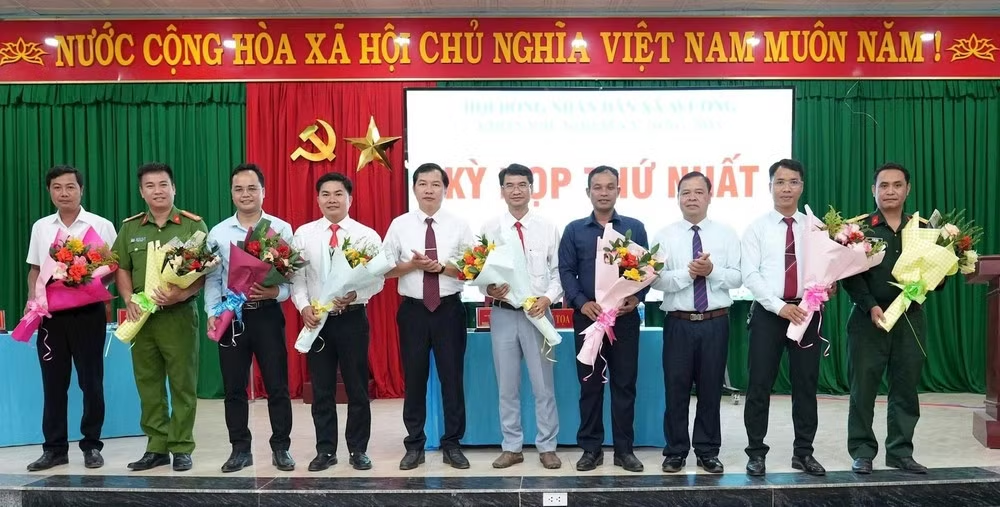
According to Nguyen Xuan Nghiem, Secretary of the Party Committee, Chairman of the People’s Council of Song Kon Commune and National Assembly deputy of Da Nang City, Song Kon Commune and mountainous and border communes in general still face many obstacles in socio-economic infrastructure, while local residents continue to experience difficult living conditions.
Da Nang therefore needs special and breakthrough mechanisms and policies to attract human resources to work in mountainous, remote, and border communes, especially in land management, public finance and budget, investment, and digital transformation. The city should also prioritise allocating resources for infrastructure development, particularly in transport, electricity, telecommunications, and education, while paying special attention to improving educational standards and promoting the “Digital Literacy for All” movement within communities.
![[Infographic] Key points from General Secretary and President To Lam’s opening remarks at the 14th PCC’S 4th plenum](https://en-cdn.nhandan.vn/images/j0QNt7m_5iy1OXpnUKiwG61aYhTv_B140GWhfriF26JwZbNNJ8LWetfvXUhz4Az6/1-8220.jpg.avif)