Harnessing social resources for change
A wide range of programmes and policies to support poverty reduction have been introduced and effectively implemented across Da Nang.
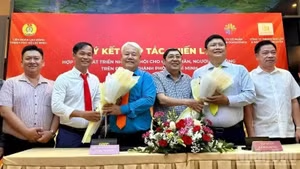
The total budget for the city’s poverty reduction programme during 2021–2025 is estimated at 1.22 trillion VND, with 473.37 billion VND contributed by organisations and communities.
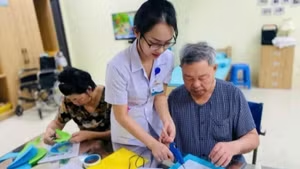
Over the past five years, around 181,000 health insurance cards have been distributed to poor, near-poor, and recently poverty-exited households. Nearly 28,000 disadvantaged individuals have received medical examinations, screenings, reduced hospital fees, and free medicines.
More than 52,000 students from poor and disadvantaged households have benefited from tuition fee exemptions or subsidies in line with Government Decrees. Social organisations and the city’s Association for Promoting Education have mobilised funding to provide scholarships, school supplies, and bicycles for nearly 49,000 children from poor families, helping to curb school dropout rates.
The total budget for the city’s poverty reduction programme during 2021–2025 is estimated at 1.22 trillion VND, with 473.37 billion VND contributed by organisations and communities.
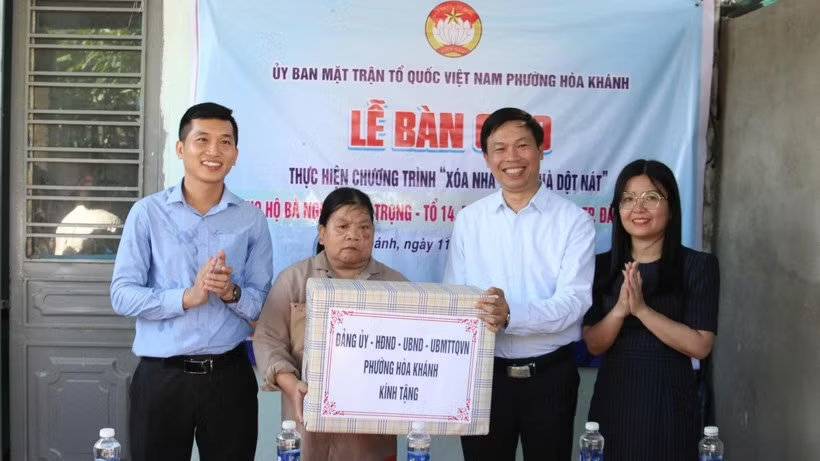
The city has supported the construction and repair of thousands of homes; introduced policies to reduce land use fees by 50% within the residential land quota for poor households; cut rental fees for state-owned flats for nearly 1,400 poor and near-poor households; and allocated 55 state-owned apartments to families facing especially difficult circumstances.
The Da Nang branch of the Bank for Social Policies has worked with associations and local authorities to assess and disburse loans to more than 4,500 poor, near-poor, and newly poverty-exited households, enabling them to develop production and business activities.
In addition, the city has introduced interest-free loans for poor households. Those who repay on time and successfully escape poverty receive a support payment of 4 million VND.
Policies have also been enacted to provide monthly allowances for cancer patients, individuals with end-stage renal failure requiring dialysis, poor households without labour capacity, elderly people, disabled individuals, and frequently ill orphaned children not yet eligible for social protection schemes.
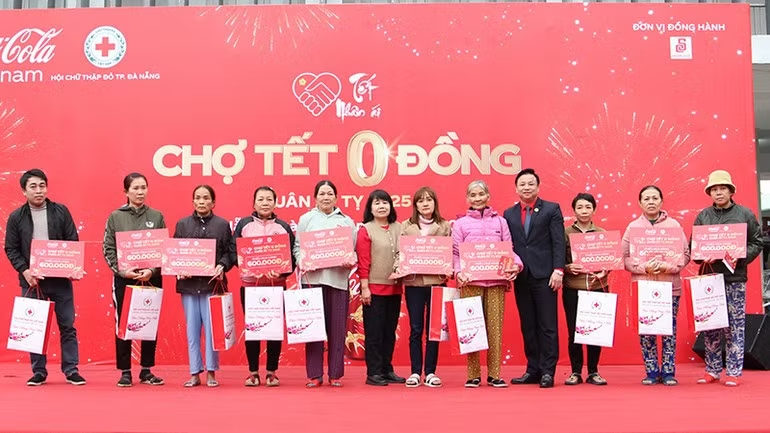
Electricity subsidies have been expanded to ease living costs for poor households. Timely assistance is also provided to disadvantaged families during Lunar New Year celebrations and recovery periods following major storms or epidemics.
Promoting vocational training and livelihood guidance for sustainable futures
Localities across Da Nang have offered job placement services, livelihood guidance, and vocational training to thousands of workers from poor and near-poor households, helping to reduce unemployment and improve educational outcomes for people aged 16 to under 30.
The city has integrated sustainable poverty reduction initiatives into programmes, projects, and plans. Training courses have been organised on safe free-range chicken farming, vegetable and flower cultivation, mushroom production, and biological husbandry models for poor households in Hoa Vang district.
Seedlings and plants have been provided to poor households and ethnic minority communities, alongside technical guidance on seed sowing and nursery management in mountainous areas.
Between 2021 and 2025, numerous poverty support programmes have facilitated infrastructure investment, production development, vocational training, job creation, and preferential credit policies for poor households.
Associations and localities have expanded effective poverty reduction models such as “Helping Children in Difficulty Stay in School,” the “5 Million Club,” “Sticky Rice Cakes for the Poor,” and “Joining Hands to Help Veterans Escape Poverty Sustainably.” These initiatives have supported job creation, livelihood guidance, vocational training, and part-time work, helping poor and near-poor households stabilise their lives and move out of poverty.
Communication campaigns have been strengthened through newspapers, radio, public broadcasting, leaflets, conferences, and dialogues, enabling poor households to stay informed about policies and encouraging proactive efforts to escape poverty.
Legal aid dissemination, along with recognition and rewards for outstanding collectives and individuals in the emulation movement “For the Poor – Leaving No One Behind,” has also been reinforced.
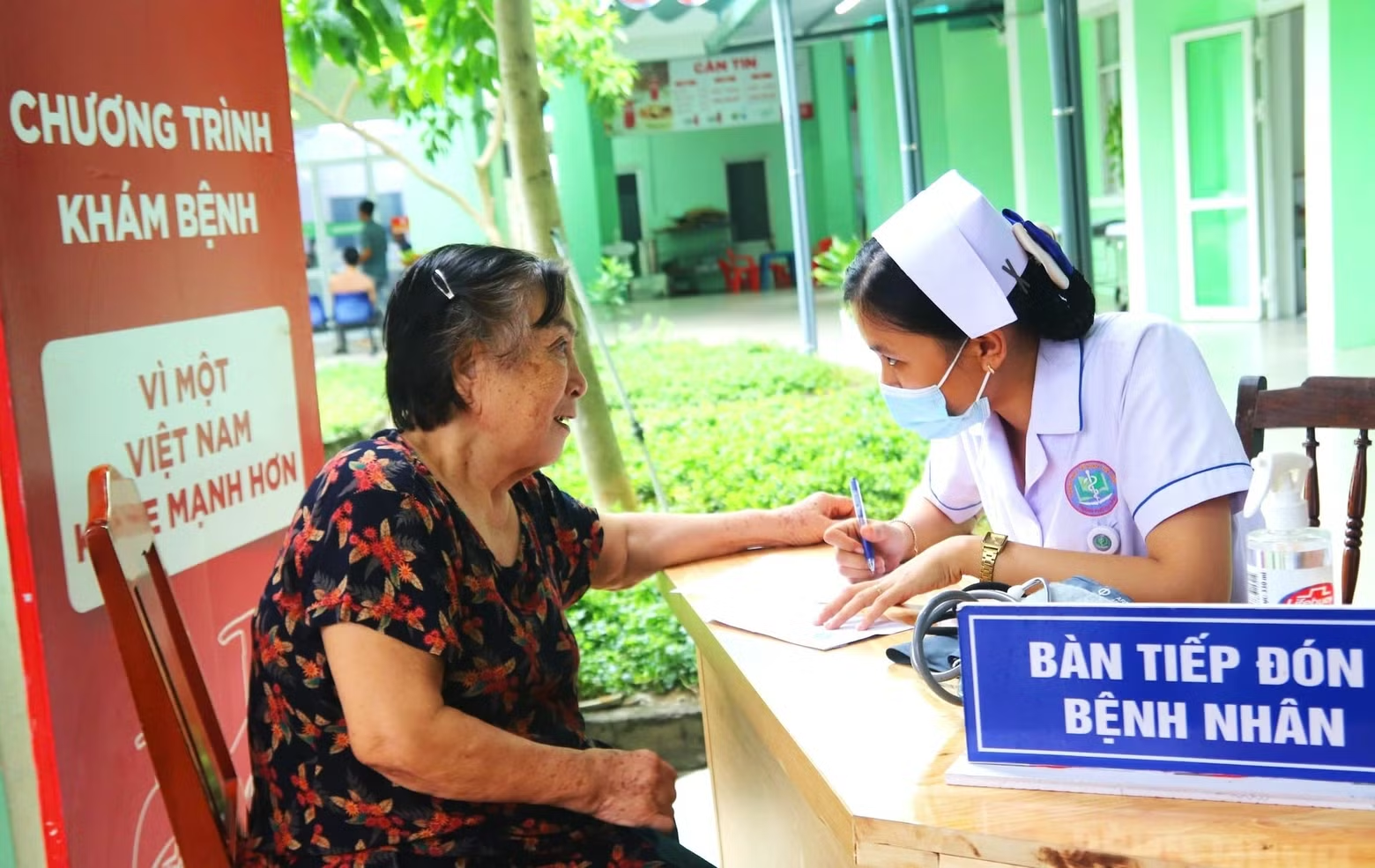
Between 2021 and 2025, numerous poverty support programmes have facilitated infrastructure investment, production development, vocational training, job creation, and preferential credit policies for poor households.
Scaling up poverty reduction models and production support has received significant attention, creating favourable conditions for disadvantaged people to access capital, expand production, generate employment, and increase income.
The achievements of the “For the Poor – Leaving No One Behind” movement in Da Nang over the past five years are attributed to the determination of party committees and authorities at all levels, as well as the active involvement of sectors, mass organisations, and the strong response of communities across the city.