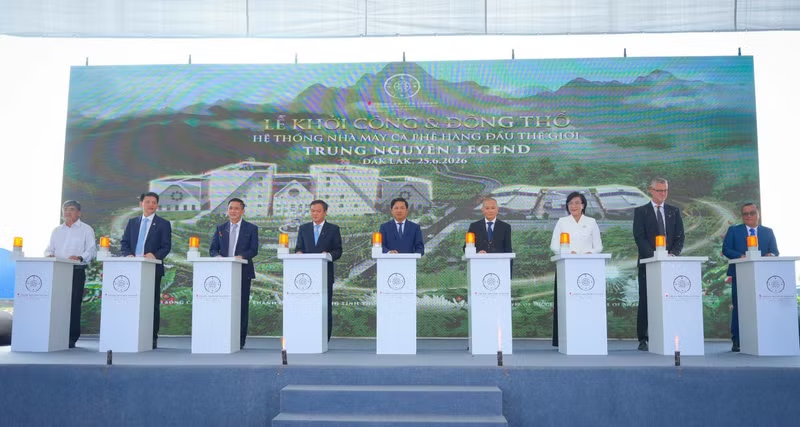
At the event, the group officially launched construction of the Trung Nguyen Legend coffee plant, designed as a sustainable, ecological energy-efficient facility meeting Net Zero standards. The first phase carries an investment value of 989 billion VND (37.58 million USD), with a spray-drying capacity of 1,000kg per hour across an area of 4.9 hectares.
At the same time, the renowned coffee manufacturer broke ground on an expansion project for its existing Trung Nguyen factory, covering 2.5 hectares with investment capital of 150 billion VND and a processing capacity of 18 tonnes of green coffee beans per hour. The expansion is expected to strengthen the deep-processing capability and maximise utilisation across Trung Nguyen Legend’s manufacturing system and the wider coffee industry in Dak Lak.
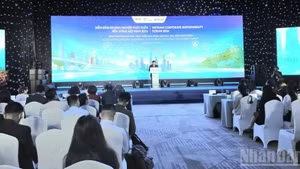
According to the project investor, the ceremony formed part of the province’s 2026 planning announcement and investment promotion conference. Once operational, the Trung Nguyen Legend coffee factory system is expected to strengthen the global position of Buon Ma Thuot Robusta beans and contribute to achieving the long-term target of generating 20 billion USD annually for Viet Nam’s coffee sector.
Speaking at the event, Dao My, Vice Chairman of the Dak Lak People’s Committee, said the commencement of the two projects under a sustainable ecological model aligned with Net Zero standards holds particular significance within the integrated production chain linking the group’s roasting facilities and raw material storage network at Tan An industrial cluster.
He noted that the launch of the two factory projects demonstrates the province’s strong investment promotion efforts and reflects the confidence of a leading domestic enterprise in accompanying Dak Lak’s strategy to expand deep and refined processing capacity. The developments are expected to create new opportunities, generate employment and improve living standards for local communities.
To ensure the projects are completed and brought into operation as soon as possible, the provincial authorities called on the investor to mobilise resources to maintain construction progress and target operational launch in 2027. The investor was also encouraged to assess labour demand early, coordinate in workforce training and prioritise local recruitment.
The provincial administration further instructed relevant departments and agencies to proactively identify and resolve obstacles facing the investor, ensuring legal procedures are handled efficiently without interrupting implementation progress.