Today, as science and technology, innovation and digital transformation are fundamentally reshaping production methods, social governance and everyday life, the imperative to enhance knowledge has taken on a new dimension: equipping citizens with digital skills so that they can adapt to and participate effectively in the development process.
Against this backdrop, women—who account for more than half of the country’s population—are presented with immense opportunities, but also face considerable challenges. Digital transformation opens up new avenues for development, enabling women to access knowledge, employment opportunities, markets and social services more easily. However, without digital skills, some women—particularly those in remote and disadvantaged areas, vulnerable groups, older women and those with limited access to technology—risk being left behind in the course of development.
Recognising this need, the draft Political Report for the 14th National Women's Congress for the 2026-2031 term identifies the effective implementation of the “Digital Literacy for All” movement as a key task aimed at enhancing women’s digital capabilities and enabling them not only to adapt to, but also to take an active role in the country’s digital transformation.
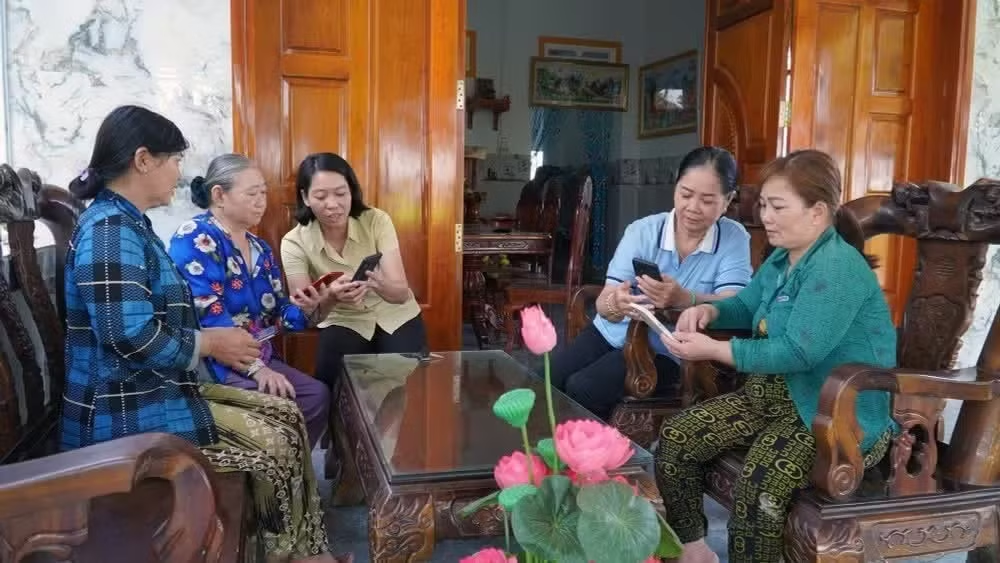
Notably, “Digital Literacy for All” is not conceived as a short-term initiative or a symbolic campaign. Rather, it is regarded as a long-term solution for expanding digital skills among women on a broad scale, tailored to different groups, regions and practical needs.
Under the objectives set for the new term, by the end of the period, at least 80% of Women’s Union members and 60% of women nationwide are expected to meet the requirements of digital citizenship competencies. In addition, every woman is expected to possess at least one basic digital skill and understand how to stay safe online.
These figures are more than technical targets; they reflect a new development mindset in which digital transformation is centred on people, with women recognised as a key stakeholder. When women are equipped to use digital technologies, their opportunities to access knowledge, develop economically, manage their lives and participate in society expand significantly.
In reality, digital transformation is already present across almost every aspect of daily life. From using online public services and cashless payment systems to accessing information, healthcare, online learning, production, business and community engagement, digital technology is increasingly becoming an essential tool for every citizen. In this context, lacking digital skills means not only limited technological capability but also a reduced ability to seize development opportunities.
Looking back on the previous term, efforts to advance digital transformation throughout the Vietnam Women’s Union system have delivered positive results, laying an important foundation for implementing the “Digital Literacy for All” movement in the years ahead. Through the breakthrough initiative of “Innovating Women’s Union operations, with a focus on information technology application”, Women’s Union organisations at all levels have gradually modernised their management, administration and member engagement methods in the digital environment.
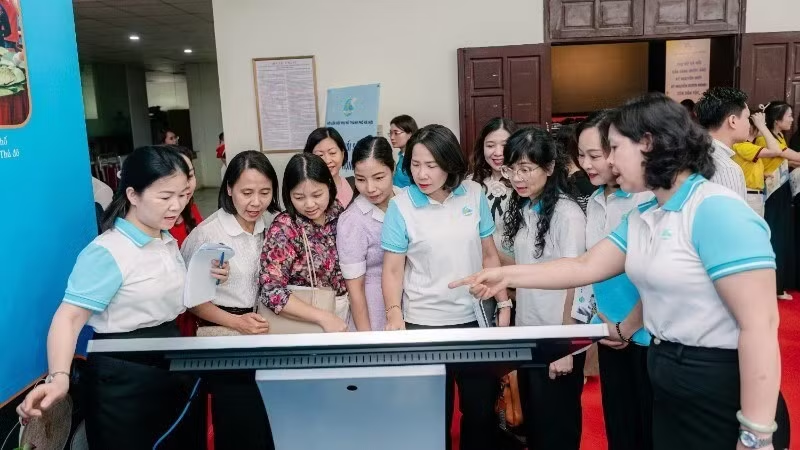
To date, 100 % of grassroots Viet Nam Women’s Union organisations have adopted software applications in their operations, while 92% of local chapters use social media platforms to carry out activities and connect with members and women. A range of practical programmes has been organised, including the “Women on the digital transformation journey festival”, seminars, forums and training courses on digital skills and the application of information technology in both organisational work and everyday life. These initial achievements demonstrate that women are fully capable of adapting quickly to the digital environment when provided with access to knowledge and opportunities.
Under the orientation for the next term, Viet Nam Women’s Union organisations at all levels will intensify efforts to help members and women access online public services, e-commerce platforms and cashless payment methods, while making effective use of the “Vietnamese Women” application and other digital platforms to obtain information, knowledge and skills for economic and personal development.
This represents an important shift from merely facilitating access to technology towards enabling women to generate value through technology. When women can effectively utilise the digital environment, local agricultural products can reach broader markets, women-made products can join supply chains, and livelihood models can gain greater opportunities for sustainable growth.
Notably, the draft Political Report also sets a goal of encouraging women and girls to participate in STEM fields—Science, Technology, Engineering and Mathematics—to help prepare a female workforce for the next stage of development. At a time when science and technology have become major drivers of growth, enabling women to access technological knowledge from an early stage not only promotes gender equality but also enhances the quality of the national workforce.
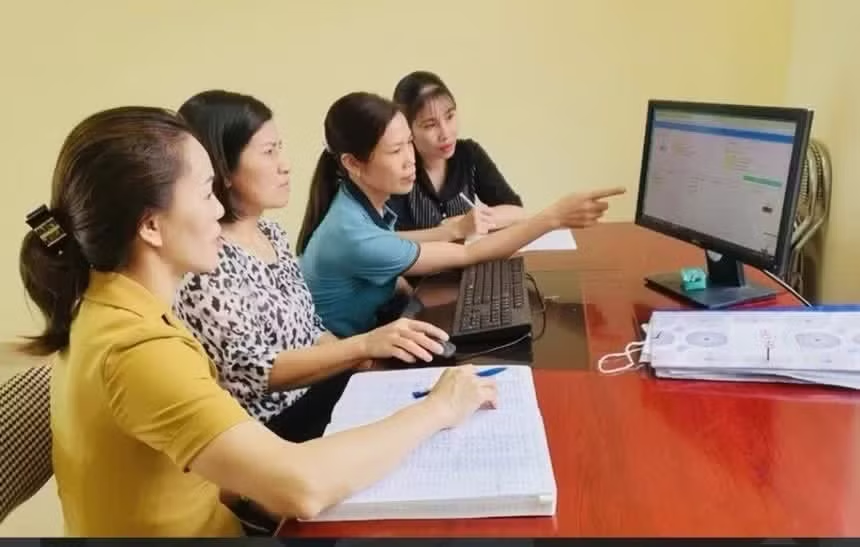
From the “Binh dan hoc vu” (Mass Literacy Campaign) in the early years of the nation’s founding to today’s “Digital Literacy for All” movement, there is a clear continuity of thought: empowering people through knowledge to expand development opportunities. If the earlier mission was to eradicate illiteracy so that people could read and write, today’s objective is to equip citizens with digital skills so they can harness technology, adapt to change and actively shape their future.
Viet Nam now stands before a major opportunity to achieve breakthroughs driven by science and technology, innovation and digital transformation. In this process, promoting the role of women is not only a matter of gender equality but also an objective requirement for development. When the “Digital Literacy for All” movement is implemented widely, substantively and effectively, it will represent not only a significant advance in women’s digital capabilities but also an important foundation for building digital citizens, a digital society and a digital economy in the country’s new era of development.