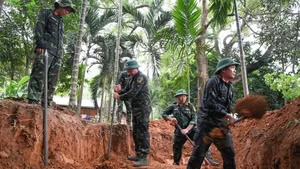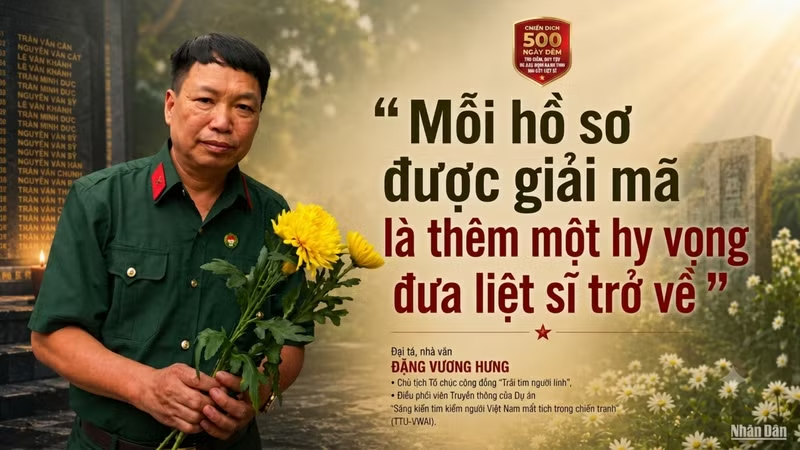
Notably, research into the "War Memento Files" preserved in the archives of the US is opening new avenues for this work.
On the occasion, a reporter from Nhan Dan Newspaper spoke with writer Colonel Dang Vuong Hung, Chairman of the "Trai tim nguoi linh" (Soldier's Heart) Community Organisation and Communications Coordinator of the Vietnam Wartime Missing Initiative (TTU-VWAI), about the journey of decoding these extraordinary records and their significance in honouring Viet Nam's heroic fallen soldiers.
The War Memento Files are documents created during the war, including diaries, letters, notebooks, personal papers, maps, operational reports, and many other artefacts preserved within the archival system of the US. Following their declassification, these materials have become an important source of data, enabling researchers from both countries to compare them with domestic archival records, thereby supplementing information for the search for, recovery, and identification of the remains of fallen soldiers. The greatest value of these files lies not only in the military information they contain, but also in the authentic record they preserve of the lives, emotions, ideals, and sacrifices of Vietnamese soldiers during the war.
Q: The entire country is implementing the "500-Day Campaign to Intensify the Search for, Recovery, and Identification of the Remains of Fallen Soldiers." In your view, what significance does this campaign hold for today's efforts to honour those who have rendered distinguished service to the nation?
A: This is a policy of profound significance, reflecting the responsibility and the long-standing Vietnamese tradition of "When drinking water, remember its source" upheld by the Party, State, and people towards those who sacrificed their lives for the independence and freedom of the nation.
Many decades after the war ended, a great number of fallen soldiers are still yet to be found or identified. As time passes, the search becomes increasingly difficult due to changes in the landscape, the dwindling number of witnesses, and the gradual loss of many sources of information. Therefore, this campaign is not only a professional mission but also a race against time to restore the names, hometowns, and long-awaited reunion of those who laid down their lives.
In response to this initiative, numerous agencies, organisations, scientists, veterans, relatives of fallen soldiers, and social organisations have joined hands, contributing in a variety of ways. Particularly encouraging is the growing number of young people engaging in archival research and applying digital technology, helping to carry forward this journey of remembrance through knowledge and civic responsibility.
Q: One approach that has attracted considerable attention is the use of information from the War Memento Files. Could you tell us more about the value of this source of documentation?
A: This is an exceptionally valuable source of documentation because most of it was created during the war itself. During military operations, the US forces seized numerous diaries, letters, notebooks, personal papers, maps, operational reports, and many other documents belonging to our troops. Following their declassification, these materials have been preserved in a remarkably complete condition.
Initially, these were simply military documents collected for intelligence purposes. However, viewed today from historical and cultural perspectives, each page contains invaluable information about individuals, military units, battles, or places where soldiers made the ultimate sacrifice. When cross-referenced with Viet Nam's archival records, the recollections of comrades-in-arms and testimony from local witnesses, much of this information has helped supplement the data used in the search for, recovery, and identification of the remains of fallen soldiers.
We have always preferred to refer to these as the "War Memento Files", because they are not merely archival documents but also historical testimonies that bear witness to the sacrifices made by countless generations for the nation's independence and freedom.
Q: How is the Vietnam Wartime Missing Initiative (TTU-VWAI) collaborating in the use of these materials to support the search for fallen soldiers?
A: This is a humanitarian cooperation project involving numerous experts from Viet Nam and the US, with strong support and facilitation from the competent authorities of both countries. Its primary objective is to make use of historical sources of data to help support the search for Vietnamese people who remain missing as a result of the war.
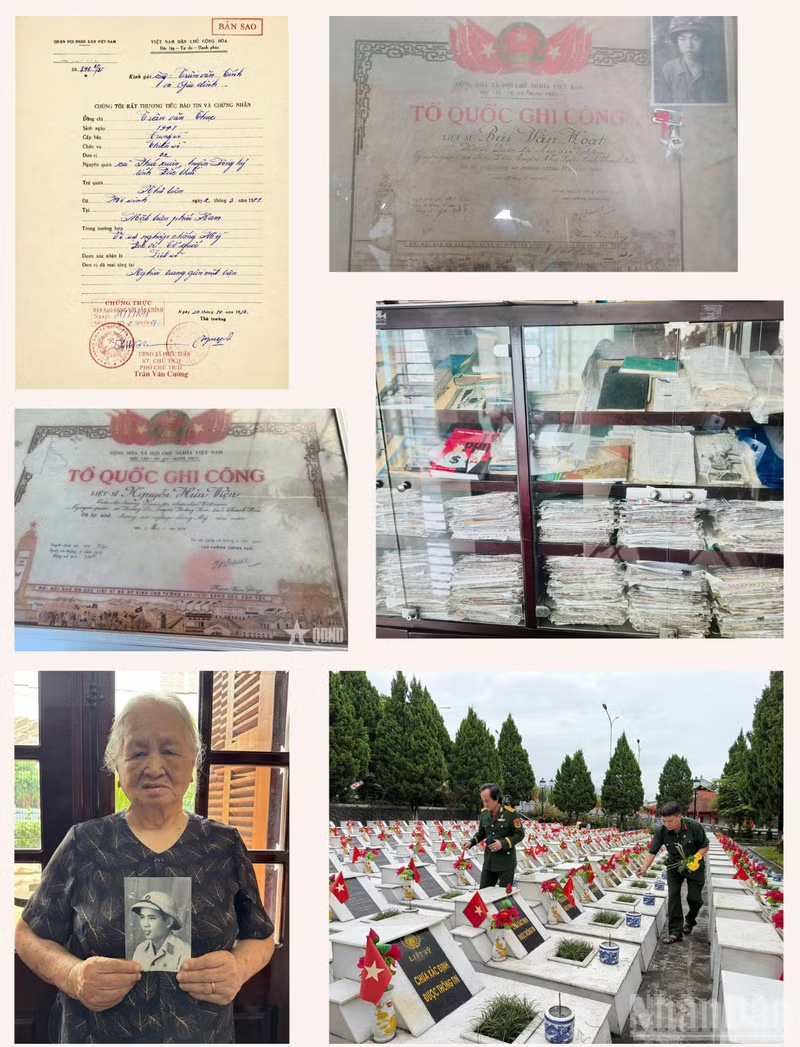
One of the project's greatest strengths is that it brings together experts from a wide range of disciplines, including military history, geography, aerial photography, cartography, archival studies, foreign languages, and digital technology. Every file must undergo a rigorous process of translation, verification, and cross-referencing with multiple documentary sources before any preliminary conclusions can be drawn.
A considerable number of files have already provided additional battlefield coordinates, initial burial locations, or information about military units. This data is subsequently transferred to the relevant authorities for further research and verification in accordance with established procedures before field surveys are carried out.
Q: Decoding files that were created more than half a century ago must present enormous challenges?
A: Indeed, it does. The greatest challenge lies in processing an immense volume of materials in many different formats. Most of the documents are written in wartime military English, while many are handwritten, contain specialised military symbols, or consist of old maps that have faded with the passage of time.
In addition, verifying the information always requires great caution. A detail contained in a file only becomes truly valuable when it has been cross-checked against multiple sources, including domestic archival records; accounts from witnesses, veterans, and relatives of fallen soldiers; and the actual geographical conditions on the ground.
")
For this reason, every completed file is the result of close collaboration among researchers, specialists, and volunteers. Encouragingly, an increasing number of young people are joining this quiet but meaningful work. They bring expertise in foreign languages, digital technology, and modern research methodologies, enriching the resources available for efforts to honour those who made the ultimate sacrifice.
We have always believed that every successfully decoded file does more than add another piece to the historical record; it can also bring renewed hope to a family that has spent many years waiting for news of a loved one. That, in itself, provides the motivation that keeps those engaged in this work steadfast in pursuing a journey that is both profoundly meaningful and immensely challenging.
Q: During the course of the research, which areas is the project prioritising to support the search for and recovery of the remains of fallen soldiers?
A: We are focusing first and foremost on areas where some of the fiercest battles took place and where many fallen soldiers have yet to be found or identified. One of our current priority areas is Loc Ninh (formerly Binh Phuoc Province), an important revolutionary base during the resistance war against the US for national salvation.
")
By cross-referencing the War Memento Files with military maps, Viet Nam's archival records, and the accounts of witnesses, a great deal of new information concerning battle sites, initial burial locations, and mass graves has gradually been brought to light. All this data is forwarded to the relevant authorities for further assessment, providing the basis for field surveys and recovery operations in accordance with established procedures.
Encouragingly, an increasing number of veterans, relatives of fallen soldiers, and local residents are proactively providing information, helping to improve and complete these files. It is a remarkable convergence of historical documentation and the collective memory of the community.
Q: In addition to the southern battlefield, you and the "Trai tim nguoi linh" community organisation have devoted considerable effort over many years to the Vi Xuyen battlefield (Ha Giang). What motivates you to do so?
A: For many veterans, Vi Xuyen is not merely a place name; it is a symbol of sacrifice and courage in the struggle to defend the northern border.
Even today, many fallen soldiers have yet to be recovered because of the rugged terrain and the severe scars left by the war. Some comrades still lie beneath sheer cliffs, in deep mountain ravines, or in areas that were repeatedly devastated by bombs and artillery fire.
For this reason, alongside archival documentation, we attach particular importance to recording oral history and meeting with veterans and eyewitnesses to preserve every memory, every place name, and every detail, however small they may seem. These stories often become valuable leads for future search efforts, while also helping to preserve the historical memory for future generations.
Q: Following the implementation of the project, what significance have its initial results had for the search for and recovery of the remains of fallen soldiers?
A: The most valuable achievement lies not simply in the number of files that have been studied or the number of witnesses who have been connected, but in the fact that many seemingly fragmented sources of information have been systematically organised, cross-referenced, and transferred to support professional work.
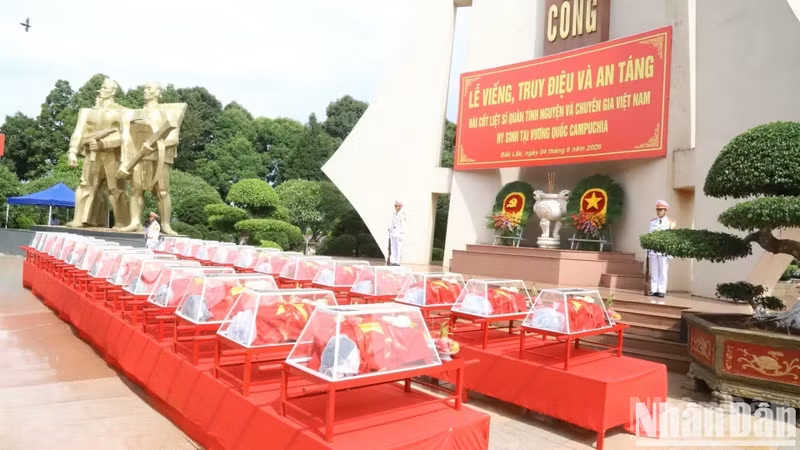
To date, hundreds of War Memento Files have been introduced to the public, while many relatives of fallen soldiers and veterans have provided additional information. Notably, some files have yielded important evidence regarding the original burial locations of fallen soldiers, providing a stronger basis for the competent authorities to continue verification and conduct field surveys.
")
We have always recognised that the search for fallen soldiers is a long-term undertaking requiring close coordination among many different parties. Every additional piece of information, every witness located and every file successfully decoded can create another opportunity for a family to learn where their loved one rests.
Q: In addition to researching archival records, the "Trai tim nguoi linh" community organisation also carries out many activities to preserve the memory of the war, including the restoration of portraits of heroic fallen soldiers. In your view, what is the significance of these efforts?
A: We have always believed that paying tribute is not only about finding the remains of the fallen, but also about preserving the memory of those who devoted their youth to the nation.
Many families of fallen soldiers no longer possess a clear photograph of their loved one. Therefore, restoring portraits from faded old photographs and presenting them to relatives, museums, or memorial sites is not only of commemorative value but also helps preserve history through images.
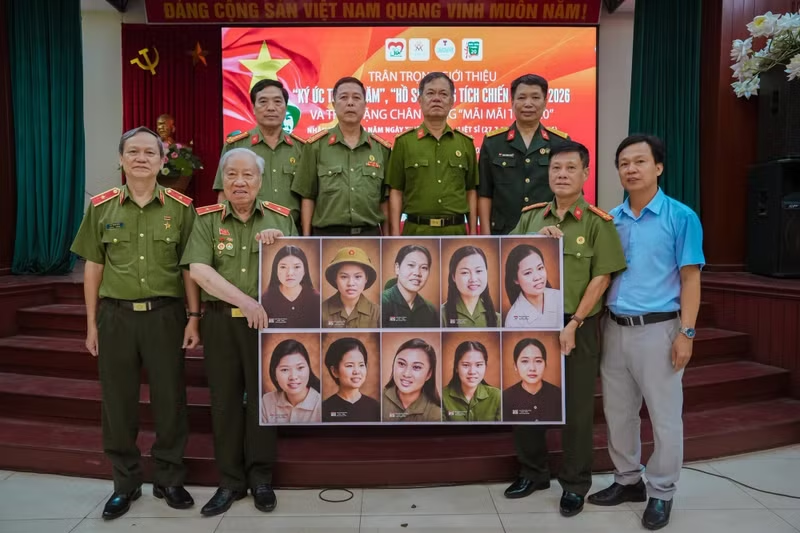
Each completed portrait is a tribute to the deceased and a source of comfort for their families and former comrades. It enables both present and future generations to see the faces of those who sacrificed their lives for the nation, thereby gaining a deeper appreciation of the value of peace, independence, and the life we enjoy today.
Q: Thank you very much!
A Culture of Remembrance — Connecting the Past with the Present: The search for, recovery, and identification of the remains of fallen soldiers is not only a political task but also a vivid expression of the Vietnamese tradition of "When drinking water, remember its source" and the nation's enduring humanitarian values. The utilisation of the War Memento Files, the connection of witnesses, the application of technology, and the sharing of stories about today's soldiers all serve a common purpose: to help restore the names of those who laid down their lives, to ease the pain of the families of fallen soldiers, and to foster a stronger sense of responsibility among today's generations to preserve historical memory and cherish the values of peace and national independence.


![[Video] Public non-business units continue restructuring by sector](https://en-cdn.nhandan.vn/images/8f440db7b9bfe62cb5397a6750a8b01bcb1d6a7feab8669317e39ec5fc7464c2615f3cb7ea7cbd4fc783acf4fc283c8e691f133ed13bdaa173083ca3c2d014af/donvi-3811.jpg.avif)