They are not only cherished cultural values but also the foundation that connects the past with the present, linking those who devoted and sacrificed themselves in the past with today's generations who continue to build and defend the Fatherland.
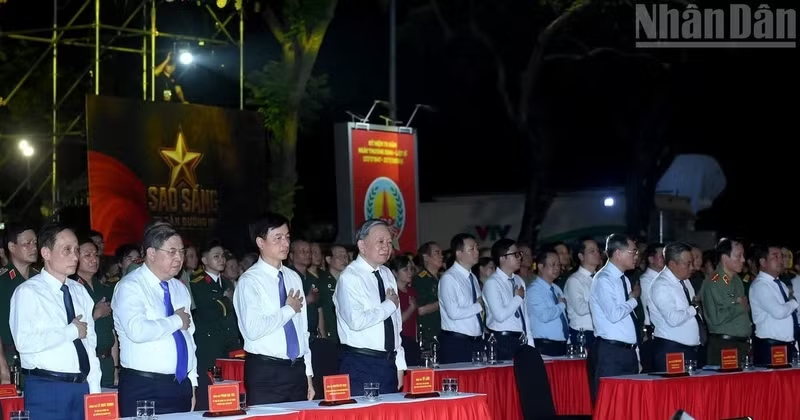
The annual commemoration of War Invalids and Martyrs' Day (July 27) provides an occasion for the entire Party, the people, and the armed forces to respectfully commemorate beloved President Ho Chi Minh, heroic martyrs, Heroic Vietnamese Mothers, war invalids, sick soldiers, and those who rendered meritorious service to the revolution. However, the significance of July 27 extends far beyond remembrance alone. More importantly, through these sacred memories of history, every Vietnamese citizen gains a deeper appreciation of the value of peace, independence, and freedom, understanding that every achievement the country enjoys today has been paid for with the immense sweat, blood, sacrifice, and dedication of generations of predecessors.
The revolutionary history of Viet Nam is an epic of patriotism and the aspiration for national independence. Under the glorious banner of the Communist Party of Viet Nam, countless generations of cadres, soldiers, and citizens endured hardship, imprisonment, and the ravages of war, willingly sacrificing their youth, personal happiness, parts of their bodies, and even their lives to protect the Fatherland and the people. Some returned bearing wounds they carried for the rest of their lives, others remain forever on the battlefields. Whether their names have been engraved on gravestones or their identities remain unknown, they have become part of the very image of the nation, enabling Viet Nam to attain the achievements, potential, international standing, and prestige it enjoys today.
In a letter of gratitude addressed to Heroic Vietnamese Mothers, heroes, war invalids, sick soldiers, relatives of martyrs, veterans, and their families on the occasion of the 79th anniversary of War Invalids and Martyrs' Day (July 27, 1947 - July 27, 2026), General Secretary and State President To Lam affirmed: "The most meaningful way to honour those who devoted and sacrificed themselves is to continue safeguarding the achievements of the revolution and to build a peaceful, independent, democratic, prosperous, flourishing, civilised, and happy Viet Nam, steadfastly advancing towards socialism. This is the solemn promise of today's generation to those who came before us, ensuring that the sacrifices and contributions of our comrades and fellow citizens will forever shine across the skies of the Fatherland, illuminating the path for the Vietnamese nation as it confidently enters a new era of development."
Over the past 79 years, the Party and State have consistently regarded the care of those who rendered meritorious service to the revolution as a steadfast policy, a political responsibility, and a vivid expression of the profoundly humanitarian nature of the socialist system. The system of preferential policies for people with meritorious service has continued to be improved, while both the material and spiritual well-being of beneficiaries has steadily increased.
To date, more than 9.2 million people with meritorious service have benefited from preferential policies and entitlements, while 99% of households of people with meritorious service enjoy living standards equal to or higher than the average level in their local communities. These figures not only reflect the effectiveness of social welfare policies but also demonstrate that the principle of "repaying gratitude" has been translated into practical actions, becoming a shared responsibility of the entire political system and society.
Campaigns such as "Repaying Gratitude" and "The Entire People Caring for Those Who Rendered Meritorious Service to the Revolution" as well as the construction of gratitude houses, gratitude funds, gratitude savings books, the sponsorship of Heroic Vietnamese Mothers, and the care of severely wounded war invalids not only provide material support but also help spread humanitarian values and strengthen the great national unity bloc. They stand as vivid evidence that the tradition of "when drinking water, remember its source" continues to be enriched every day through responsibility, compassion, and community solidarity.
Nevertheless, the journey of expressing gratitude still involves much work and requires persistent efforts. More than half a century after national reunification, around 175,000 martyrs' remains have yet to be recovered, while approximately 230,000 martyrs' graves remain unidentified. These represent immense voids that can never truly be filled in the hearts of countless families. Every mother waiting for her son, every wife waiting for her husband, and every child hoping to know where their father or uncle rests reminds us that although the war has long ended, our responsibility towards those who sacrificed their lives will never come to an end.
The "500-day campaign to intensify the search, recovery, and identification of martyrs' remains" is truly a "peacetime campaign". It is a political mission, a "command from the heart", and a continuation of the tradition of "repaying gratitude" through science and technology, responsibility, and profound appreciation.
Meaningful gratitude requires continued improvement of policies and more effective implementation. Thoroughly grasping and effectively implementing the Resolution of the 14th National Party Congress, the important directives of the Politburo and the Secretariat, together with the ordinance amending and supplementing a number of articles of the Ordinance on Preferential Treatment for People with Meritorious Service to the Revolution, should be translated into practical action programmes suited to real conditions. It is necessary not only to continue reviewing and improving policies but also to enhance healthcare services, vocational training, employment support, income improvement, and housing assistance, ensuring that people with meritorious service and their families fully and promptly benefit from the Party and State's policies.
Every policy that is implemented effectively addresses a social welfare need while strengthening public confidence and reaffirming the moral responsibility of the State towards those who devoted themselves to the Fatherland.
Looking ahead to the 80th anniversary of War Invalids and Martyrs' Day (July 27, 1947 – July 27, 2027), the prime minister's launch of the campaign to intensify care for people with meritorious service to the revolution will continue to inspire and further spread the spirit of responsibility, compassion, and the collective commitment of the entire political system and society in the ongoing journey of expressing gratitude to those who devoted and sacrificed themselves for the Fatherland.
Gratitude must become a driving force for inspiring the aspiration to develop the country in the new era. By understanding the value of peace and honouring the glorious sacrifices that made today's peace possible, younger generations will be inspired to pursue learning, work, innovation, and dedication, contributing to the building of an ever stronger and more prosperous nation for a peaceful, powerful, prosperous, civilised, and happy Viet Nam.