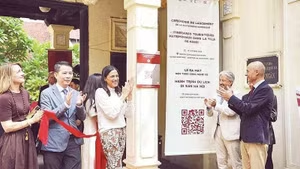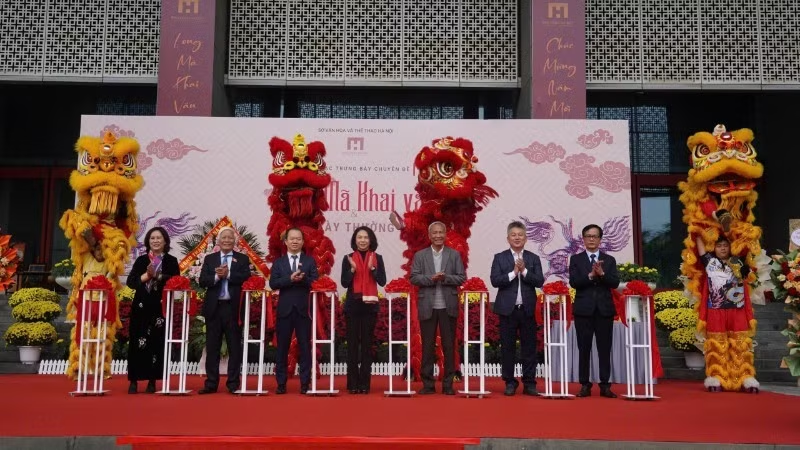
Marking the 96th anniversary of the founding of the Communist Party of Viet Nam (February 3, 1930 – February 3, 2026) and welcoming the Lunar New Year — the Year of the Horse, the Ha Noi Museum officially opened its permanent exhibition spaces to visitors and inaugurated the thematic exhibition “Long Ma Khai Van” on February 3.
In Vietnamese culture, the long ma is a distinctive mythical creature closely associated with spiritual beliefs and commonly found in decorative motifs across a wide range of settings, from communal houses and temples to ritual and worship objects.
The long ma is a composite creature, combining elements of the dragon, the qilin, and the horse.
More than a mythical animal, the long ma symbolises strength, joy, beauty, and auspiciousness.
The long ma has long served as a source of creative inspiration for artisans in many traditional craft villages across Ha Noi.
As 2026 is associated with the image of the horse, the Ha Noi Museum has selected antiques and artefacts related to the long ma motif and horse decorations in traditional fine arts to introduce to the public.
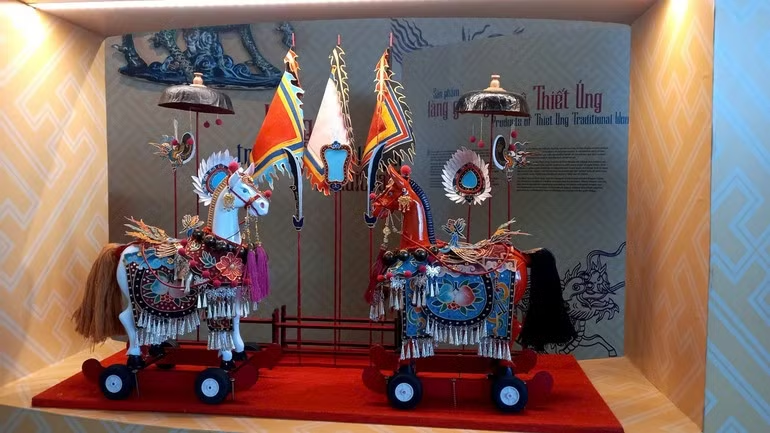
The exhibition features more than 100 documents and artefacts from the Ha Noi Museum, alongside products and artworks by artisans, contributing to the preservation and promotion of the cultural heritage passed down by previous generations.
Among them are unique objects of high aesthetic value, such as gilded and lacquered wooden long ma figures, long ma motifs rendered in ceramics and porcelain, bronze decorative long ma pieces, and horse images in mother-of-pearl inlay art.
In addition, the organisers vividly present long ma motifs as they appear in decorative elements and artefacts belonging to some of the city’s most prominent architectural heritage sites, including the Temple of Literature – Quoc Tu Giam, So Communal House, and Chem Temple.
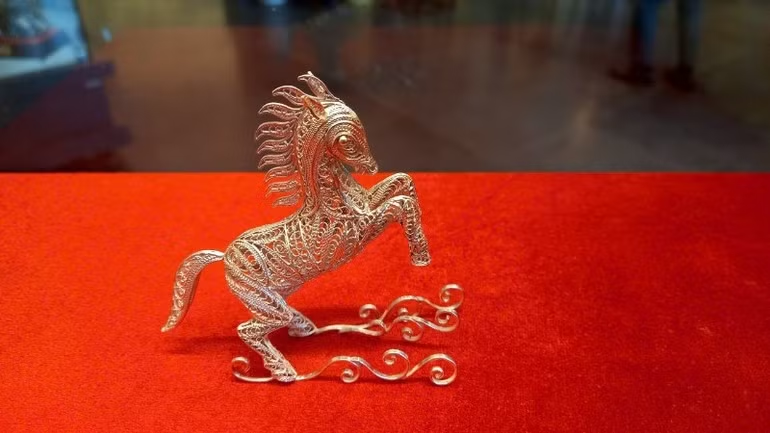
The exhibition also introduces the horse motif in the worship of Saint Giong, in the beliefs associated with the Four Sacred Temples of Thang Long, and in the cultural life of Hanoi’s residents.
The long ma and horse motifs not only appear in traditional decorative artworks but have also been developed by many craft villages into distinctive cultural industry product lines.
The Ha Noi Museum presents to the public a range of outstanding designs featuring long ma and horse imagery from craft villages such as Bat Trang Pottery Village and Dinh Cong Silver-inlay Village, as well as wood sculpture works.
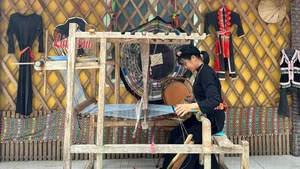
The thematic exhibition “Long Ma Khai Van” offers an opportunity for visitors to experience and explore, broadening their understanding of the long ma and horse motifs in Vietnamese culture, both past and present.