The recognition was announced by the UNESCO Committee for the safeguarding of intangible cultural heritage at its 10th meeting in Windhoek city, Namibia on December 2.
The four countries have together prepared a multi-national dossier submitted to UNESCO for the recognition of tugging rituals and games as an intangible cultural heritage of humanity.
Being popular in East Asia and Southeast Asia, tugging rituals and games are used to pray for good weather, abundant crops and prosperity.
They also aim to promote the solidarity and sense of belonging and identity among community members as well as mark the start of a new agricultural cycle.
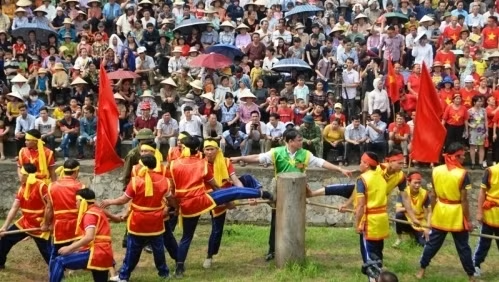
The activity is practiced in front of communal houses or shrines with two teams who hold the rattan rope at opposite ends and compete with the other by trying to pull the other team over the line.
In Vietnam, tug of war is a traditional folk game that is often organised in festivals and community activities mostly in the northern midlands, Red River Delta and North Central regions - the cradles of ancient Vietnamese civilisation.
Over the past years, tugging games in many provinces and cities, including Bac Ninh, Vinh Phuc and Hanoi, been recognised as national intangible cultural heritages.
The UNESCO honour demonstrates the appreciation of the world for the efforts of Vietnam, the RoK, Cambodia and the Philippines in actively joining in protection of this common heritage.