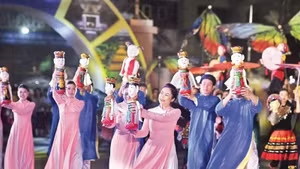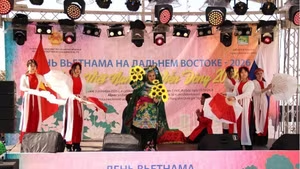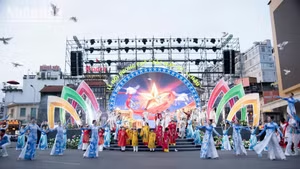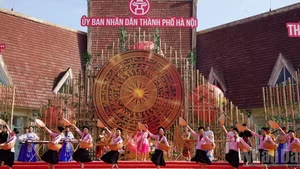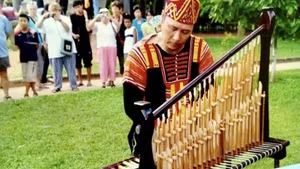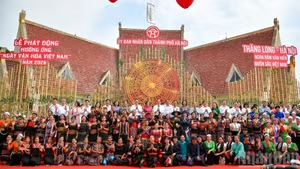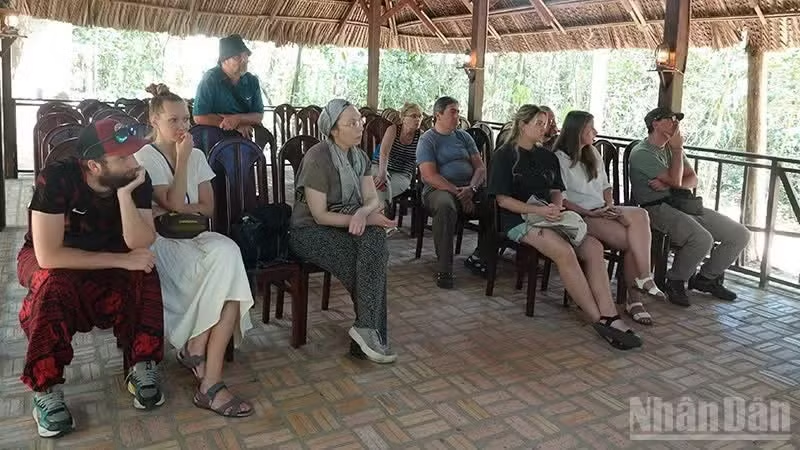
Notably, during this period, the site hosted performances showcasing the distinctive cultural art forms of the Khmer people from Ca Mau Province. The programme offered visitors unique cultural experiences such as traditional drum performances, enriching the overall sightseeing experience.
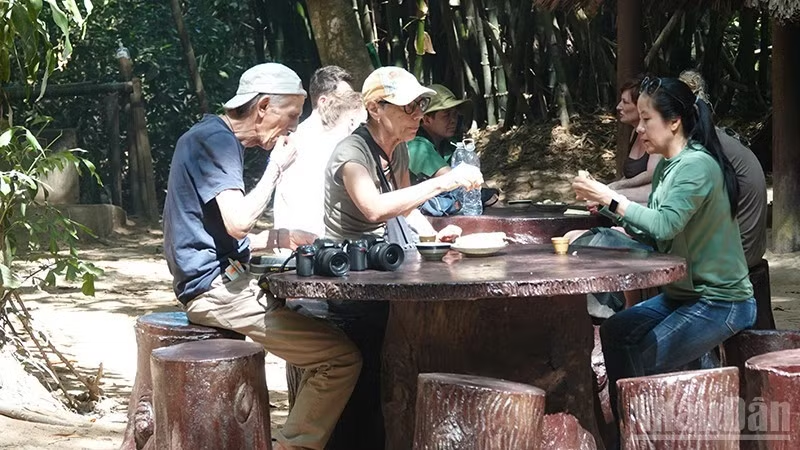
In addition, visitors enjoyed various entertainment activities at the site, including visiting to the zoo, interactive games, single-shot shooting experiences, and check-in spots featuring Hoang Sa and Truong Sa islands.
A representative of the historical site of the Cu Chi Tunnels said that it welcomed more than 11,000 visitors on April 30 alone, including over 2,000 international tourists.
In the city centre, well-known destinations such as the Independence Palace and the War Remnants Museum also drew a large number of visitors during the holiday.
According to statistics from the War Remnants Museum, nearly 7,000 visitors came on April 30, with international tourists accounting for approximately 58.3%. Many visitors from Europe, the US, and the Republic of Korea expressed particular interest in documents and images about the war and Viet Nam’s journey towards peace.
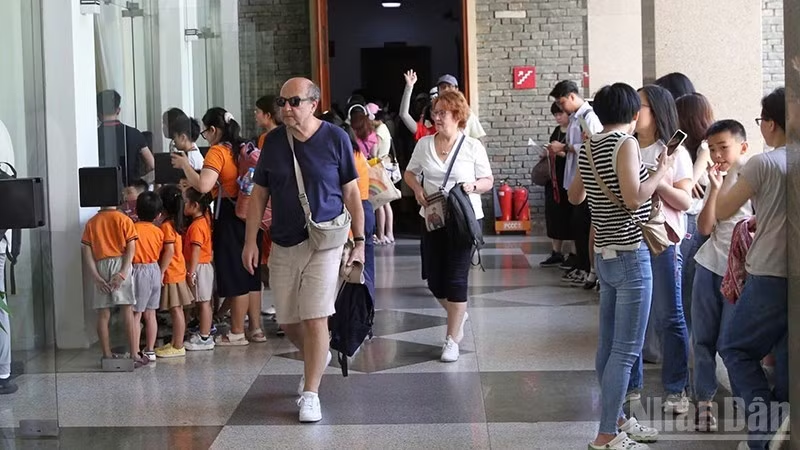
To attract visitors, the museum organised various new experiential programmes during the holiday, creating strong appeal among the public. A highlight was the art performance “Echoes of Peace”, combining piano, violin, and vocals to deliver moving melodies about the aspiration for peace.
The museum also offered VR360 experiences allowing visitors to explore Ho Chi Minh City from above, along with activities such as the “Heritage Diary” photobooth and the “Imprint of Peace” programme, conveying meaningful messages about history, peace, and freedom.
At the same time, the museum has focused on renewing both display content and formats, while strengthening experiential activities to improve service quality.
The application of technologies such as VR360 and interactive art programmes has made the museum more engaging and accessible, especially for young people and international visitors.
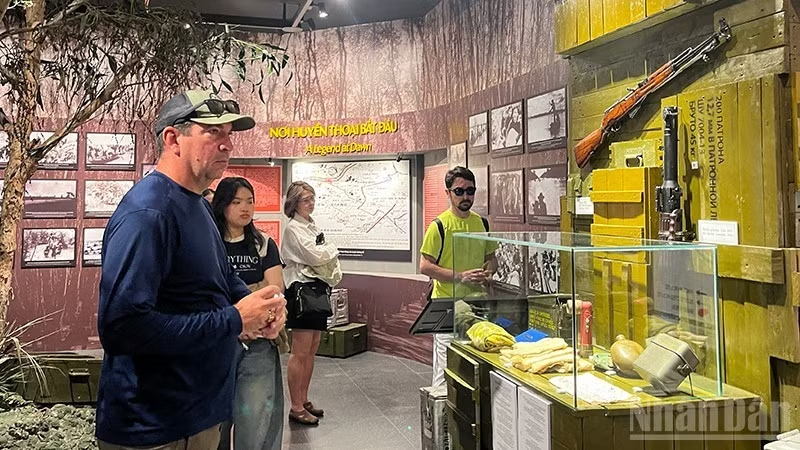
At the Reunification Hall (Independence Palace historical site), the number of visitors surged during the holiday, particularly on May 1. Many families and groups of young people and international tourists chose the site to learn about important historical milestones of the nation. Its distinctive architecture and well-preserved artefacts offer visitors vivid and authentic experiences.
In addition, other popular destinations in the centre of Ho Chi Minh City such as the Saigon Central Post Office and the Ho Chi Minh City Book Street also attracted large numbers of visitors for sightseeing and check-ins during the holiday.
According to the Ho Chi Minh City Department of Tourism, to best serve the recreational needs of residents and visitors during the holiday marking the 51st anniversary of the Liberation of the South and National Reunification Day (April 30), May Day (May 1), the summer season of 2026, and the 50th anniversary of Saigon–Gia Dinh officially being named after President Ho Chi Minh (July 2, 1976 – July 2, 2026), the city’s tourism sector has implemented stimulus programmes, diversified products and strengthened connections within the tourism service ecosystem.
Alongside traditional tourism programmes, travel companies have proactively innovated their offerings with thematic products, enhancing cultural and historical experiences in combination with high-quality services and diverse modes of exploration such as road, river, metro, sports, and creative tours.
Notable highlights include themed tours such as “Saigon Rangers”, vintage car city tours, and the “I Love Ho Chi Minh City” programme connecting the city centre with nearby destinations such as Can Gio, Cu Chi, and Binh Duong. At the same time, eco-tourism, creative tourism, and healthcare tourism products have been further developed, contributing to a richer tourism ecosystem and enhancing the city’s appeal as a destination.