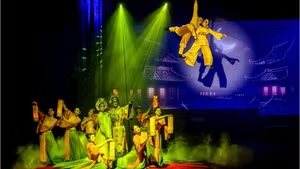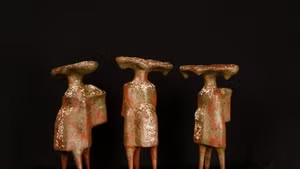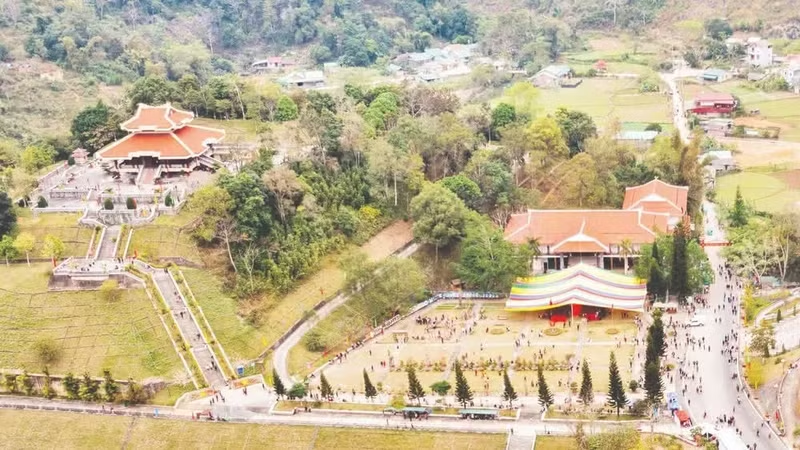
On January 28, 1941, President Ho Chi Minh returned to Pac Bo to directly lead the revolutionary movement in the country. From this place, he established the nation’s first revolutionary base, launched the movement for national liberation, and opened a decisive turning point for the Vietnamese revolution.
Returning to the cradle of the revolution
After crossing winding mountain passes and villages nestled along the hillsides amid the vast expanse of forests and mountains, the Pac Bo Special National Relic Site emerges in a peaceful and tranquil setting.
In the local language, “Pac Bo” means “the mouth of the source” — the starting point of a stream — and it is the place where the revolutionary journey of the nation began. The traces associated with Nguyen Ai Quoc’s activities at the site during his early days after returning to the homeland are still preserved almost intact.
According to guide Hoang Thi Quynh, the journey following Uncle Ho gradually unfolds through historical landmarks such as Milestone 108, the foundation of Ly Quoc Sung’s house, Coc Bo Cave, Nguom Vai Cave, and the Khuoi Nam hut. The former house of Ly Quoc Sung, now a historical relic site, was the first place where Uncle Ho stopped after crossing Milestone 108 back into Viet Nam. From there, he and revolutionary cadres moved to live and work at Coc Bo Cave from February 8, 1941 until mid-March 1941.
Eighty-five years after the day “Uncle Ho returned here, oh Fatherland”, that journey continues to be carried forward by the Party organisation, authorities, and people of Cao Bang through many creative and practical approaches. Cao Bang’s organisation of activities marking the 85th anniversary of Uncle Ho’s return to the country is both a tribute to history and a journey back to the revolutionary roots, helping nurture ideals among younger generations and spread the enduring values of Ho Chi Minh’s thought, morality, and lifestyle throughout society today.
Alongside diverse and in-depth communication activities, creative media products and emotional documentary films, one notable highlight is the development of the Ho Chi Minh Cultural Space in Truong Ha Commune into a “red address” connecting traditional education and historical experiences with cultural tourism.
According to Hoang Hong Dieu, Standing Deputy Head of the Cao Bang Provincial Party Committee’s Commission for Information, Education and Mass Mobilisation, with support and experience from Ho Chi Minh City, the space will integrate displays of documents, photographs, and artefacts about Uncle Ho’s return journey, while also applying digital and virtual reality technologies and organising experiential educational activities for pupils, students and visitors.
Cao Bang is gradually turning the journey following Uncle Ho’s footsteps into a journey of revolutionary education and inspiration for development aspirations in the new era. To achieve this goal, Hoang Hong Dieu added that the province would continue integrating the values of the commemorative activities into traditional education, political activities, mass mobilisation, and socio-cultural life.
It will also focus on developing and promoting the effectiveness of the Ho Chi Minh Cultural Space in Cao Bang, and expand digital learning materials and experiential education models such as “Following Uncle Ho Back to the Source”, thereby raising awareness and nurturing revolutionary ideals among cadres, Party members, and people from all walks of life.
A journey of renewal and aspiration to rise
Linking the values of the revolutionary cradle with present-day development requirements, Cao Bang is opening a new chapter of development: building a more prosperous homeland through innovation and a strong aspiration to rise.
To help realise that aspiration, the provincial Party Committee has focused on concretising the Resolution of the 14th National Party Congress and the Resolution of the 16th Provincial Party Congress in association with the implementation of resolutions, directives, and conclusions issued by the Party Central Committee and the province’s tasks for 2026 in line with local realities.
In the first quarter of 2026, the economy continued to maintain its growth momentum and several sectors have recorded encouraging results compared with the same period in 2025, especially industry, tourism, services, and domestic budget revenue. Total tourism revenue in the first quarter of 2026 reached 704 billion VND, up 56.4 per cent year on year.
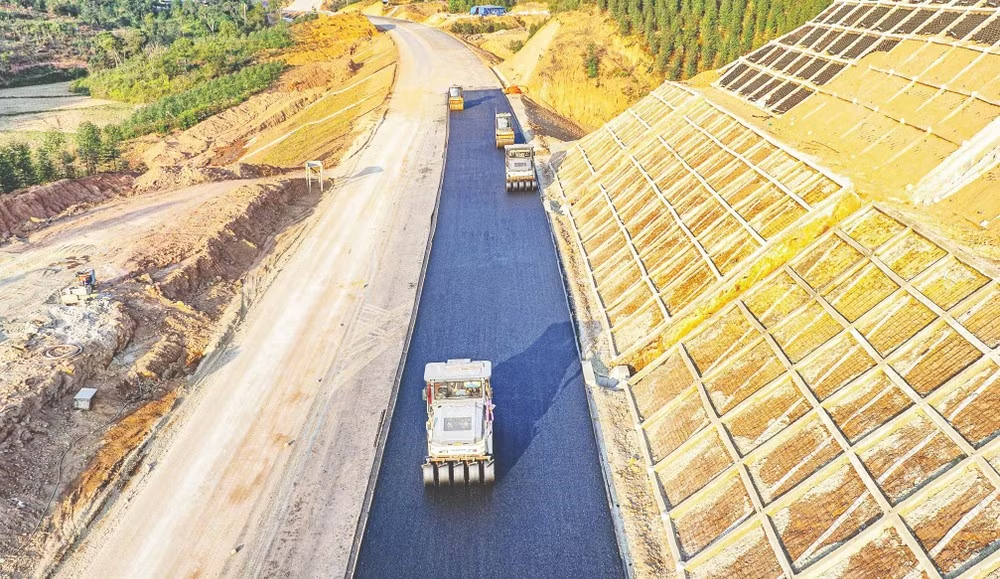
The clearest evidence of this new pace of development is the expansion of roads reaching even the most remote and isolated villages. Truong The Vinh, Deputy Chief of the Provincial People’s Committee Office, said Cao Bang is accelerating strategic transport projects, including the Dong Dang–Tra Linh and Bac Kan–Cao Bang expressways.
The province is also preparing investment in routes connecting expressways with urban centres, international border gates, key tourism destinations, and special national relic sites. At the grassroots level, the province is focusing on solidifying commune roads, aiming to asphalt or concrete at least 85 per cent of commune road lengths while also upgrading bridges spanning rivers and streams, with completion expected in the second quarter of 2026.
Cao Bang is placing strong expectations on digital transformation, innovation, and improving the quality of officials, especially at the grassroots level. According to Hoang Thi Hue, Deputy Head of the Provincial Party Committee’s Organisation Commission, Cao Bang currently has 14,347 commune-level cadres, civil servants, and public employees, more than 96 per cent of whom belong to ethnic minority groups.
Thanks to their understanding of local conditions and close ties with residents, grassroots officials are gradually adapting to modern governance requirements and applying digital technology more effectively in administration and public services.
Commune-level officials are responsible for multiple fields of work with increasing workloads and higher demands, while infrastructure, human resources, and working conditions remain limited. Nong Van Thuan, Permanent Deputy Secretary of the Party Committee of Lung Nam Commune, shared that Lung Nam is an especially disadvantaged border commune where 100 per cent of the population belongs to ethnic minority groups. Natural conditions are harsh, with frequent water shortages during the dry season.
Local officials constantly seek ways to develop the economy and encourage residents to overcome difficulties together. In remote hamlets far from the commune centre, officials still travel along mountain roads to visit households, disseminate Party policies, assist with administrative procedures, and provide technical guidance for production. Despite many hardships, local cadres remain committed to staying close to the people with the hope of improving residents’ lives.
From the revolutionary source at Pac Bo years ago, new roads are now extending to remote villages, bringing visible changes through sturdier homes and the tireless efforts of grassroots officials who remain close to the people. In this land that witnessed the revolution’s earliest days, the spirit of resilience and aspiration for progress continues to be carried forward through such everyday efforts.