Nguyen Ngoc Bich, Innovation Director, Swiss Tourism for Sustainable Development Project (ST4SD):
“Selling” cultural stories to create sustainable value
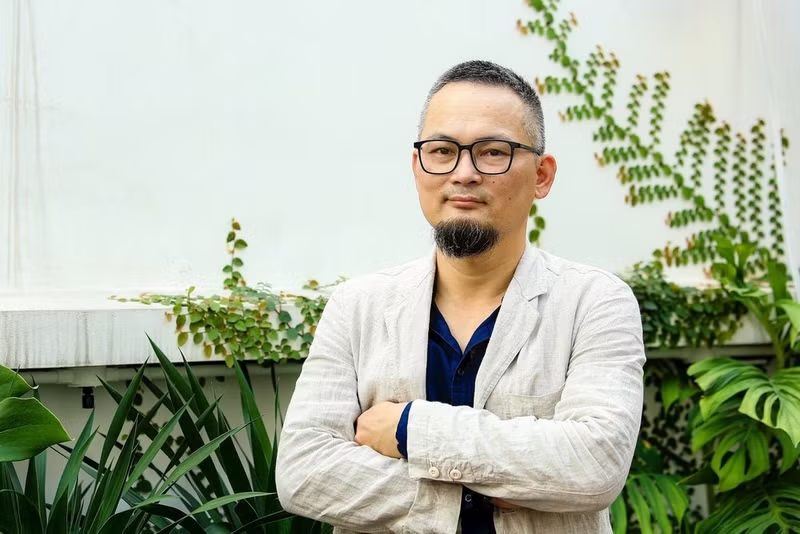
More than a decade ago, while participating in a project to develop a community-led responsible tourism model with experiential elements in a village in Hoang Su Phi District (now part of Thong Nguyen Commune, Tuyen Quang Province), we began by engaging local residents and encouraging changes in everyday habits, such as maintaining cleaner and more hygienic standards in eating, drinking, and living.
These enhanced living conditions not only benefited residents but also the demands of community-based tourism development.
The next step involved guiding and engaging residents to help them gradually recognise the cultural value embedded in their daily lives. For example, they were accustomed to weaving cloth and selling it at local markets for money. Through the project, they came to understand that the weaving process itself could generate value. Visitors could observe, participate in weaving activities, and pay for the experience.
A visitor may purchase a traditional handicraft and experience part of the production process. However, the value of that product becomes entirely different when accompanied by stories about its history and the daily lives of its creators. These stories help visitors gain a deeper understanding of the land and its people, allowing them to feel the spirit of the place.
When local communities realise that traditional culture can create new value in contemporary life, they become more motivated to preserve it. They also derive enjoyment from the process, which they naturally share with visitors. Only then do experiential activities acquire genuine value and contribute to the sustainable development of local tourism.
Today, as we continue to advise on sustainable community-based tourism models in various localities, visitor experiences remain a key focus.
From a policy perspective, we believe the role of local officials in management and coordination is critical to building sustainable tourism models. Alongside the willingness of local people to participate, grassroots officials help maintain balanced connections among different components of the local ecosystem, preserve community solidarity, and effectively manage large-scale activities and events.
At provincial, municipal, and regional levels, tourism is part of a far more complex network involving transport, environmental protection, social governance, food safety, and other sectors. We believe the time has come to develop multi-layered tourism ecosystems for each administrative level, bringing together stakeholders across sectors to share responsibilities and jointly create value while ensuring the smooth circulation of financial resources.
To “sell” an experience to visitors is not simply about selling a landscape or a specific product. It is about knowing how to “sell” the stories of local life, culture, and history, ensuring visitors remember those stories, share them with friends, family, and colleagues, and look forward to returning.
Dinh Anh Ngoc, Manager of Dine With Locals, a Vietnamese culinary experience chain for international visitors:
Cuisine connects visitors with Vietnamese culture and people

One of our most popular products is a class teaching participants how to make Vietnamese baguettes filled with pâté or assorted ingredients, alongside preparing coffee.
Participants engage with the entire process, from kneading and shaping the dough to baking the bread, preparing the fillings, and finally assembling and enjoying the finished product.
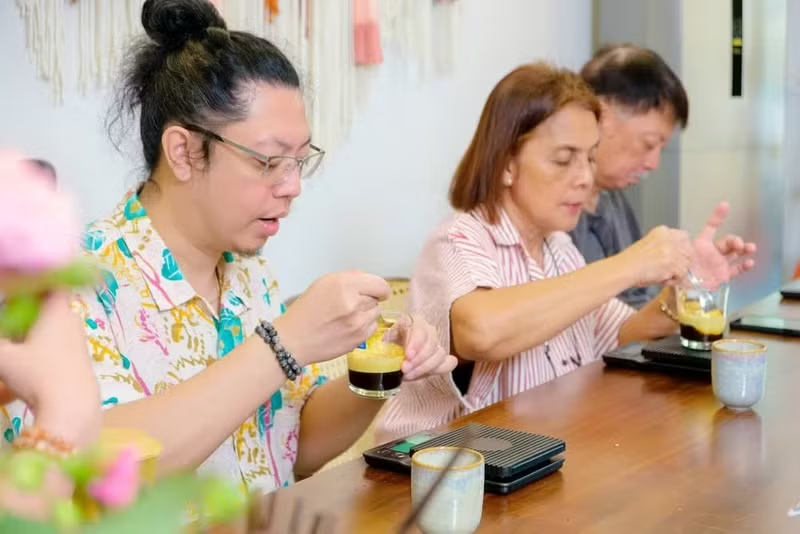
Depending on the schedule and preferences of each session, participants may also learn how to brew traditional Vietnamese drip coffee and prepare one of three signature coffee drinks: coconut coffee, egg coffee, or salted coffee. These beverages are often seen as representing the country’s three regions. This provides an opportunity for instructors to share stories about Viet Nam’s diverse cultural regions while guiding visitors through the experience.
Similarly, our Vietnamese cooking classes and family-meal workshops are designed as full-process experiences. Participants visit traditional markets, purchase ingredients with their instructor, and then return to the classroom to prepare, cook, and enjoy the meal together.
At each stage, guides share relevant stories. For example, during market visits, they explain the social interactions and community relationships maintained within traditional market spaces, along with how Vietnamese people choose seasonal produce to ensure freshness, suitability, and food safety.
We also actively research and develop various beverages and food ingredients to create distinctive flavours. The process of experimentation itself generates many interesting stories to share with visitors.
While the food and drinks produced may not always be exceptional, the genuine stories, warmth, and attentiveness of our instructors and support staff help create meaningful experiences for visitors to Ha Noi and Viet Nam.
Our experience chain has now developed 10 product models. Positive feedback from participants continues to inspire and motivate us to expand our culinary tourism offerings, thereby contributing to the preservation of Vietnamese culture.
In reality, most visitors want to learn more about Vietnamese culture, history, and daily life through these classes rather than simply acquiring cooking skills or filling spare time during their stay in Ha Noi. Some guests even enrol in additional classes within the same experience series after completing their first session.
Painter Tran Cong Dung:
Significant potential remains for developing craft-village tourism experiences

My lacquer workshop in Ha Thai Lacquer Village in Ha Noi has been offering lacquer-making experiences to French visitors since 2015. Over the years, the workshop has become increasingly well known among both domestic and international visitors. Several schools have also selected it as a destination for educational visits and hands-on learning experiences.
A traditional lacquerware product requires numerous stages of production and a high level of skill and experience. Visitors participating in the experience complete one of the final stages by inlaying eggshell pieces into pre-designed patterns under my guidance before taking the finished piece home.
This process requires patience and attention to detail and is by no means easy, particularly for people who live in highly modern societies with little exposure to handicrafts.
Before the hands-on activity, visitors receive introductions from me and other guides about the history of traditional Vietnamese lacquer art and observe examples displayed throughout the workshop.
The popularity of this experience has provided the workshop with a stable source of income. This has enabled me to expand the space and create multiple smaller areas for designing and displaying a diverse range of products, including my own graphic artworks, thereby enriching visitors’ visual experiences.
Since April 2026, I have expanded this model to Chuyen My Mother-of-Pearl Inlay Craft Village. The area offers beautiful rural scenery that adds a different aesthetic dimension to visitors’ experiences.
Local authorities have invested systematically in community tourism development, placing particular emphasis on visitor experiences. I have also designed the space around a traditional Vietnamese wooden house, creating a warm and peaceful atmosphere for visitors.
In reality, there remains enormous potential for developing experiential tourism linked to traditional craft villages, but this requires collaboration among many stakeholders.
First, artists and designers should work more closely with craft villages to improve product design, increase product value, and meet the aesthetic expectations of diverse visitor groups.
On-site shopping opportunities should also receive greater attention. This requires stronger cooperation among local stakeholders and travel companies to design tours that encourage visitors to spend more time exploring craft villages.
In my view, experiential tourism in craft villages does not need to be something grand or complicated. Sometimes, visitors simply want to immerse themselves in an ordinary setting filled with warmth, comfort, and pleasant things to see.