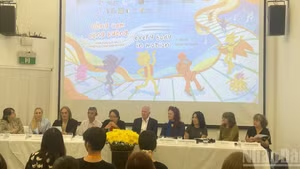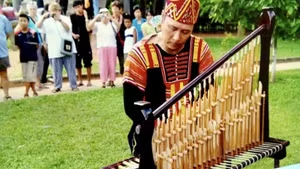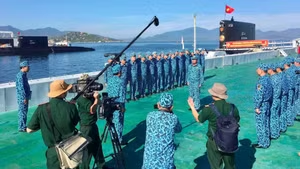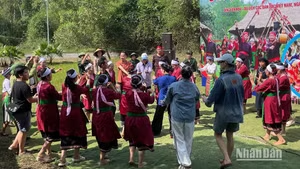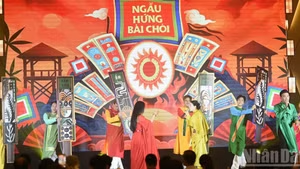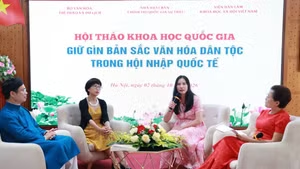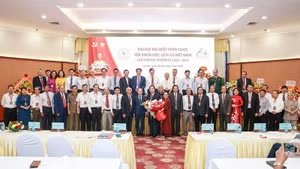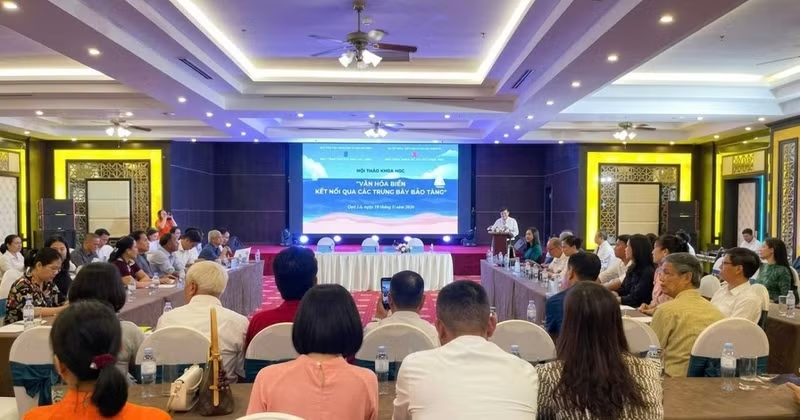
The workshop has been jointly organised by the Viet Nam Museum of Ethnology and the Nghe An – Nghe Tinh Soviet Museum in Cua Lo Ward, Nghe An Province.
In his opening remarks, Deputy Director of the Nghe An Provincial Department of Culture, Sports, and Tourism Bui Cong Vinh stressed that marine culture serves as a connecting thread and an important foundation in the lives of coastal communities. Therefore, preserving and promoting marine cultural values through exhibitions and digitalisation activities has become an urgent requirement. This workshop carries practical significance, helping gather expert opinions to raise awareness and propose strategic solutions for the future.
In his keynote report, Associate Professor Dr Le Hai Dang noted that the workshop carried profound significance in linking scientific research with museum educational activities. The event also affirmed that museums are not merely academic spaces, but places where the past is placed in dialogue and vivid interaction with the present.
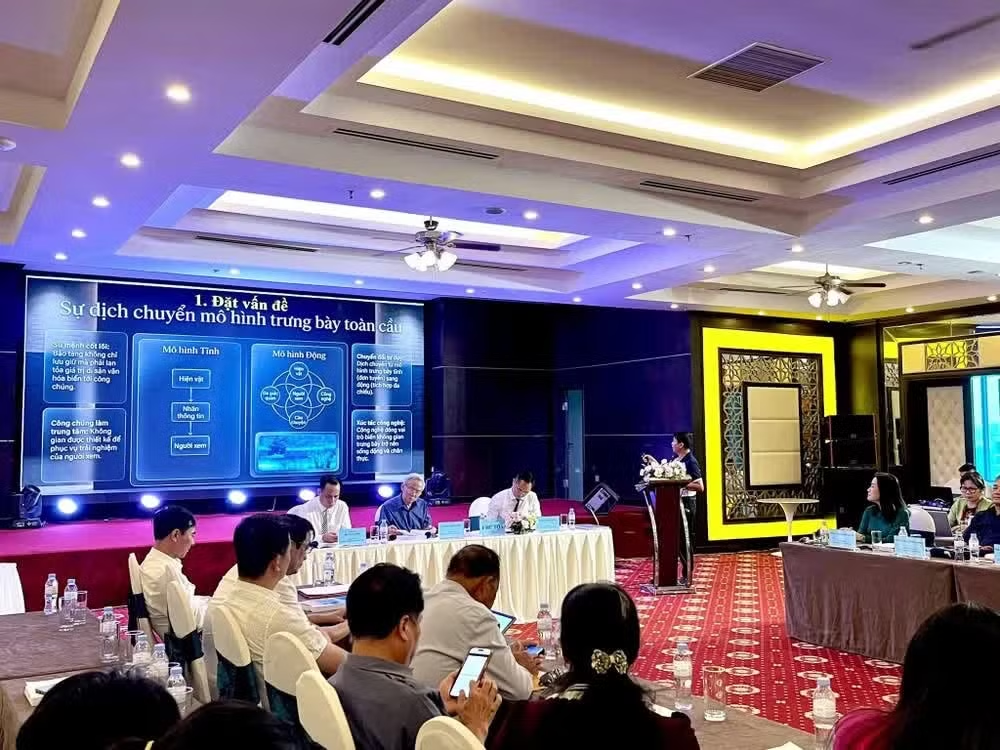
The workshop was organised into two thematic sessions. The first focused on theoretical and practical issues, as well as international experiences relating to marine culture. Presentations highlighted the role of marine culture in the process of nation-building and development, the creation of specialised exhibition spaces on seas and islands, the promotion of documentary heritage related to Viet Nam’s sovereignty over the Hoang Sa (Paracel) and Truong Sa (Spratly) archipelagos, and innovative exhibition practices from international museums.
The second session centred on digital transformation and orientations for preserving and developing marine culture in the new context. Presentations analysed the current state of digital technology application in museum activities, while proposing various solutions such as digitising artefacts, creating interactive experiential spaces, applying virtual reality (VR) and augmented reality (AR), and developing digital museums and shared data ecosystems.
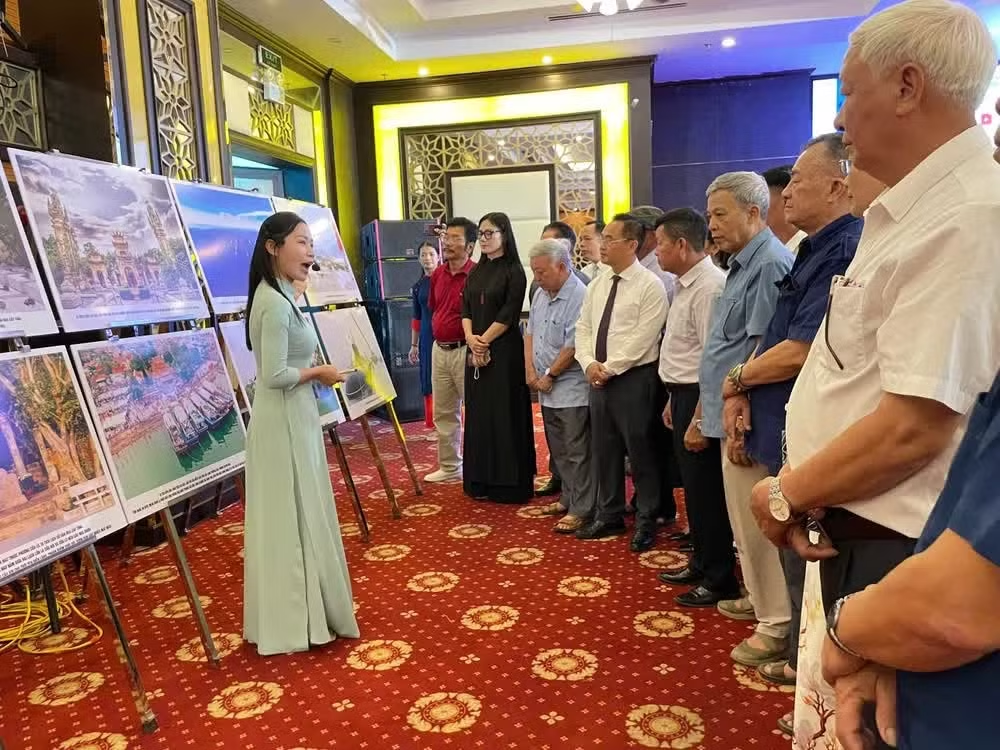
In addition to the thematic presentations, the discussion session recorded many insightful exchanges. Delegates agreed that in the context of contemporary museology, museums should move away from approaches primarily based on displaying artefacts towards models of heritage interpretation through stories connected with people and communities. Accordingly, collective memory, folk knowledge, beliefs, customs, and the livelihoods of coastal residents should be regarded as important sources of materials and resources for creating interactive, multidimensional, and vibrant exhibitions.
Many proposals were also put forward to improve the preservation and promotion of marine cultural values, emphasising the need to strengthen in-depth research, develop shared databases, enhance links between central and local museums, and promote the role of museums as spaces for heritage education. Such efforts would help foster awareness, patriotism, and a sense of responsibility towards the nation’s seas and islands among younger generations.
In his concluding remarks, Associate Professor Dr Lam Ba Nam highly praised the quality of the presentations and academic exchanges at the workshop. He affirmed that marine culture holds a particularly important place in Viet Nam’s historical and cultural development, and that efforts to research, collect, preserve, and exhibit marine cultural values should be further promoted through stronger cooperation among research institutions, museums, local authorities, and communities.