Preserving distinctive national values in the digital age
In today’s era of deep international integration, cultural identity serves both as armour against assimilation and as a defining marker of national character. The greatest challenge in managing culture online is safeguarding those distinctive features that embody national identity. These values form the bedrock of innovation and creativity, transforming intangible heritage into tangible products that enrich spiritual life while generating economic benefits.
Vietnamese culture is no longer confined to restoration and preservation but is increasingly viewed as an ecosystem of creativity, digitisation, and technology. The Politburo’s Resolution No. 57-NQ/TW on breakthroughs in science, technology, innovation, and national digital transformation has breathed new life into cultural development. Technology has become essential infrastructure, a lever driving cultural creativity.
The Politburo’s Resolution No. 57-NQ/TW on breakthroughs in science, technology, innovation, and national digital transformation has breathed new life into cultural development. Technology has become essential infrastructure, a lever driving cultural creativity.
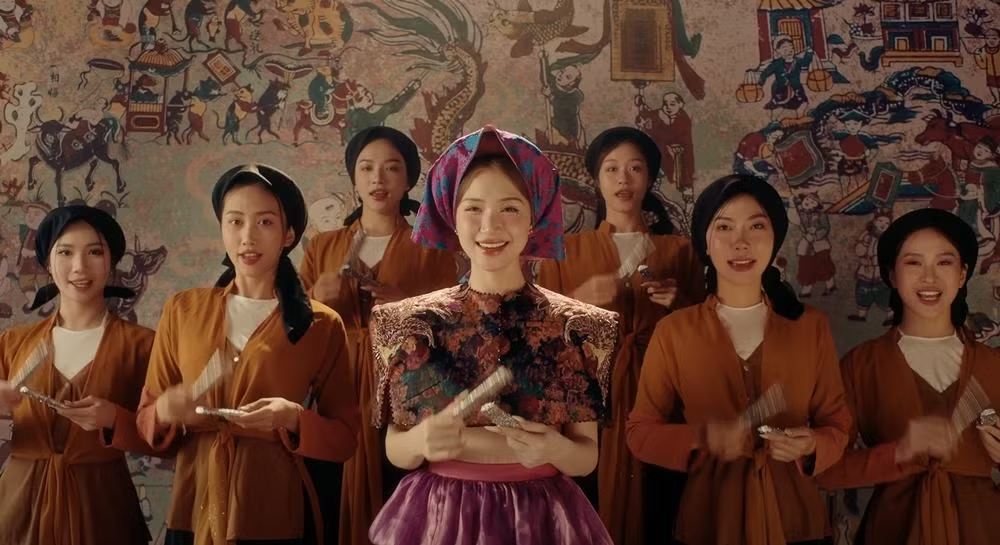
With the boundless expansion of cyberspace, not only intellectuals and artists but also ordinary citizens can participate in the cultural marketplace by creating and publishing content. Thanks to digital platforms, works reflecting Vietnamese identity have reached millions at home and abroad, such as music videos including Bac Bling by Hoa Minzy, Phu Dong Thien Vuong by Duc Phuc, and See Tinh by Hoang Thuy Linh.
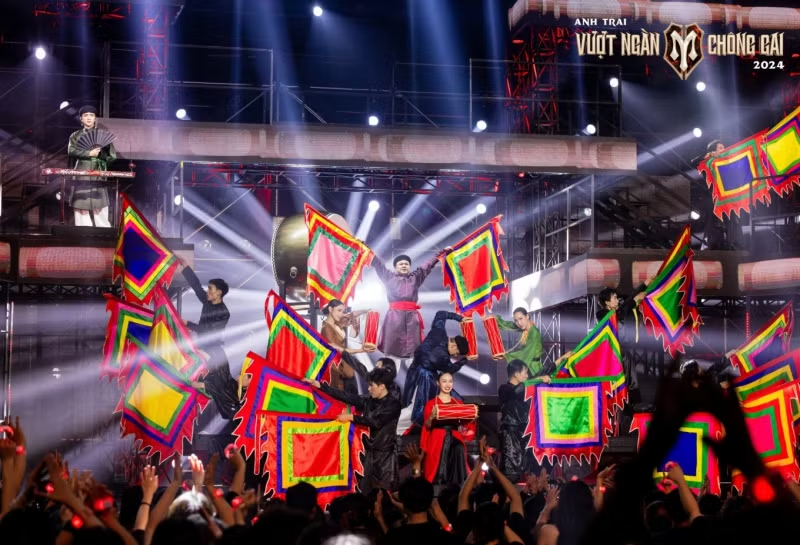
Commemorative programmes marking the 50th anniversary of national reunification, the 80th anniversary of National Day, cultural festivals, and music events have harnessed modern technology to showcase traditional culture, delighting audiences and spreading widely online.
Many heritage sites have been restored, turning static values into vibrant ones infused with contemporary relevance. Technology is likened to a “motorway” transporting people back in time to rediscover ancestral beauty.
Yet, alongside these achievements, distortions and anti-cultural content persist in the digital environment. Offensive and extremist material that misrepresents history, glorifies foreign cultures, or undermines national values continues to exert a negative influence on society.
This situation arises from several causes, notably herd mentality, trend-chasing, and the pursuit of likes and views by so-called “online idols”. A lack of cultural knowledge and legal awareness among some social media users, including both creators and consumers, also contributes. In serious cases, authorities have intervened to remove harmful content and sanction violators.
Building cultural resilience through digital literacy
The Politburo’s Resolution No. 80-NQ/TW on cultural development stresses that “developing culture and people is the foundation, an important endogenous resource, a great driving force, pillar, and regulatory system for the country’s rapid and sustainable development”. Embedding cultural elements throughout the digital ecosystem is therefore essential.
Digital literacy is inseparable from the protection of cultural identity online. Citizens equipped with technological knowledge who can evaluate, verify, and use information responsibly are more likely to engage constructively on social media. Digitally literate citizens are the cornerstone of preserving Vietnamese cultural identity in cyberspace.
Strengthening cultural resilience must begin with education and training. Instilling national pride, cultural knowledge, responsibility in speech and behaviour, and a spirit of innovation in the younger generation will shape their online conduct, itself an expression of Vietnamese identity.
National cultural identity, understood as a system of foundational values, must be thoroughly analysed and defined through education and communication to raise public awareness. This is a strategic task tied to cultural sovereignty, enhancing national soft power, and Viet Nam’s proactive integration in the new era.
Digital literacy provides the foundation, while cultural knowledge acts as a shield, enabling citizens to distinguish and select appropriate values to enjoy and practise creatively. It also empowers them to identify harmful trends and voice reasoned opinions to defend national identity.
Dr Nguyen Thi Tuyet Nhung of Viet Bac College of Culture and Arts argues that in the current digital transformation context, human development must go beyond specialist training to foster cultural autonomy, information literacy, and awareness of preserving national identity.
Knowledge of digital humanities, media ethics, discourse analysis, and digital heritage should be integrated into curricula from primary to university level. This is not merely about updating content but about creating a “cultural filter” for future generations.
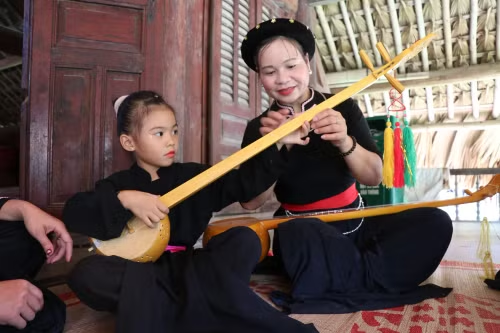
Only when equipped with both technological competence and humanistic depth will young people confidently become responsible creators who preserve and protect national identity in the global online space.
In today’s digital society, safeguarding cultural identity requires strong involvement from humanities scholars. Social science and humanities knowledge must serve as the operating system for ideology, guiding the construction of Vietnamese identity online.
National cultural identity, understood as a system of foundational values, must be thoroughly analysed and defined through education and communication to raise public awareness. This is a strategic task tied to cultural sovereignty, enhancing national soft power, and Viet Nam’s proactive integration in the new era.
Authorities must refine the legal framework and codes of conduct to swiftly prevent content that infringes national values, while also encouraging and incentivising citizens to contribute to the creation and dissemination of Vietnamese cultural identity online.