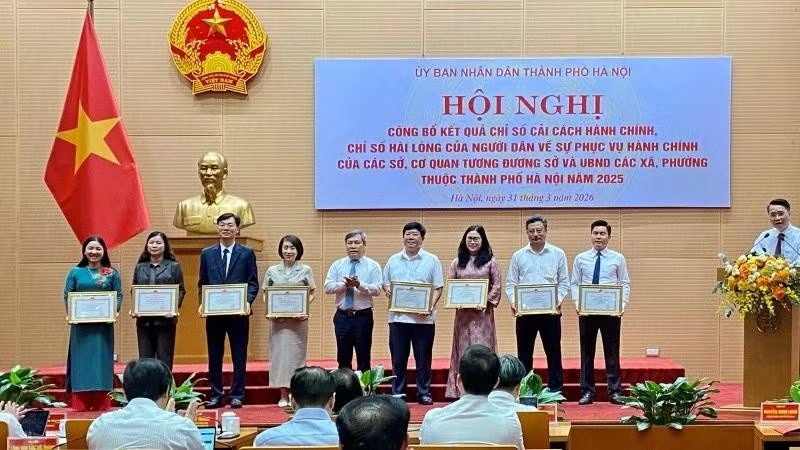
According to the Ha Noi Municipal Department of Home Affairs, the annual announcement of the Administrative Reform Index and the SIPAS has become one of the city’s key activities, contributing to a comprehensive assessment of the performance and service quality of state administrative agencies.
The 2025 Administrative Reform Index set of the city was developed with a stronger focus on quantifiable and outcome-based criteria. Specifically, compliance-based indicators have been reduced or removed and replaced by criteria that assess actual results and reflect Ha Noi’s specific characteristics.
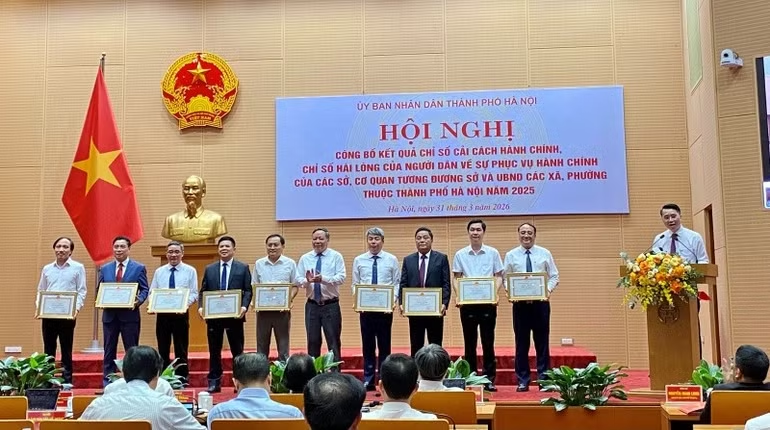
The average Administrative Reform Index for departmental-level agencies in 2025 reached 92.20%, marking an increase of 5.65 percentage points compared to 2024. Notably, several component indices recorded significant improvements, including organisational restructuring (up 8.08%) and direction and administration (up 5.24%), among others.
Out of the 16 departmental-level agencies assessed, 11 were rated Grade A (accounting for 68.75%), indicating that many bodies have effectively maintained administrative discipline while proactively pursuing reform and innovation.
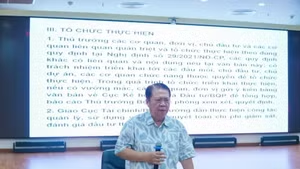
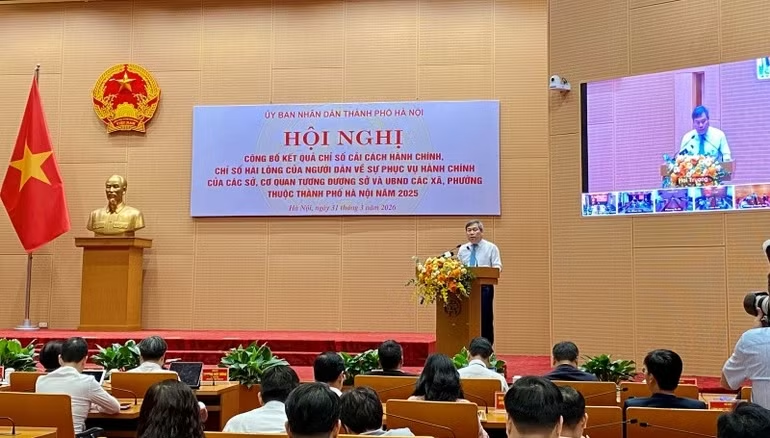
Delivering remarks at the conference, Vu Dai Thang, Chairman of the Ha Noi People’s Committee, commended the achievements of agencies and units. However, he also candidly pointed out that administrative reform efforts still face several shortcomings and limitations.
The chairman called on agencies at all levels to further strengthen administrative discipline and accountability, while enhancing the role and responsibility of leaders.
He stressed the need to closely link administrative reform outcomes with performance evaluation, classification, and emulation and commendation systems, as well as to resolutely and strictly handle cases of avoidance, buck-passing of responsibility, and any actions that cause inconvenience to citizens and businesses.
Agencies and units are required to focus on implementing reforms in a substantive manner across core areas; continue streamlining organisational structures and improving the quality of the workforce; and accelerate comprehensive, results-oriented digital transformation.
All tasks must be clearly defined in terms of deliverables, with measurable indicators and specific deadlines.
In addition, it is crucial to further innovate methods of direction and administration in a more scientific, transparent, and effective manner.
Based on the results of the 2025 Public Administration Reform Index, ministries, agencies, and units are required to conduct thorough reviews, analyses, and comprehensive assessments. On that basis, they should formulate plans to improve the 2026 Index and that of subsequent years, while ensuring that evaluations are substantive, objective, and closely linked to measurable outputs.




![[Infographic] Key points from General Secretary and President To Lam’s opening remarks at the 14th PCC’S 4th plenum](https://en-cdn.nhandan.vn/images/j0QNt7m_5iy1OXpnUKiwG61aYhTv_B140GWhfriF26JwZbNNJ8LWetfvXUhz4Az6/1-8220.jpg.avif)