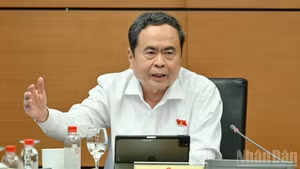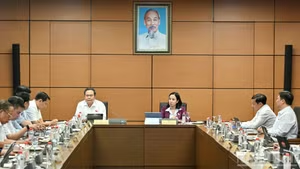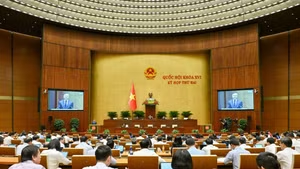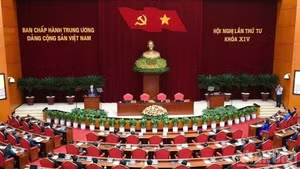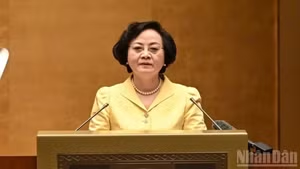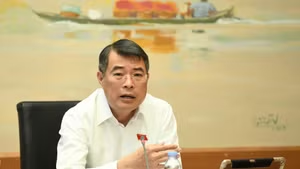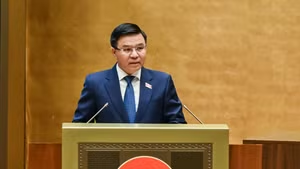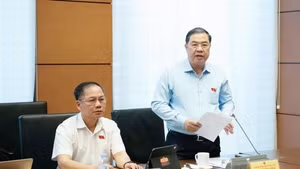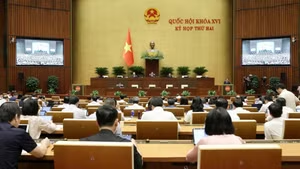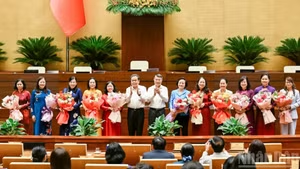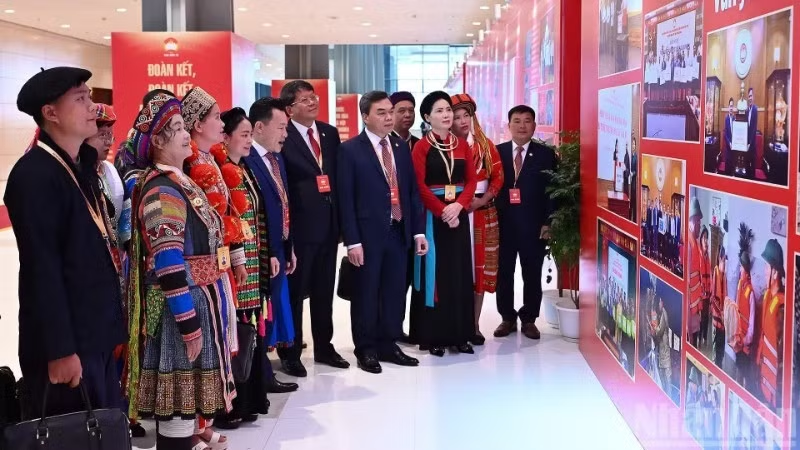
Attending the Congress were 1,136 official delegates representing social strata, ethnic groups, religions, armed forces, overseas Vietnamese communities, and Fatherland Front officials at all levels.
The 11th National Congress of the Viet Nam Fatherland Front carries special significance as the first great national unity festival after the arrangement of socio-political organisations under the “common roof” of the Fatherland Front.
On the sidelines of the Congress, Lo Thi Nga, born in 2003, of Lao ethnicity, living in Muong Luan 1 Village, Muong Luan Commune, a delegate from Dien Bien Province and the youngest delegate at the Congress, expressed her wish that the government and relevant ministries and sectors would consider researching and issuing additional preferential recruitment and start-up support policies for young ethnic minority people in their localities.
Attention should be paid to creating more opportunities for university graduates and accompanying young entrepreneurs, not only to develop socio-economic conditions, but also to build the foundation for the great national unity bloc.
As a representative individual of the Ha Nhi ethnic group, delegate Ly Gia So, Deputy Head of the Culture and Social Affairs Committee of the People’s Council of Y Ty Commune, Lao Cai Province, stated that he would strive to propagate and encourage local people to properly implement the Party’s guidelines and the state’s policies and laws, preserve traditional cultural values, and join hands in building prosperous, civilised, and united villages and hamlets.
People in mountainous areas always hope for more opportunities to access education, employment, and science and technology, especially policies supporting livelihoods and sustainable poverty reduction.
Delegate Do Thi Hien, Chairwoman of the Thai Nguyen Provincial Federation of Labour, stated that in order to ensure better care for the people in general and ethnic minority communities in particular, socio-political organisations, especially provincial-level labour federations, need to provide decisive and focused direction and pay greater attention to grassroots trade unions.
In addition, digital transformation and the use of social media and the internet to guide information and public opinion at the grassroots level also need to see regular and extensive implementation.