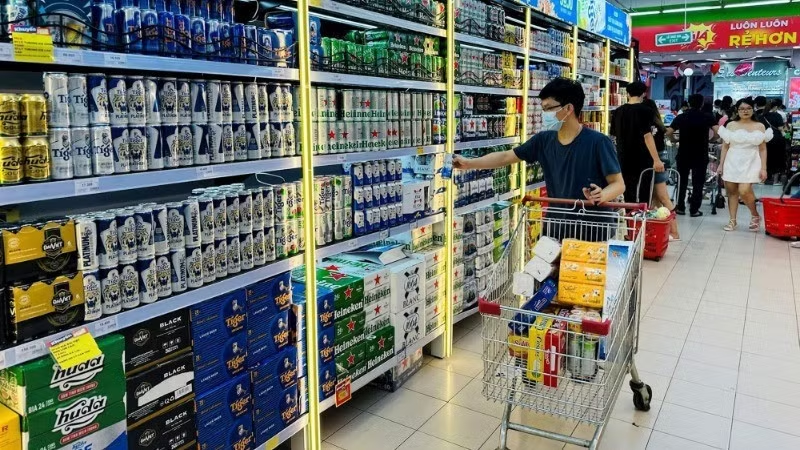
The results reflect recovering consumer demand, a stable domestic market, and positive momentum from year-end demand-stimulus programmes.
Ha Noi’s average consumer price index (CPI) for the 11-month period increased by 3.61% year on year, a rate within the acceptable threshold and broadly aligned with inflation-control targets. In the context of global economic volatility, cyclical rises in energy prices and input materials, keeping CPI below 4% demonstrates the city’s effective price-management capacity.
Essential goods such as food and foodstuffs saw only moderate price increases thanks to stable supply sources and proactive market regulation by competent authorities. During peak consumption periods such as holidays and the Lunar New Year, the city implemented price-stabilisation programmes and supply–demand connection initiatives to prevent hoarding and price gouging.
In addition, the expanding distribution network has helped goods reach consumers more quickly, thereby mitigating the risk of localised price hikes.
However, non-food groups, particularly transport, housing and construction materials, healthcare, and education, continued to show upward price trends due to rising service costs and global fluctuations. Increases in international fuel prices pushed up transport costs, while higher labour costs in urban services drove price pressures across various goods and services.

To keep CPI under control in the coming period, Ha Noi needs to focus on several key priorities: ensuring sufficient supply of essential goods; reducing logistics costs by developing modern reserve and distribution centres; flexibly managing price-stabilisation schemes; strengthening inspections to curb hoarding and speculation; and improving price transparency. At the same time, the city must continue to enhance the housing market and urban services to reduce cost-push pressures.
In the long run, the capital should develop a price-forecasting system based on big data to enable more proactive market management. When prices remain stable, consumer confidence is safeguarded, supporting more efficient production and business activities and laying the foundation for the sustainable development of Ha Noi’s economy.













![[Video] Resolution No. 10 repositions FDI in Viet Nam's new development strategy](https://en-cdn.nhandan.vn/images/5992a12dd6e78b9bfb434962ff1830731c3ef6c1538d722fbb2593b0fa31ecfea73ea406e335bb4f889623e75863a3fa5de1ba084f5b1db0b5788c84a44f1d4c/anh-dai-dien.jpg.avif)