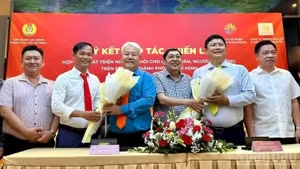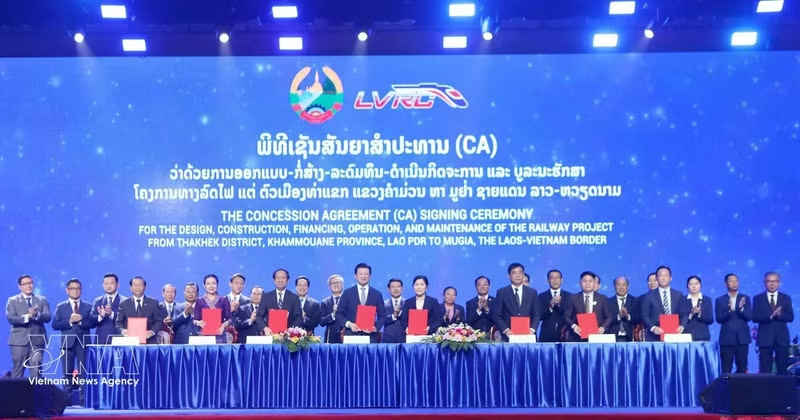
Speaking at the signing ceremony in Vientiane on March 31, Lao Minister of Public Works and Transport Leklay Sivilay affirmed that the railway project is a key national one that will help Laos realise Resolution No. 04 of the Central Committee of the Lao People's Revolutionary Party on building an independent and self-reliant economy. The project also contributes to the implementation of the country’s 10th five-year national socio-economic development plan, particularly the goal of strengthening regional and global integration to facilitate production, services, trade and investment.
The project will help transform Laos from a landlocked into a landlinked nation, with access to the sea through Viet Nam’s Vung Ang port, and a future connection linking Viet Nam, Laos, China and Europe via the Laos–China railway.
Sivilay stressed that in the future, the Laos–Viet Nam railway will stand as a symbol of cooperation in a new era, further strengthening the great friendship, special solidarity, comprehensive cooperation and strategic cohesion between the two countries.
As a strategic project backed by both governments and listed as a priority in bilateral cooperation, the Laos–Viet Nam railway has a planned total length of around 562 km. The section from Thakhek to Mu Gia is set to span 147 km.