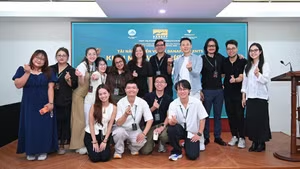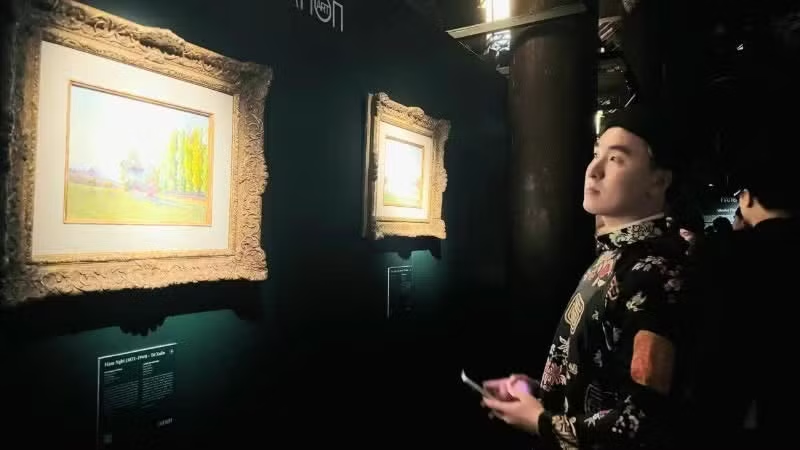
The bilingual art magazine Art Nation, the French Institute in Viet Nam, and the Van Mieu–Quoc Tu Giam Centre for Cultural and Scientific Activities jointly opened an exhibition of Emperor Ham Nghi’s paintings under the theme “Troi, Non, Nuoc | Allusive Panorama” at the Van Mieu–Quoc Tu Giam historical site (Ha Noi) on the evening of April 23.
Emperor Ham Nghi (1871–1944) ascended the throne at a time when French colonial forces were gradually occupying the country. He issued the Can Vuong Edict in an effort to mobilise resistance against the French.
He was later captured and exiled to Algeria, where he remained until his death. During his years of exile there, Emperor Ham Nghi quietly nurtured his dream of returning to his homeland and turned to painting as a means of expressing his inner feelings.
His works convey a wide range of emotions and states of mind. They are considered to have ushered in the dawn of Indochinese fine arts and to mark the opening chapter of modern Vietnamese art.
Previously, an exhibition of his paintings was held at Kien Trung Palace in the Hue Imperial Citadel in March 2025, attracting 110,000 visitors.
Meeting international exhibition standards, this is the first large-scale exhibition of Emperor Ham Nghi’s artworks to be held in the capital, featuring 20 pieces drawn from 10 private collections.
The works have been repatriated, appraised, preserved, and restored by leading experts, and are co-curated by art researcher Ace Le and Dr Amandine Dabat — a fifth-generation descendant of Emperor Ham Nghi and author of the book Ham Nghi – Exiled Emperor, Artist in Algiers.
The event will also include exchanges and panel discussions with experts on the journey of repatriating the artworks, while also reassessing Emperor Ham Nghi’s role in the trajectory of Vietnamese art history.
Speaking at the opening ceremony, Le Xuan Kieu, Director of the Van Mieu–Quoc Tu Giam Centre for Cultural and Scientific Activities, said: “An art event on the scale of “Troi, Non, Nuoc | Allusive Panorama” makes an important contribution to transforming heritage sites into distinctive creative spaces. Displaying the former emperor’s works at Van Mieu–Quoc Tu Giam is a tribute to the intellectual values that have always been cherished throughout the nation’s history. We believe the exhibition will turn the site into a cultural destination for the public during this holiday period, continuing to nurture the flow of cultural heritage.”