Emulation movement unleashes solidarity and creativity across the sector
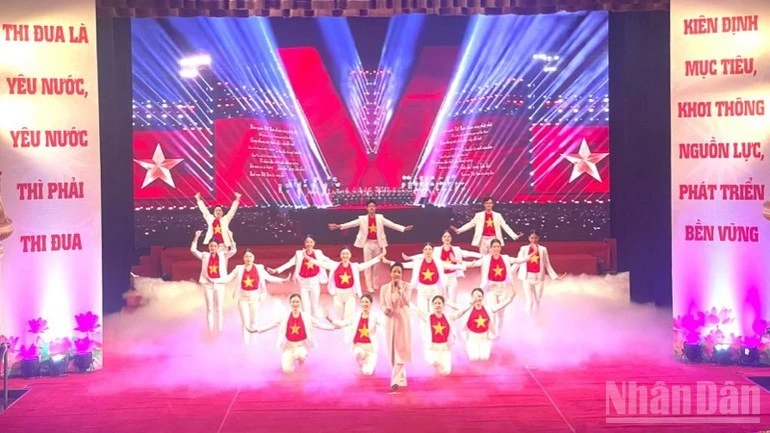
This tradition was clearly affirmed in the report presented at the 4th Patriotic Emulation Congress of the Ministry of Culture, Sports and Tourism. According to the report, the 2020–2025 period witnessed unprecedented difficulties and challenges, particularly due to the prolonged impact of the Covid-19 pandemic. However, with solidarity, proactiveness, and creativity, emulation movements across the sector were implemented in a synchronous and substantive manner, producing clear improvements in all fields.
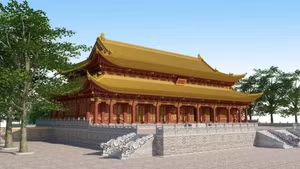
State management of culture continued to be strengthened, while numerous major projects, strategies, and programmes were developed and implemented, such as the Strategy for Cultural Development to 2030, the Strategy for Vietnamese Family Development, and the Planning for the System of Grassroots Cultural Institutions. Efforts in preserving and promoting cultural heritage achieved remarkable results, especially in preparing dossiers and welcoming new UNESCO World Heritage recognitions, further affirming the status and appeal of Vietnamese culture on the international stage.
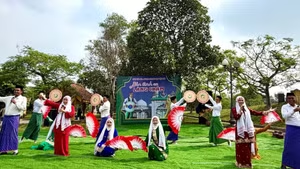
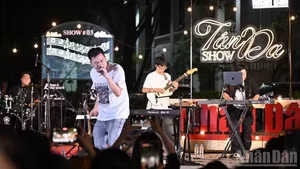
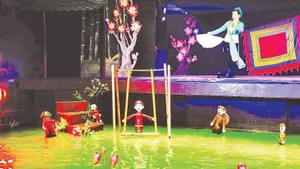
In performing arts and cinema, many large-scale, meticulously staged works were produced and achieved notable success at domestic and international festivals. The movement “Building a Cultural Environment in Agencies and Units” was implemented comprehensively, contributing to improvements in professional ethics, a stronger sense of responsibility, and better service attitudes among officials and civil servants across the sector.
Over the past five years, Vietnamese sports have continued to affirm their position in regional and continental arenas. The tourism sector has gradually and strongly recovered after the pandemic, welcoming more than 16 million international visitors in 2024, becoming one of the fastest-recovering destinations in the region. Notably, in 2025, Vietnamese tourism recovered and made a breakthrough with impressive growth indicators; in the first 10 months of 2025 alone, nearly 17.2 million international visitors were welcomed and tourism revenue reached 858 trillion VND. These results are evidence of the tireless efforts of the collectives and individuals at the forefront of the patriotic emulation movement — outstanding contributors honoured at this Congress.
Affirming the role of patriotic emulation as a driving force in the new period
Speaking at the 4th Patriotic Emulation Congress of the Ministry of Culture, Sports and Tourism, Nguyen Van Hung, Minister of Culture, Sports and Tourism, emphasised that patriotic emulation must thoroughly embody President Ho Chi Minh’s teaching: “to emulate is to love the country, and loving the country requires emulation.” In the context of the nation’s demand to revitalise and develop culture in the digital era, patriotic emulation remains an essential spiritual and material driving force for promoting strong innovation in thinking, management approaches, and task implementation across the sector.
The minister affirmed that the Party and state consider cultural revitalisation a strategic task of both urgent and long-term significance. Therefore, the ministry’s emulation movement must be closely linked to effectively implementing the resolution being developed by the Politburo on breakthrough solutions for developing Vietnamese culture. This will serve as an important orientation for the culture–sports–tourism sector in fulfilling its mission of “lighting the path for the nation”, building comprehensively developed Vietnamese people capable of meeting the requirements of sustainable national development.
Emulation must not be a formal slogan but must translate into concrete actions associated with the duties of each unit and each individual. Therefore, to further enhance the emulation movement during 2025–2030, the Ministry of Culture, Sports and Tourism has identified five key solutions:
First, to strongly innovate state management in culture, sports, and tourism, focusing on completing institutions, building long-term strategies for cultural revitalisation and development, improving planning quality, and promoting decentralisation paired with inspection and supervision. Emulation must be linked to policy-making that is feasible and backed by strong resources so that culture truly becomes the spiritual foundation of society.
Second, to focus on building a healthy and exemplary cultural environment within agencies and units. This is a consistent requirement to shape professional conduct and responsibility, with a dedicated service attitude toward the people. Emulation must be associated with studying and following Ho Chi Minh’s thought, morality, and lifestyle, building a workforce that is both virtuous and competent.
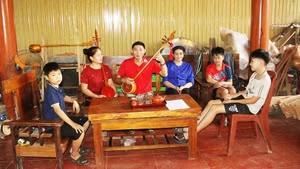
Third, to preserve and promote the value of national culture in tandem with socio-economic development. The ministry affirms that emulation must inspire new momentum in heritage preservation, restoration of traditional values, and integration of culture into community life. Many substantive movements will be implemented, such as developing grassroots cultural life, promoting digital transformation in heritage conservation, and developing cultural industries.
Fourth, to strongly develop high-performance sports and mass sports. The goal by 2030 is for Viet Nam to be among the leading nations at the SEA Games and continue affirming its position at continental events. Emulation in the sports sector requires professionalism, discipline, and the aspiration to rise, while also valuing mass sports to improve public health.
Fifth, to create breakthroughs in tourism development — an industry of the green economy and creative economy. Tourism must become a spearhead economic sector in line with the Politburo’s Resolution No. 08. The emulation movement will focus on developing unique tourism products, accelerating digital transformation, enhancing visitor experiences, and strongly promoting the image of a peaceful, friendly, and culturally rich Viet Nam.
The nation is entering a new stage of development where culture plays the role of “the most important source of internal strength”. Following President Ho Chi Minh’s teachings, patriotic emulation is not merely a movement of one sector but a crystallisation of the patriotism, national spirit, and aspiration to rise within every Vietnamese person. In the new context, patriotic emulation must closely follow political tasks, address practical challenges, and create sustainable values for society, ensuring the successful implementation of sectoral targets and tasks while contributing significantly to national construction and defence as well as to the revitalisation and development of Vietnamese culture in the era of integration.
As affirmed by Trinh Thi Thuy, Deputy Minister of Culture, Sports and Tourism: “The ultimate goal of the culture, sports, and tourism sector is to ensure that the patriotic emulation movement is not only a regular task but also a noble cultural mission, stirring patriotism, strengthening national solidarity, and contributing to realising the goal of making Viet Nam a developed, strong, and prosperous country by 2045.”