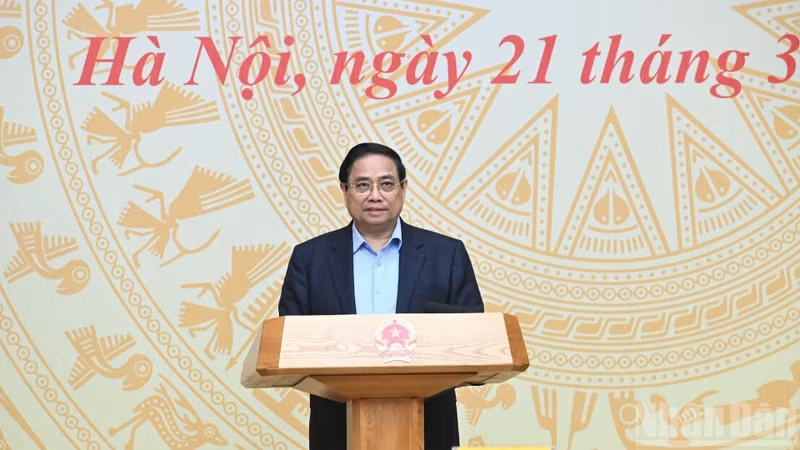
Prime Minister Pham Minh Chinh underscored that safeguarding cybersecurity and data security is an urgent, regular and critical task, inseparable from Viet Nam’s socio-economic development, as he chaired the first meeting in 2026 of the National Steering Committee for Cybersecurity on March 21.
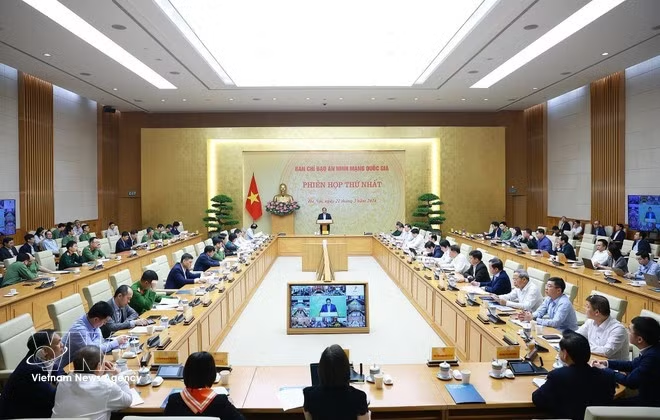
The hybrid meeting, held at the Government headquarters and connected to 34 provinces and cities, reviewed the steering committee’s performance in 2025 and outlined key directions and solutions to ensure national cybersecurity, and protect the security of activities of state agencies and citizens in the digital environment.
In his remarks, PM Chinh stressed that the increasingly complex developments in the global and regional situation require new mindset, particularly in addressing non-traditional security threats, including cyberattacks, online fraud, and activities that could undermine political stability and social order.
Placing cybersecurity within the broader context of national development in a new era, he called for a shift from task-based management to results-oriented governance, where tangible outcomes and public trust serve as the ultimate benchmarks of effectiveness. He emphasised the need to move from “doing more” to “doing the right things thoroughly and effectively,” ensuring that efforts translate into concrete products rather than remaining on paper.
The Government leader reiterated that the 14th National Party Congress identified comprehensive security, including national security, non-traditional security, cybersecurity and human security, as a strategic foundation to maintain a peaceful and stable environment for development, particularly as the country pursues two-digit economic growth targets.
Reviewing key achievements, he highlighted six major outcomes, including stronger leadership, improved legal frameworks, enhanced protection of national sovereignty in cyberspace, expanded international cooperation, mobilisation of social resources, and more effective public communication.
At the same time, he pointed out ongoing limitations in awareness, institutional organisation, human resources, and financial capacity, as well as increasingly complex online scams.
Therefore, PM Chinh called on ministries, sectors, and localities to strictly adhere to the leadership of the Party, headed by General Secretary To Lam, and ensure national sovereignty in cyberspace.
He urged a comprehensive transformation in mindset and action, with clear assignment of responsibilities, timelines, and accountability. Emphasis was placed on strengthening discipline, optimising resource allocation, and implementing a coordinated approach under the guiding principle: enhancing awareness, mastering technology, early prevention, proactive protection, effective response, close coordination, and safeguarding sovereignty.
The PM outlined key objectives, including preventing and disabling cyber threats, ensuring national security and public safety, protecting national sovereignty and interests, and people’s peaceful life, and placing cybersecurity within the overall framework of national security and national development.
He assigned specific tasks to ministries and localities, including completing institutional frameworks, developing strategies to protect sovereignty in cyberspace, strengthening coordination mechanisms, investing in human resources and domestic cybersecurity industries, and expanding international cooperation, particularly in implementing the United Unions Convention against Cybercrime, also known as the Ha Noi Convention.
The Steering Committee’s Office and relevant subcommittees were tasked with finalising and issuing their 2026 action plans by April, clearly defining targets, timelines, and responsibilities.
Expressing his confidence in the collective determination of the political system, businesses, and citizens, PM Chinh said strengthened cybersecurity efforts will help build digital trust, advance the digital economy and society, and contribute to a prosperous, stable and secure Viet Nam.