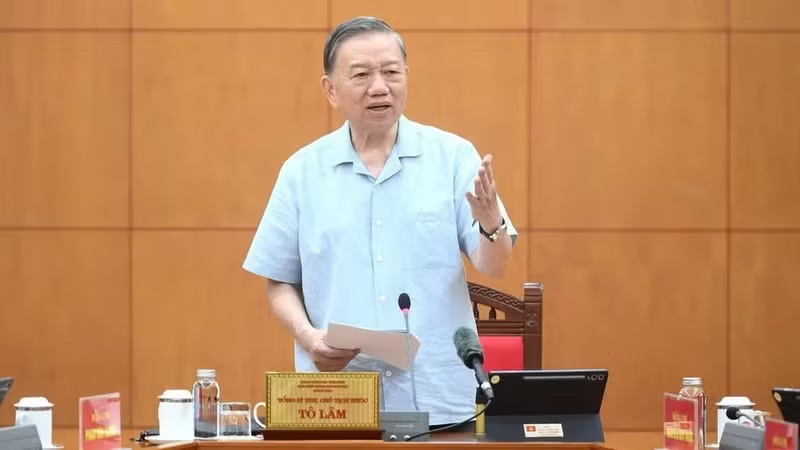
General Secretary and President Lam stressed that reform in basic science research must encompass awareness, institutional frameworks, investment mechanisms, and implementation methods. He described the issue as a strategic matter directly linked to Viet Nam’s development model, national self-reliance and international standing in the 21st century.
According to the leader, perceptions regarding the role of basic scientific research have changed significantly in recent years. While it was previously viewed mainly as a highly specialised academic activity in universities and research institutes, it is now increasingly recognised as the nation’s knowledge foundation and a basis for developing core technologies, elite human resources, strategic forecasting capacity and long-term autonomy capability.
However, he noted that the sector still faces many shortcomings and bottlenecks that are not commensurate with the country’s development requirements. Investment remains limited, while Viet Nam has yet to establish a strong, stable and long-term national ecosystem for basic research. Research activities remain fragmented, lacking close coordination, strong scientific schools and internationally competitive research groups aligned with national development strategies.
He also pointed to administrative-heavy management mechanisms, the shortage of modern laboratories, shared computational infrastructure and large-scale scientific databases, as well as inadequate long-term investment mechanisms for leading research teams. Human resources, he said, remain a strategic bottleneck, with a shortage of top scientists in many fields and insufficient support for younger generations of researchers.
The top leader highlighted the strategic importance of social sciences and humanities, stressing that while natural sciences and technology form the foundation for production and technological capacity, social sciences and humanities underpin governance, institution-building, cultural development and social stability.
A country may import technology, but it cannot import a development model suited to its own history, culture and conditions, he said, emphasising the crucial role of social sciences and humanities in theoretical research, policymaking, legal development, strategic forecasting and safeguarding the Party’s ideological foundation.
The Party General Secretary and State President called for the development of a modern, autonomous and internationally integrated basic research system capable of generating new knowledge, training elite human resources and supporting strategic policymaking and technological development for rapid and sustainable national growth.
He set out major targets through 2030 and toward 2045, including the removal of institutional bottlenecks, the establishment of a relatively synchronised national research ecosystem, the development of leading research centres and internationally competitive fields of basic science.
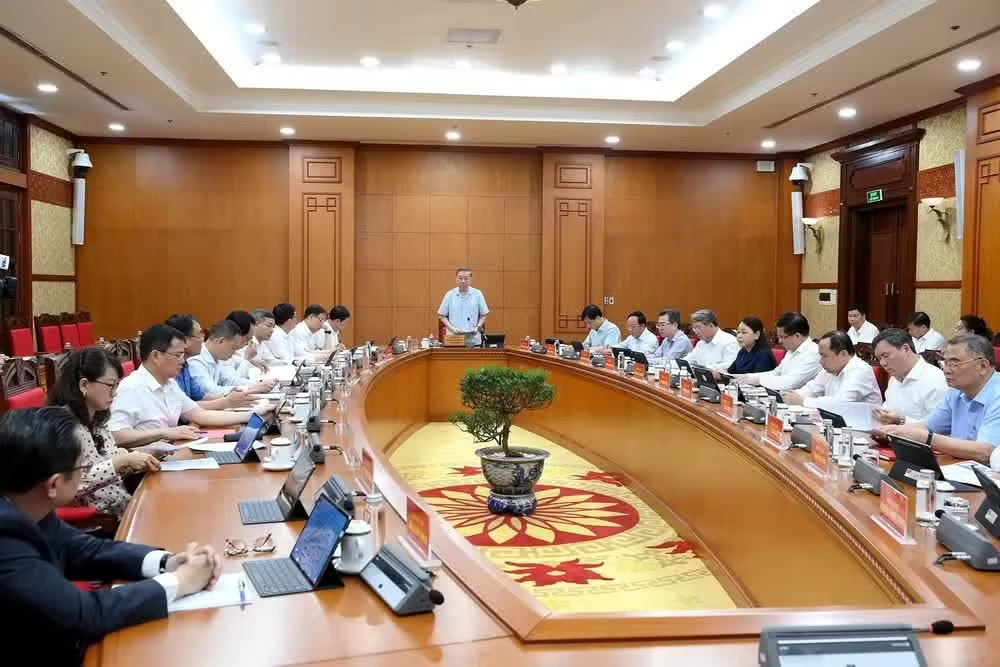
General Secretary and President Lam also underscored the need to shift scientific governance from administrative management to creative governance, emphasising post-audit mechanisms, long-term impact evaluation and protection of academic freedom alongside scientific integrity and accountability.
He further stressed that people must remain at the centre of scientific development, calling for a comprehensive ecosystem to identify, train, nurture and attract scientific talent, including overseas Vietnamese intellectuals.
He also proposed building strategic national data and knowledge infrastructure, including key laboratories, shared high-performance computing systems, digital libraries and scientific and social databases, noting that data should be regarded as a strategic infrastructure asset in the AI era.
The leader also called for stronger and more selective international cooperation, including efforts to attract foreign experts, scientists and overseas Vietnamese intellectuals; expand partnerships with leading global scientific centres to raise research standards; train the next generation of researchers; and narrow knowledge gaps. At the same time, he stressed the importance of safeguarding data, intellectual property, knowledge security and national interests.