There are kitchens operating production lines of tens of thousands of meals, where each dish must not only comply with procedures but also retain the essence of Viet Nam; and there are Quality Assurance (QA) specialists — the final “gatekeepers” — who silently safeguard the safety of every flight.
The silent “gatekeeper”
Nguyen Thi Mai, Senior Quality Assurance Specialist at Noi Bai Catering Services Joint Stock Company (NCS), said that QA is not merely a job but a decades-long journey of perseverance, including many Tet seasons when she welcomed the spring in the kitchen workshop so that the “taste of Tet” could board aircraft and reach the skies in time. A working day for a quality assurance specialist at NCS begins very early, when the kitchen is not yet bustling. The work starts with inspecting input ingredients and storage temperatures, supervising preparation, cooking, portioning, tray arrangement, and sample retention, until meals are sealed and transported to the aircraft.
At each stage, quality assurance specialists do not simply inspect but supervise to ensure that the entire process strictly complies with food safety and hygiene standards as well as the specific requirements of each airline. At the same time, they prepare detailed reports and handle feedback from customers and airlines —tasks that are invisible to passengers but directly determine the in-flight experience. “QA specialists are like silent gatekeepers. We do not appear on the flight, but we are the final layer of control to ensure everything is safe and meets standards before meals are loaded onto the aircraft,” Mai shared.

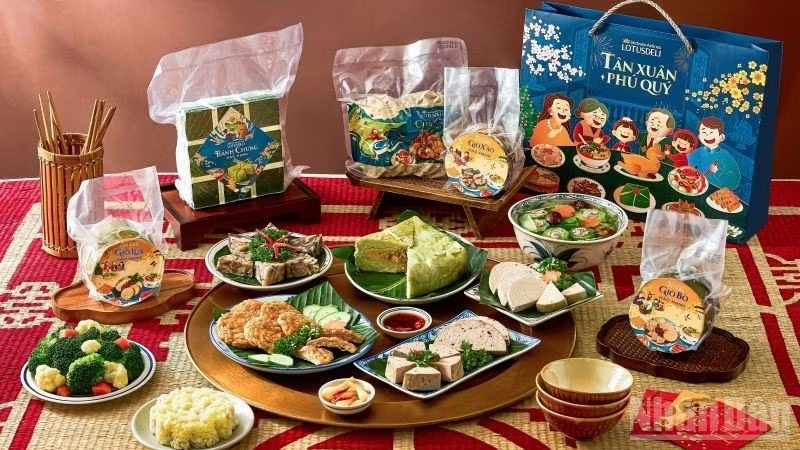
Aviation meals must pass through approximately eight to ten control stages. Among these, portioning is considered the most demanding due to the large quantities and intense time pressure. A moment of inattention may lead to incorrect portions or mislabelled trays. That pressure multiplies during Tet. As flight frequency increases and menus become more diverse, quality assurance specialists enter a true “exam season”. Traditional dishes such as banh chung (sticky rice cake), xoi (sticky rice) and gio lua (steamed pork roll) — familiar on Tet trays — carry higher microbiological risks, requiring strict control of temperature, cooling time, packaging, and storage.
After 11 years with NCS, Mai has clearly witnessed the transformation of quality assurance in the aviation catering sector. Previously, inspections relied largely on manual procedures and personal experience; now, systems have been standardised, with the application of electronic records and adoption of increasingly stringent standards from international airlines. More importantly, the role of quality assurance specialists has fundamentally shifted from correcting mistakes to preventing risks from the outset.
According to Mai, quality assurance today requires not only mastery of procedures but also management thinking, forecasting, and risk prevention. The work therefore demands greater professionalism and depth.
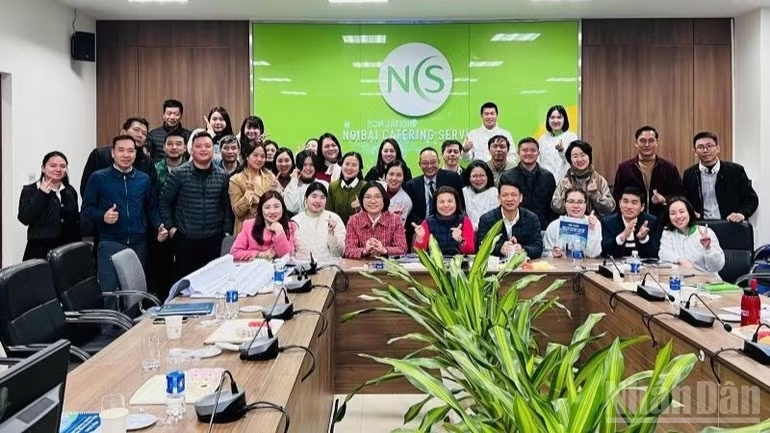
“Preserving the flavour of Tet in Viet Nam in the sky while ensuring absolute safety is something we always cherish and place first,” Mai said. Amid extended Tet shifts, there are still heart-warming moments. She recalled one spring season when, while on duty in the workshop, company leaders unexpectedly came to offer encouragement, New Year wishes, and lucky money. What has kept her at NCS for 11 years, through many peak seasons and Tet holidays away from home, is collegial solidarity and the meaning of the work. In the aviation industry, where there is no concept of a public holiday, she sees herself as an essential link in the unceasing cycle.
Bringing Vietnamese cuisine to conquer the sky
The NCS kitchen is currently one of the largest aviation kitchens in Viet Nam and Southeast Asia, serving an average of more than 50,000 meals per day. During Tet peak season, workloads surge, and all processes must accelerate to the maximum — yet no errors are permitted.
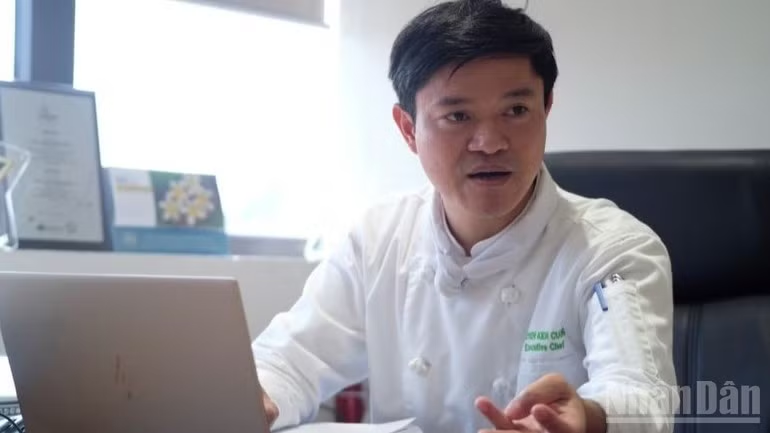
For Nguyen Kien Cuong, Executive Chef of NCS, Tet begins the moment the kitchen lights turn on, production lines operate, and tens of thousands of meals are entrusted to flights. Each dish must not only meet procedural requirements but also preserve the essence of Tet in Viet Nam, so that passengers flying through the clouds can still enjoy the taste of home. The pressure lies not in numbers or workload intensity but in the responsibility to inspire every chef at the stove.
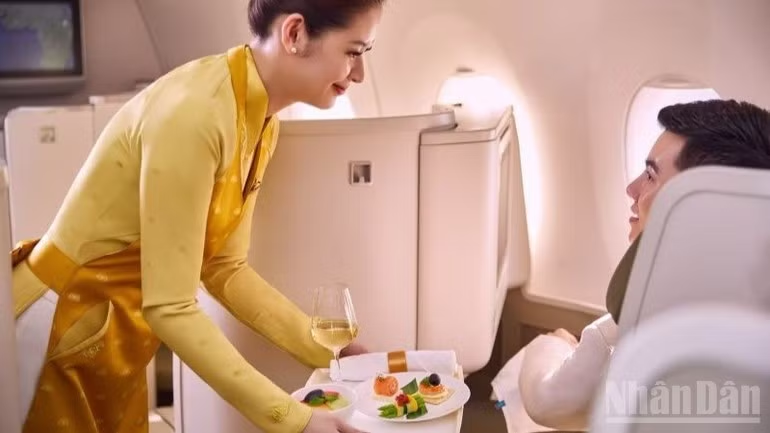
How can hundreds or thousands of meals be prepared each day while each cook maintains focus, professional passion, and enthusiasm, so that the dish delivered to passengers does not feel “industrial” but like a meal prepared in a family kitchen? To preserve the spirit of Tet, this year’s NCS menu continues to feature familiar dishes such as green banh chung, pickled onions, and gio cha — flavours embedded in family memories. A special highlight is the introduction of a “three-region tray” on board, allowing passengers to savour the distinct flavours of the north, central, and southern regions in a single meal.
From coastal banh cuon and golden Kinh Bac sticky rice paired with mac khen–roasted chicken from the north-western highlands to traditional Ha Noi-style meatball soup or Ben Tre young coconut salad creatively presented as “five-colour young coconut”, each dish is carefully calculated to harmonise flavours, preserve regional identity, and suit the aviation environment. Preserving the spirit of Vietnamese cuisine in each dish is already a challenge, but the greatest difficulty lies with hot dishes, ensuring that when cabin crew reheat them on board, the sticky rice remains soft and fragrant, the chicken retains its rich taste, and the mac khen still offers a gentle spiciness.
This is the result of numerous trials, from wrapping sticky rice in cabbage leaves to retain moisture to close coordination with cabin crew on reheating procedures and storytelling so that passengers can fully appreciate the value behind each dish. An even greater challenge is reviving dishes that seem to have faded from memory, such as meatball soup. For Cuong, this is not merely a dish but a way for chefs to preserve layers of culinary memory, so that Tet is present not only in the present but also connected to the past.
Today, NCS operates one of the region’s most advanced kitchen production lines, easing many physically demanding tasks. However, according to Cuong, technology is only a supporting tool; creativity, sensory perception, and seasoning still require human hands and emotion. “A dish is like a painting. The chef paints with flavours, and flavours always require emotion,” he said.
For aviation kitchen staff, Tet is not measured by time off but by the moment the kitchen lights up and flights take off safely. Reflecting on the journey, Cuong expressed his deepest appreciation to the chefs, technicians, and kitchen staff of NCS — those who work quietly through Tet, maintaining discipline in every movement and patience with every small detail so that each meal leaving the kitchen is safe, meticulously crafted, and imbued with the “soul of home”.
They are the ones who silently ensure that the flavour of Tet accompanies flights at thousands of metres above the ground. For them, there is no greater joy than passengers concluding their journeys with a sense of reassurance, warmth, and a lingering familiar taste of Vietnamese Tet — a wish for every early-year journey to be safe, fulfilling, and always carry a flavour to remember upon returning home.