However, with the proactive and flexible application of solutions by authorities and businesses, the domestic market is gradually stabilising and fuel supply is ensured.
Diversifying supply sources
Le Ngoc Son, Chairman of the Board of Members of the Viet Nam National Energy and Industry Group (Petrovietnam), said that the unit’s crude oil production in the past three months reached 2.63 million tons, exceeding the plan by 10.4% and increasing by 10.2%; while Petroleum production (excluding Nghi Son Refinery and Petrochemical Plant) exceeded the plan by 11%, an increase of 8.4% compared to the same period in 2025.
The group and its member units are currently actively working with partners to seek and diversify sources of crude oil, petroleum products, and raw materials for blending and fuel production, thereby maintaining stable and uninterrupted petroleum production and supply to the economy.
Dung Quat Refinery is operating at 120% of its equivalent capacity to increase supply to the market; Nghi Son Refinery and Petrochemical Plant has accelerated the diversification of crude oil sources, thereby enhancing flexibility in choosing alternative sources, limiting the risk of disruption, and ensuring stable operation.
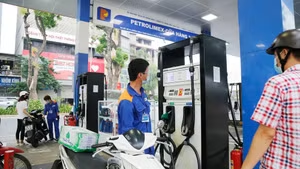
To proactively secure domestic supply, Viet Nam Oil Corporation (PVOIL) increased import volumes and opened new bidding lots compared to the plan. Fuel supply operations at over 900 gas stations were maintained smoothly, meeting consumer demand.
Units in the oil and gas exploration and production sector continued to maintain production levels and optimise capacity while ensuring safety and efficiency, contributing to meeting the crude oil needs of domestic refineries.
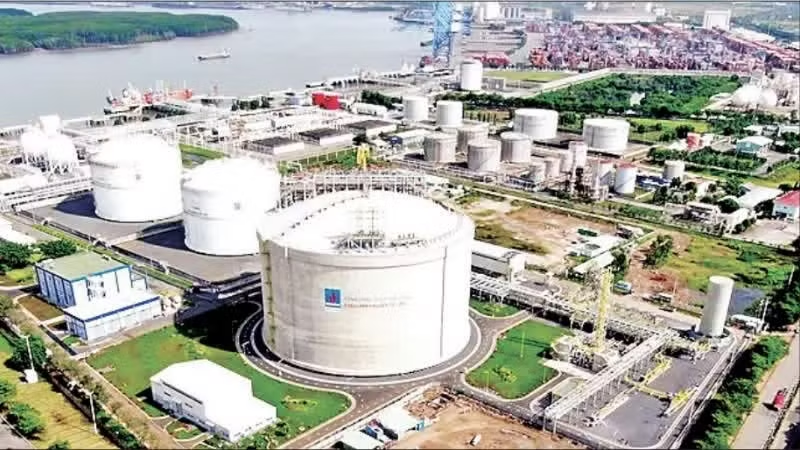
In addition, Viet Nam Gas Corporation (PV GAS) received its first imported liquefied natural gas (LNG) shipment of 2026 at the Thi Vai LNG terminal, with a volume of 63,000 tonnes, contributing to stabilising the domestic energy market. Furthermore, the corporation imported nearly 43,000 tonnes of liquefied petroleum gas (LPG), and this figure is expected to increase in the future.
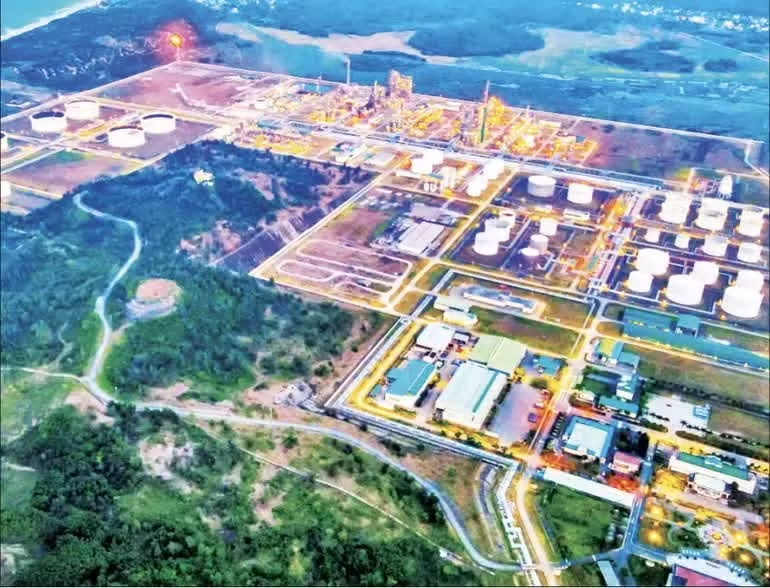
“To contribute to ensuring national energy security, Petrovietnam Group will implement a comprehensive set of solutions, from flexible management to enhancing market analysis and forecasting capabilities; proactively diversifying crude oil sources, increasing production and import of petroleum products, and strengthening coordination and improving efficiency throughout the entire chain; proactively developing response scenarios; and researching and proposing a ‘rapid response’ mechanism to market fluctuations,” emphasised Le Ngoc Son, Chairman of the Board of Members.
According to the Viet Nam National Petroleum Group (Petrolimex), when some previously existing regional supply sources were affected by export restrictions and bans, the group and its member units urgently sought and implemented alternative import options from other markets, including Asia and Southeast Asia, to ensure the maintenance of import volumes and meet domestic consumption needs.
Flexible solutions
Geopolitical tensions in the Middle East caused a sharp surge in crude oil prices at the end of March, more than 2.5 times higher than before the conflict erupted, plunging many countries into a fuel crisis.
In Southeast Asia, the Philippines declared a national state of emergency; Thailand witnessed long overnight queues at gas stations; and Myanmar suffered fuel price increases of over 55%. Amidst this volatile landscape, Viet Nam emerged as a bright spot in the region by responding with a multi-layered, flexible, and in-depth stabilisation strategy, yielding impressive results in curbing rising prices.
According to a representative from the Ministry of Industry and Trade, within just one month, the fuel price stabilisation fund was activated nine times, with an estimated total expenditure of 5.3 trillion VND (approximately 217 million USD).
By the end of March, for the first time in history, the government decided to advance 8 trillion VND (approximately 303 million USD) from the increased central government budget revenue for 2025 to support the fund.
Simultaneously, the government implemented several fiscal tools such as reducing preferential import taxes on some petroleum products to 0% from March 9th to April 30th, 2026; reducing the environmental protection tax to 0% on gasoline (excluding ethanol), diesel, and aviation fuel from midnight on March 26 to April 15; cutting the special consumption tax on gasoline from 8-10% to 0%; and exempting value-added tax declarations while still allowing input tax deductions.
The estimated total reduction in budget revenue is approximately 7.2 trillion VND/month (approximately 295 million USD), a figure the government considers “necessary to stabilise prices and reduce cost pressure.”
According to experts, the flexible combination of the fuel price stabilisation fund, tax and fee adjustments, and dynamic operating mechanisms demonstrates a relatively balanced model between protecting consumers, maintaining macroeconomic stability and avoiding long-term budget burdens.
The mechanism of budget advances with a commitment to repayment within 12 months is a crucial differentiating factor, demonstrating fiscal discipline in an emergency context and reflecting the flexibility in management and rapid policy responses of the government.
In reality, the energy crisis shows no signs of ending, and global oil prices continue to fluctuate sharply. However, the flexible application of sufficiently strong policy tools, swift action, and close coordination among ministries and agencies have helped Viet Nam gradually overcome the energy crisis, firmly protecting its fuel defences while meeting the consumption needs of the people and the economy.