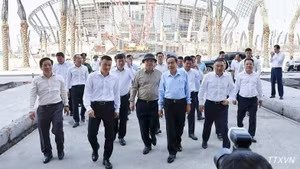
Speaking at a recent working session with Dong Nai leaders, General Secretary and President To Lam stressed that the city must elevate its planning, guided by a long-term, integrated and practical vision. He emphasised that the Dong Nai River should be restored to its rightful role as an ecological, cultural and scenic axis, as well as a key driver of urban development.
Unlocking the full potential of the river
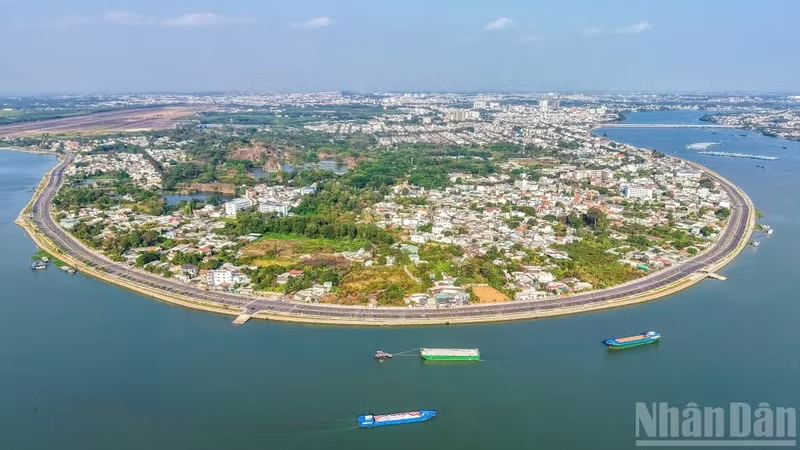
Stretching more than 586 kilometres from its headwaters, including a 234-kilometre section flowing through Dong Nai City, the Dong Nai River is the lifeblood of the region’s ecosystem and holds immense value.
More than a physical waterway that has flowed through the centuries, it is deeply embedded in the collective memory of generations, inspiring the enduring sentiment that "wherever one may go, the river is never forgotten".
Its tranquil waters have long nurtured the aspirations of the people of Dong Nai to build a prosperous and liveable homeland. In areas with particularly favourable conditions, such as Tran Bien, Bien Hoa and Long Hung wards, determined efforts are under way to fully harness the river’s untapped potential.
Ho Van Nam, Party Secretary of Tran Bien Ward, said that in the long term, Tran Bien should be developed in a manner befitting its strategic position. The Dong Nai River should serve as the central axis for urban and service development, with the plan anchored by the establishment of a new administrative centre on the site of the former Bien Hoa 1 Industrial Park.
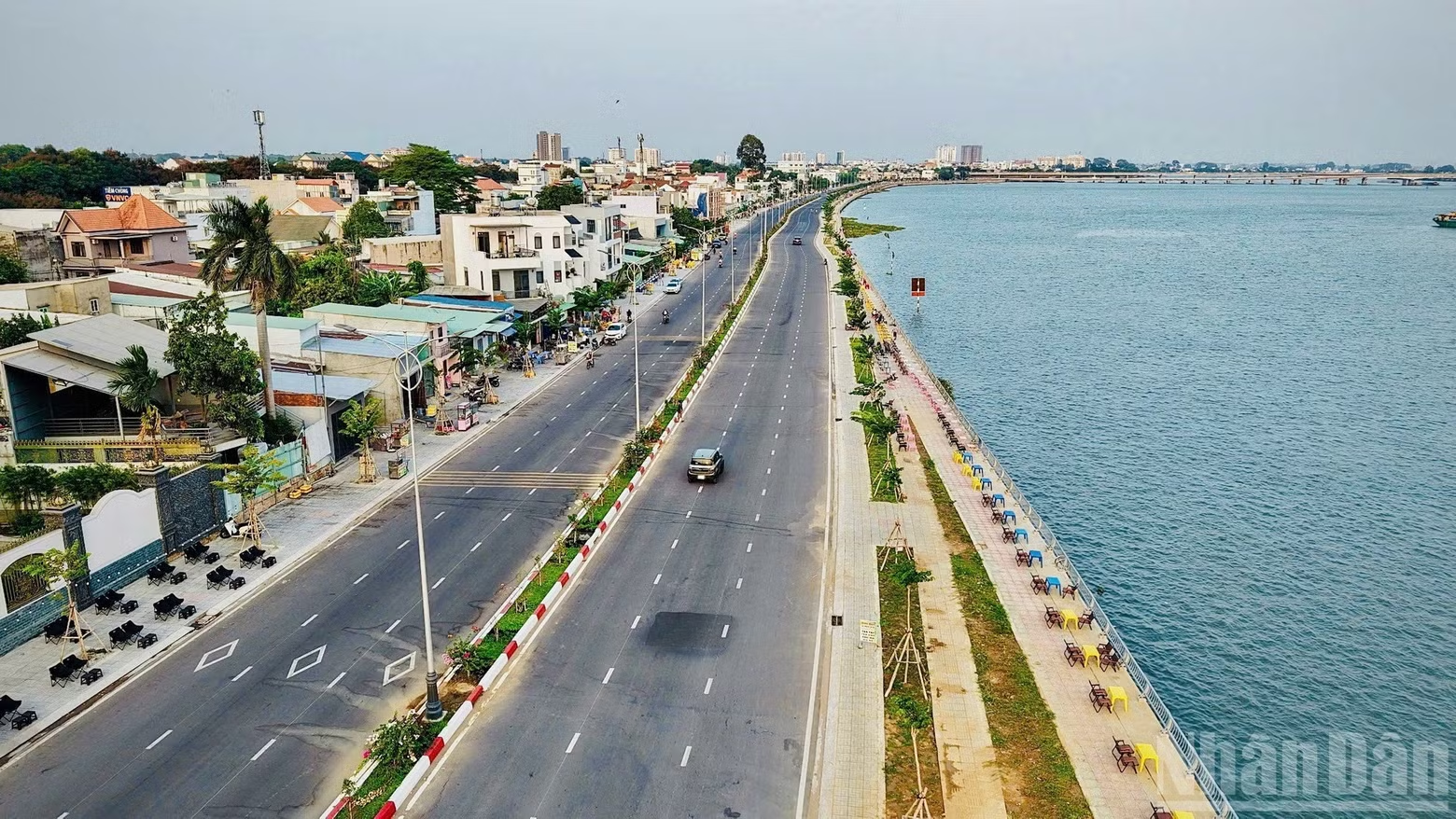
Newly completed major transport projects are gradually shaping a modern urban landscape in Tran Bien, enabling the ward to maximise its riverside advantages for economic, cultural, social and commercial development.
Notably, site clearance for the conversion of Bien Hoa 1 Industrial Park is now nearly complete. Meanwhile, the largest Aeon Mall in southern Viet Nam is steadily taking shape in the area.
In recent years, a number of large-scale riverside urban developments along the Dong Nai River have attracted major investors. Among the most notable are two projects in Dai Phuoc Commune with a combined investment of more than 800 trillion VND (30.4 billion USD). These developments are expected to play a decisive role in realising the vision of the Nhon Trach urban area, alongside the creation of a science and innovation district.
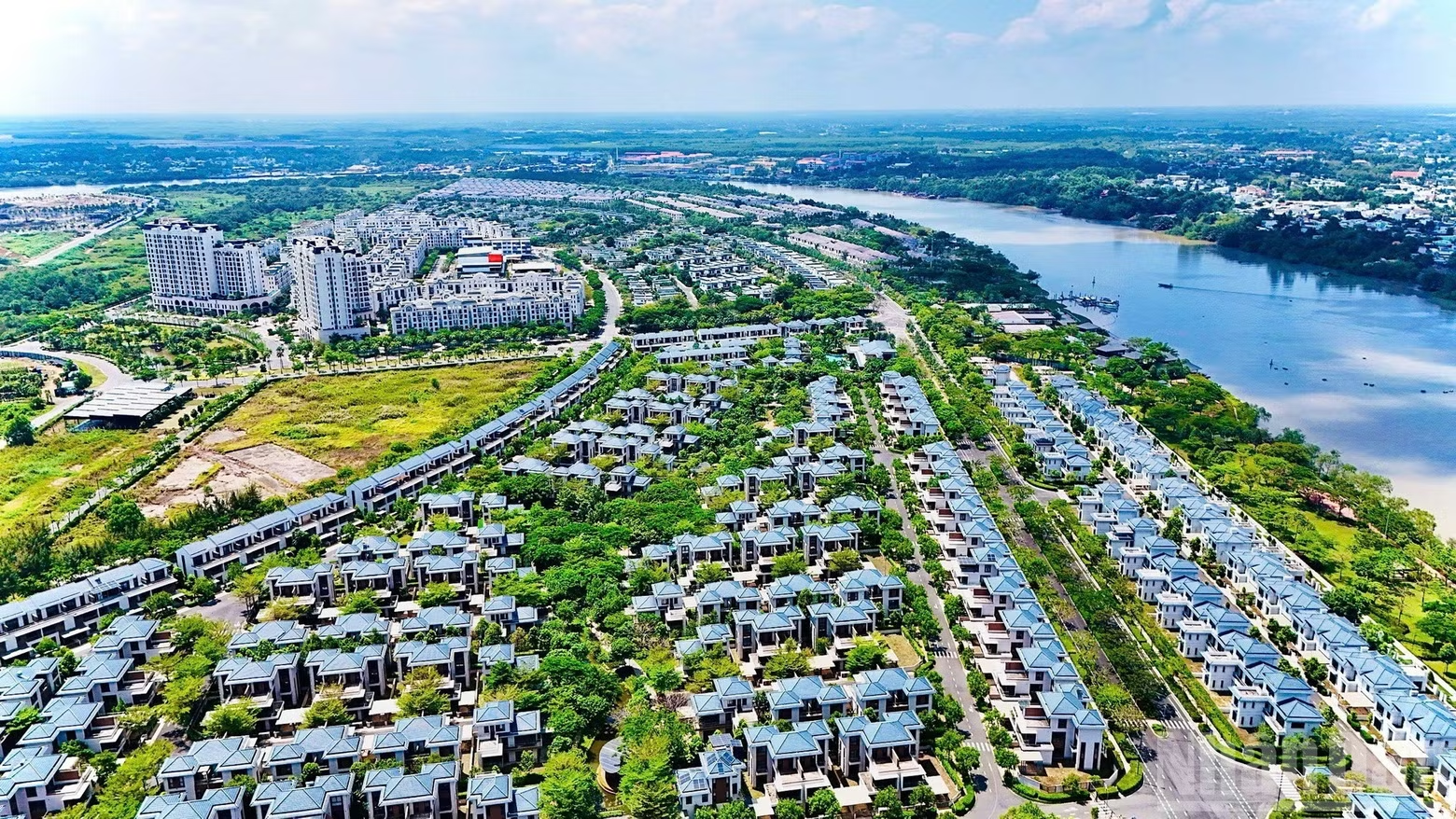
Riverside ecological urban areas such as Aqua City in Long Hung Ward, the urban development on Tan Van Islet in Bien Hoa Ward, and the Hiep Hoa urban area in Tran Bien Ward are all designed to create modern urban centres and integrated service complexes that blend with the natural landscape while promoting sustainable tourism.
Creating new momentum for sustainable development
Today, from the vibrant industrialised area of Nhon Trach, where the lower reaches of the Dong Nai River continue their journey towards the sea, to the upstream forests of Cat Tien National Park and Dak Lua Commune, where the river first enters Dong Nai, numerous bridges now connect communities on both banks. These links have opened up new possibilities for spreading socio-economic activities more evenly and unlocking fresh development space across the wider region.
A network of modern road bridges spanning the river, including Phu My 2, Cat Lai, Long Thanh, Long Hung, Dong Nai, An Hao, Buu Hoa, Hoa An, Bach Dang 2, Thu Bien, Ma Da, Hieu Liem, Thanh Son, Ta Lai and Dak Lua, has been built, helping to improve transport connectivity while providing a significant boost to socio-economic development.
Many of these projects have been realised through effective cooperation between the authorities of Dong Nai City and Ho Chi Minh City. To further strengthen this vital transport backbone, the two cities have agreed to expedite the construction of the Hieu Liem 2, Thanh Hoi 2, Tan Hien, Tan An and Xom La bridges. In the near future, the authorities will also prioritise extending Ho Chi Minh City Metro Line 1 from Suoi Tien to Dong Nai’s central area.
However, the rapid pace of urbanisation and industrialisation also presents significant challenges for preserving the Dong Nai River as a valuable natural and cultural heritage asset. Particular attention must be paid to maintaining water quality and conserving the cultural and historical sites located along its banks.
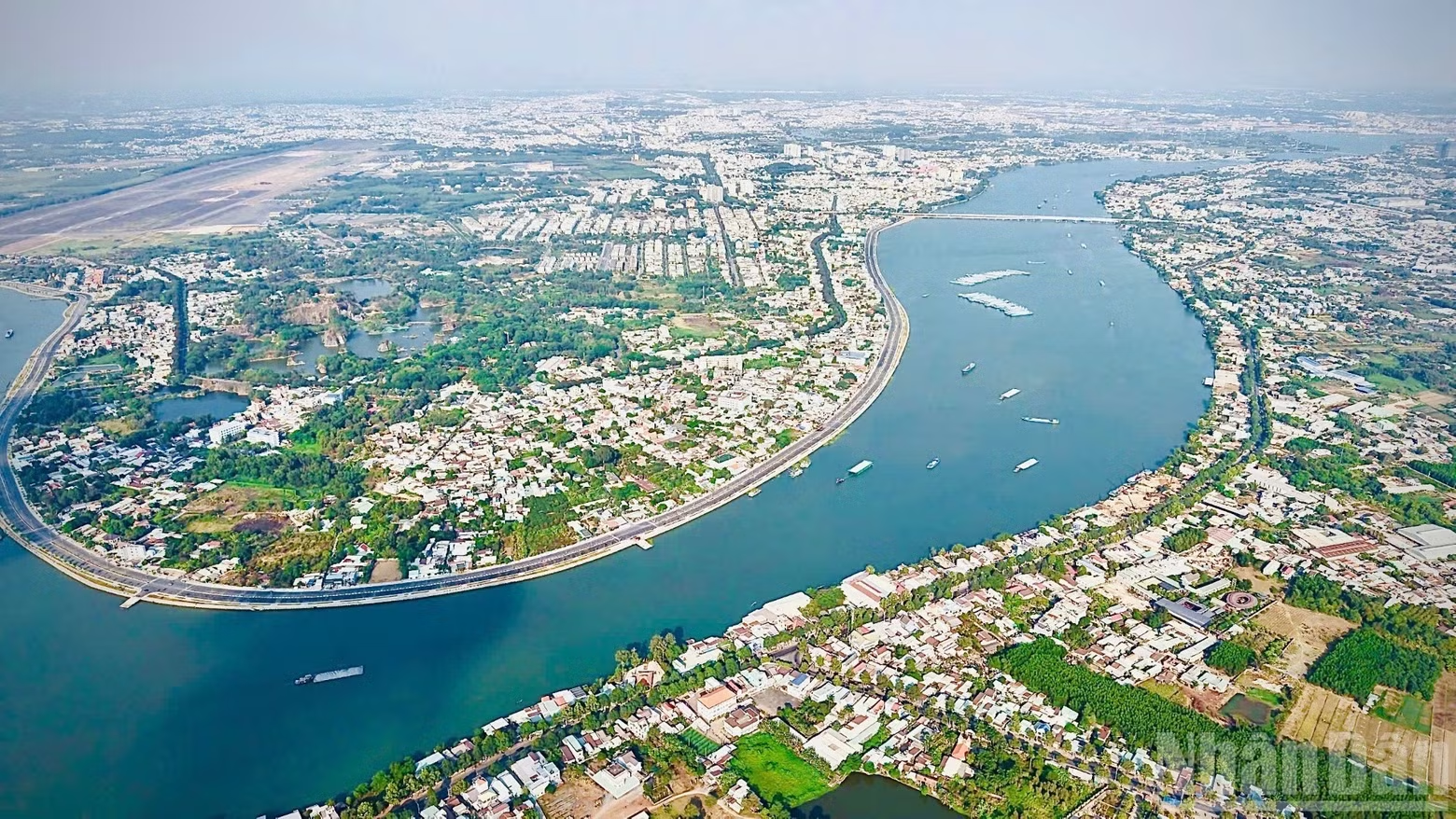
Vu Hong Van, Secretary of the Dong Nai City Party Committee, noted that the Dong Nai River corridor represents a new engine of growth, yet the city’s rich riverfront landscape of immense ecological and cultural value remains largely underdeveloped.
He pointed out that this strategic development axis has been fragmented by small-scale land subdivision projects, makeshift factories, warehouses and informal river ports. As a result, it has yet to be transformed into a continuous scenic boulevard with public riverside spaces that can serve local residents.
Dong Nai City now regards the redevelopment of its riverside urban space as a task of strategic significance for the next stage of development. The city has formulated key solutions and numerous planning initiatives to reorganise the river basin corridor, gradually establishing a layered, multi-polar urban structure spanning several distinct centres.
Today, the Dong Nai River carries with it the aspirations of a dynamic, creative and enterprising people determined to write a new chapter of development.
Serious action and a strong sense of responsibility will determine whether Dong Nai can emerge as a model of a dynamic, modern, civilised and liveable city, while preserving the unspoilt, tranquil and poetic beauty of a riverside urban centre.