>> Tour invites tourists to go through heritage sites in central region
The six heritage sites, which are the key factor to the success of the tour, are six must-see destinations for visitors from both at home and abroad.
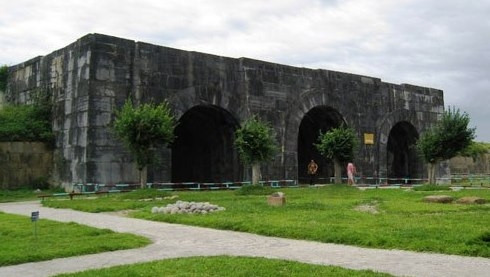
The tour opens with the Ho Dynasty citadel in Vinh Loc district, about 50 kilometres from Thanh Hoa city.
The Citadel of the Ho Dynasty was built in 1397, composed of the Inner Citadel, La Thanh Outer Wall and the Nam Giao Altar. It is located in accordance with geomantic principles in a landscape of great scenic beauty between the Ma and Buoi rivers in Vinh Loc district, Thanh Hoa province of Vietnam.
Being the capital of Vietnam from 1398 to 1407, the citadel is a gigantic structure built thanks to the technique and the art of using huge stones, as well as the harmonious combination of construction styles in Vietnam and Southeast Asia at the end of 14th century and early 15th century.
Leaving Thanh Hoa, tourists head to Quang Binh province to discover Phong Nha – Ke Bang National Park, which covers four districts: Quang Ninh, Bo Trach, Tuyen Hoa and Minh Hoa.
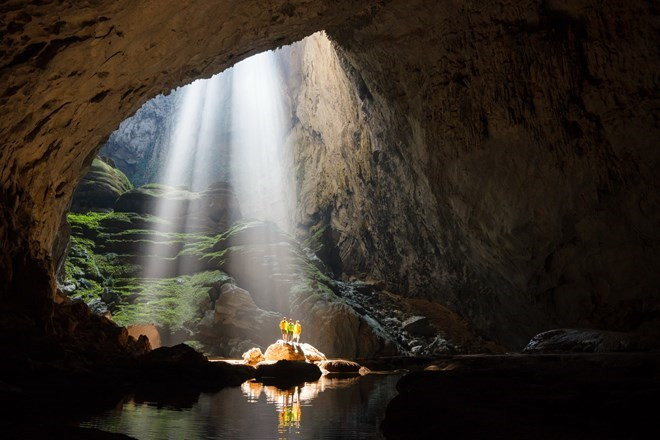
Inside the Son Doong Cave. (Photo: Ryan Deboodt)
In addition to its historical and geographic values, the national park is also blessed by Mother Nature with imposing landscapes. The cave system in the complex is like majestic castles, created inside limestone mountains millions of years ago.
The park derives its name from Phong Nha Cave, containing many fascinating rock formations, and Ke Bang forest. The plateau on which the park is situated is probably one of the finest and most distinctive examples of a complex karst landform in Southeast Asia.
This national park was listed in UNESCO's World Heritage Sites in 2003 for its geological values, and won UNESCO’s recognition for the second time on July 3, 2015 thanks to its biological and ecological diversification.
Most recently, Son Doong cave, a cave that is part of the complex, was classified as the largest cave in the world by the British Cave Research Association. The stunning beauty of Son Doong was featured in a film made by ABC News (US) and has been aired around the world.
From Quang Binh, the tourists pass Quang Tri to reach the Complex of Hue Monuments in Thua Thien-Hue province. Situated on the northern bank of the Huong (Perfume) river, it was the most important architectural complex of the Nguyen Dynasty, the last royal dynasty in Vietnamese history, from 1802 to 1945.
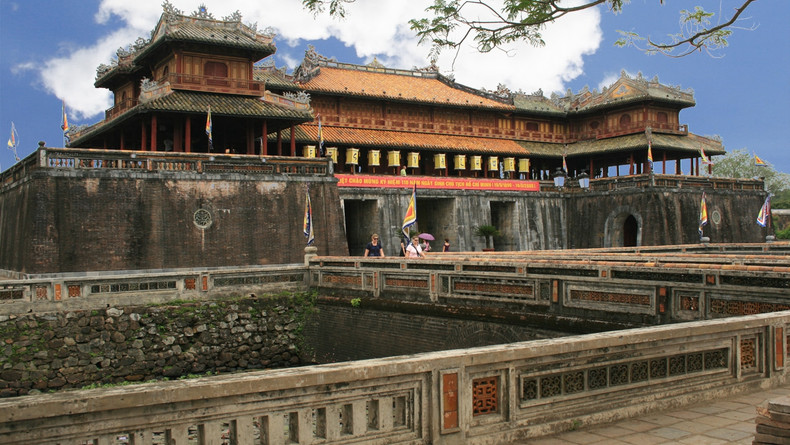
Ngo Mon (Noon gate), a must-see attraction in Hue imperial city
Within the Hue Citadel were located the Imperial Residence, the Hoang Thanh (Imperial City), the Tu Cam Thanh (Forbidden Purple City) and related royal palaces.
In the outlying areas are located important ritual sites related to the spiritual life of the dynasty such as the Nam Giao esplanade (esplanade of Sacrifice to the Heaven and Earth), Xa Tac esplanade (Esplanade to worship the Genies of the Earth and the Crop), Hon Chen temple and the Linh Mu and Tuy Van pagodas. Further upstream, arranged along the Perfume River, are the tombs of the dynasty’s emperors.
The tour also offers visitors a chance to taste the indigenous cuisine of Hue through its typical dishes such as ‘bun bo’ (beef noddle), ‘nem lui’ (lemongrass skewers), ‘banh beo’ (bloating-fern shaped cake) and ‘banh bot loc’ (dumplings with shrimp).
Hue also has one world heritage site - Nha Nhac Cung Dinh (Hue royal Court Music). ‘Nha Nhac’, meaning “elegant music”, which refers to a broad range of musical and dance styles performed at the Vietnamese royal court.
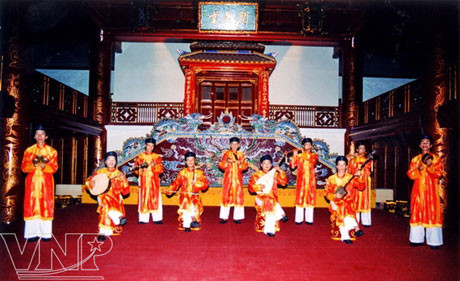
A ‘Nha Nhac’ performance at Duyet Thi Duong theatre (Photo: Vietnam Pictorial)
As a symbol of the dynasty’s power and longevity, Nha Nhac was generally featured at the opening and closing of ceremonies associated with anniversaries, religious holidays, coronations, funerals and official receptions. The art form won the UNESCO title as a “Masterpiece of the Oral and Intangible Heritage of Humanity” in 2003.
Visitors to Hue can enjoy Nha Nhac performances at Duyet Thi Duong and Minh Khiem Duong theatres or on boats along the Huong river by night.
As one of the most popular destinations at tourism forums and on websites, Hoi An Ancient Town in Quang Nam province has been revisited and recommended by many foreign visitors.
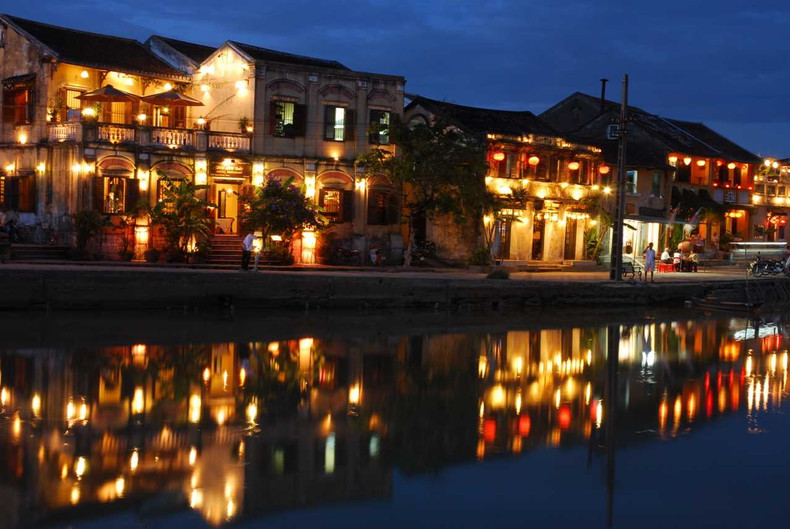
The scenic beauty of Hoi An ancient town when night falls
Located on the north bank near the mouth of the Thu Bon River, Hoi An was a trading port active in the 15th to 19th centuries. The town comprises a well-preserved complex of over 1,000 architectural monuments, including houses, community spaces, pagodas, temples and family houses. The constructions harmoniously blend between Vietnamese traditional features as well as Western and Eastern countries’ cultures.
Hoi An’s streets are short, narrow and sneaky. They are planed as a grid of streets with one axis parallel to the river and the other axis of streets and alleys set at right angles to it.
The houses are tiled and the wooden components are carved with traditional motifs. They are arranged side-by-side in tight, unbroken rows along narrow pedestrian streets.
Another site on the favourite list of foreign visitors to Quang Nam is My Son Sanctuary. Dating from the 4th to the 13th centuries, My Son Sanctuary is situated in Duy Xuyen district within an elevated geological basin surrounded by a ring of mountains and hills.
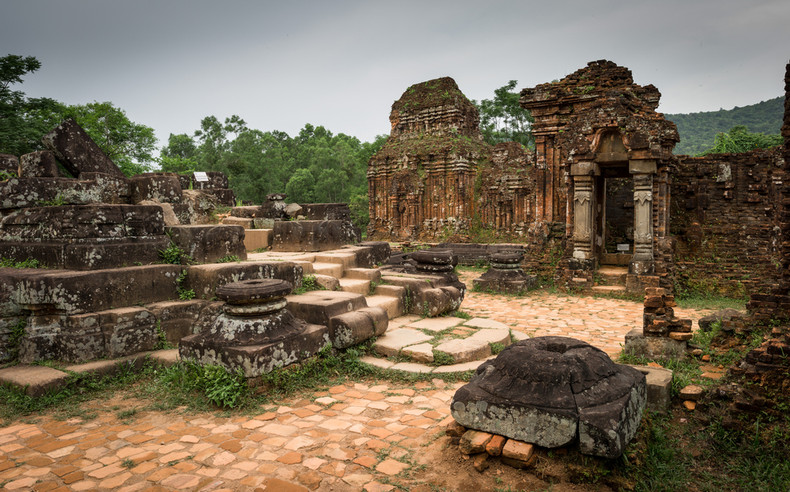
My Son Sanctuary, a site on the favourite list of foreign visitors to Quang Nam
The tower temples of the My Son sanctuary are constructed in fired brick with stone pillars and decorated with sandstone bas-reliefs depicting scenes from Hindu mythology. Their technological sophistication is evidence of Cham engineering skills as well as Cham religion and culture.
The property is a remarkable architectural ensemble that developed over a period of ten centuries. It presents a vivid picture of spiritual and political life in an important phase of the history of South-East Asia.