This represents an effort by Da Nang’s tourism authority to create a unified identity system that reflects the city’s values, character and orientation towards sustainable tourism development.
Da Nang – a friendly and hospitable destination
According to Associate Professor Pham Trung Luong, former Deputy Director of the Institute for Tourism Research, prior to the merger, Da Nang mainly served as a gateway and visitor distribution hub for central Viet Nam, rather than a fully-fledged tourism centre due to limited resources.
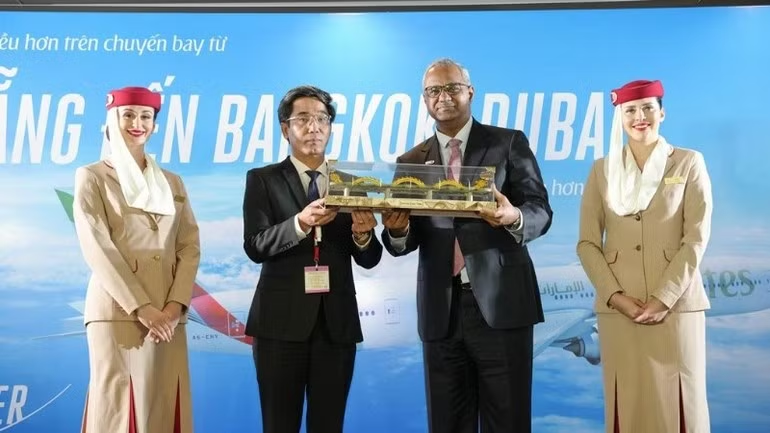
Following the merger, with a rich system of natural and cultural values and numerous UNESCO-recognised heritages, Da Nang now has a solid foundation to affirm its position as a tourism centre with a strong and distinctive identity.
The National Master Plan for the 2021-2030 period, with a vision to 2050, continues to identify the Da Nang-Hue urban region as a multi-sector hub, including tourism and regional and international events, providing a strong basis for Da Nang’s tourism to make a breakthrough.
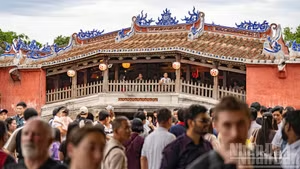
After the merger, Da Nang now manages 595 cultural heritage items, including four tangible and intangible heritage elements inscribed by UNESCO: the My Son Sanctuary, the Ancient Town of Hoi An, the Bai Choi art of central Viet Nam, and the Ma Nhai inscriptions at the Ngu Hanh Son Mountains.
The city also possesses four special national sites: the Ho Chi Minh Trail, Dong Duong Buddhist Institute, Dien Hai Citadel, and the Ngu Hanh Son Mountains.
In addition, there are 28 national intangible cultural heritages, 84 national sites, and 475 city-listed sites, many of which are closely associated with revolutionary history.
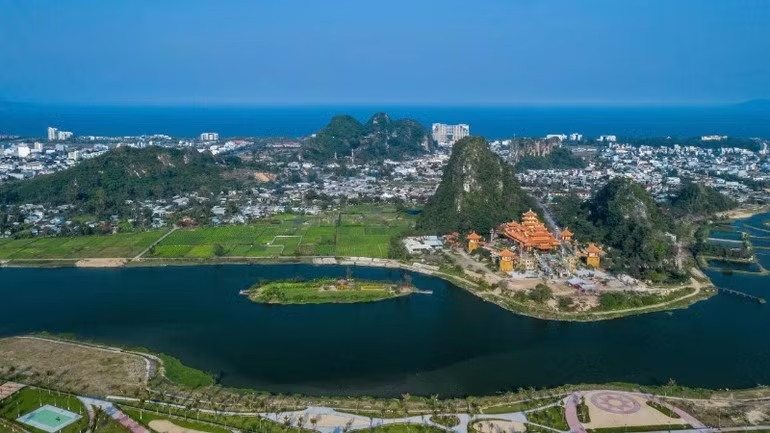
Overall, Da Nang’s heritage system displays two outstanding characteristics: diversity in geographical space and continuity across multiple historical periods. Heritage spaces extend from coastal areas to mountainous regions, encompassing a wide variety of forms.
In coastal areas, notable intangible cultural heritages include ba trao singing in Cam Thanh and Tam Hoa, the whale-worshipping festival in Man Thai, the weaving of hammocks from Chinese parasol tree fibres on Cu Lao Cham, and the traditional fish sauce craft in Nam O, among others.
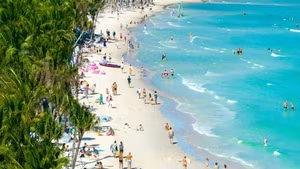
Da Nang is identified as a key economic hub of the central coastal region, with a strategic location and strong connectivity to world heritage sites such as the Imperial City of Hue, Hoi An and My Son. Over the years, the city has become a national tourism centre, distinguished by high-quality tourism products including beach resorts, mountain retreats, heritage tourism, and eco-agricultural tourism.
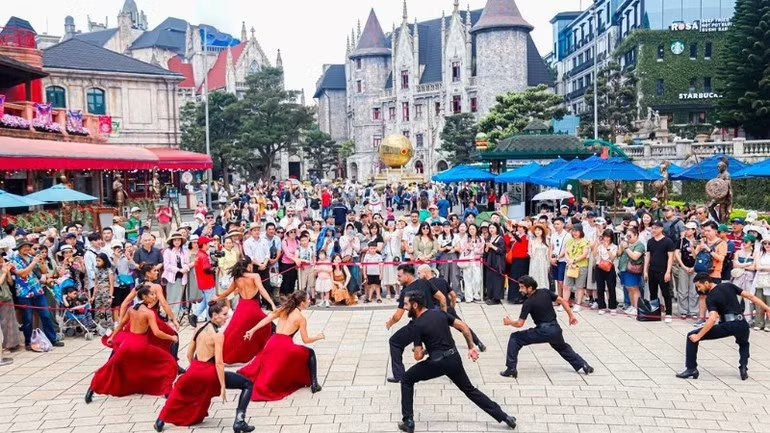
This has been accompanied by continued investment in and synchronised upgrading of tourism infrastructure and facilities, including an international airport, high-end accommodation systems, entertainment complexes, Tien Sa tourist port, and scenic routes along the coast and the Han River.
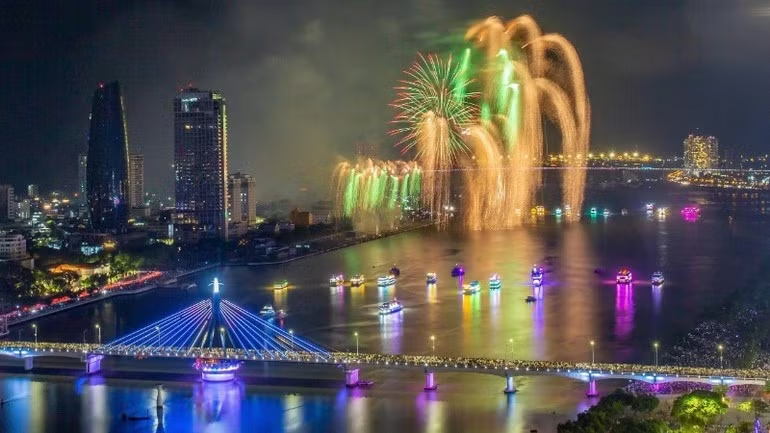
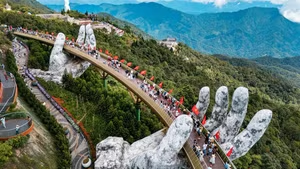
The city has also focused on developing iconic tourism products and experiences such as Ba Na Hills, festivals and events, its distinctive bridge system, pedestrian streets, and night-time urban performances, thereby creating sustainable appeal for both domestic and international visitors.
Efforts are being made to enhance the quality of cultural and heritage tourism products; to better connect Da Nang with Hue, Hoi An and My Son into a heritage corridor; to develop dedicated heritage tours alongside beach and mountain tours; and to build premium service brands in accommodation, spa and high-end resort services with a strong emphasis on personalisation.
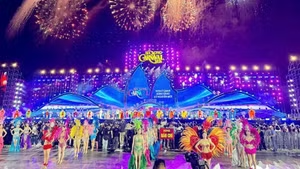
Da Nang is also strongly promoting night-time tourism products such as pedestrian streets, night markets, cuisine, street performances, and light-and-music programmes to enrich night-time experiences for visitors.
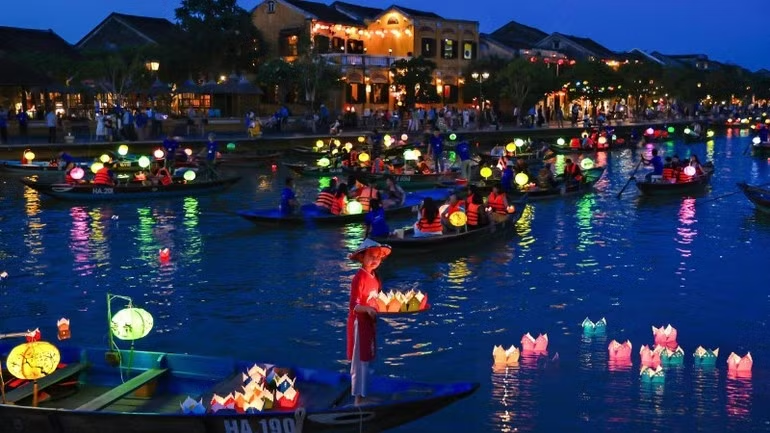
At the same time, the city is developing eco-rural resort products for experiential activities, homestays, agri-tourism, and OCOP products, as well as auxiliary services to support MICE tourism, including attracting investment in international event venues and entertainment centres.
Positioning Da Nang tourism in a new landscape
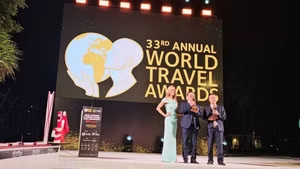
Da Nang has become a favourite destination for both domestic and international visitors, earning numerous titles and awards, including Asia’s leading destination for events and festivals, among the top 10 Asian cities with the highest return visitor rates, among the world’s top 50 most attractive tourism destinations. Meanwhile Hoi An ranked sixth among the world’s 25 most beautiful cities in 2025 and Cam Thanh was selected as one of the world’s 50 best villages.
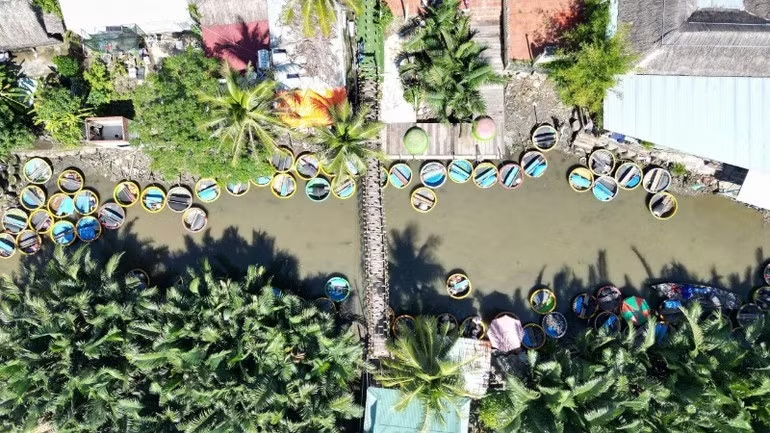
Director of the Da Nang Department of Culture, Sports and Tourism Truong Thi Hong Hanh said the city has entered a new context, with its development space expanded more than tenfold, alongside a larger population and diverse, distinctive resources.
While this is expected to create major opportunities for tourism, it also poses significant challenges in synchronising infrastructure and service quality across a vast area with uneven development conditions, particularly in brand positioning and in mobilising investment resources to develop the tourism product system.
This is therefore a crucial time to adjust the tourism development plan for the new Da Nang and to seek solutions that can effectively tap resources associated with the traditional, historical and culturally rich local values of the Quang Nam region.
The ultimate goal is to build Da Nang into an attractive global tourism destination, contributing to the city’s sustainable economic development and creating employment opportunities for businesses and local communities.
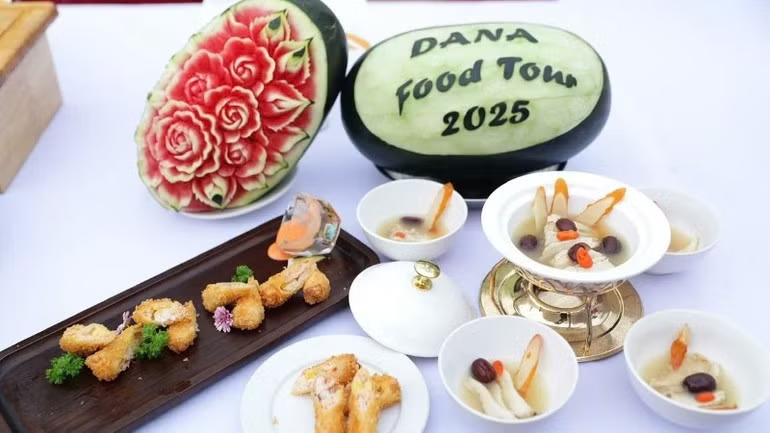
“Finding a representative logo for Da Nang’s tourism sector in this new context will facilitate more systematic tourism promotion and marketing, while helping project a more professional image of the city to visitors,” Hanh emphasised.
Experts believe Da Nang should soon move to build a new tourism brand that reflects comprehensive connectivity between the two tourism brands already well established on the national and international tourism map: Da Nang City and Quang Nam Province. This would help position Da Nang’s destination brand at a higher level, in line with national and regional tourism planning.
Currently, Da Nang’s tourism sector is preparing to launch a tourism logo and slogan design contest, which will include general information on Da Nang tourism after the merger, tourism materials, local cuisine, landscapes, heritage and green tourism.
This is considered a necessary step in positioning the brand and defining the distinctive identity of Da Nang’s tourism sector in the new context.
![[In Pictures] Nui Chua Rock Park: A million-year-old outdoor museum of landforms on the Khanh Hoa coast](https://en-cdn.nhandan.vn/images/nyM650OGFWrOVWc-xajqNz57td8idIAL_VG9puyG2UZEKOnmq1DVlT1--ZclbO3z2WBaWZhbt6O3e8kjPZqJMWkfEz7RO9qhcwg8o8LQFK8/ndo-br-cao-nguyen-da-moi.jpg.avif)