Turning indigenous culture into a driving force
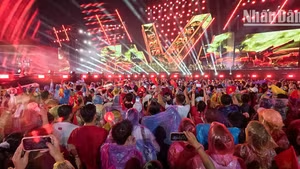
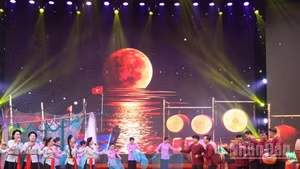
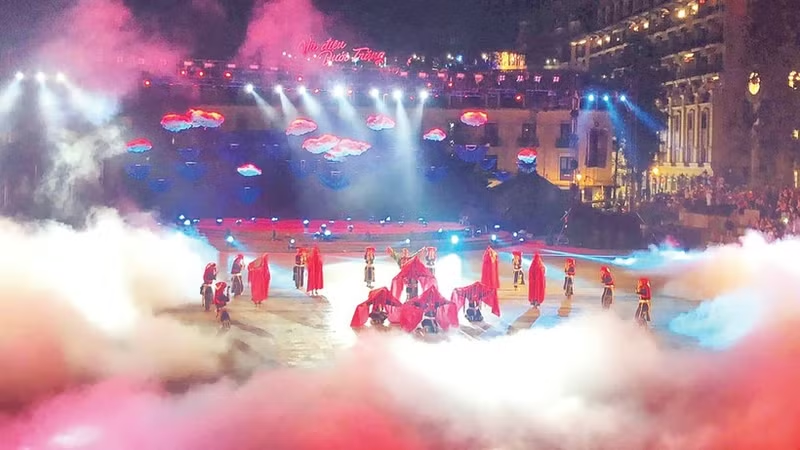
The “Thieng” (Sacred) and “Vu dieu duoi trang” (Dance under the moonlight) live performance art shows were held in Sa Pa in November 2025. Resonating with the sounds of the khene, flute, the “Pao dung” dance, and the mystical atmosphere of San Quan Square, the beauty of highland ethnic minority cultures and spiritual life immersed visitors in a vivid experiential space.
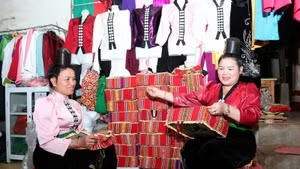
The concept for the two programmes stemmed from the personal experiences and cultural preservation efforts of scriptwriter Ha Van Thang, former director of the Lao Cai Department of Tourism. As a child accompanying his mother across villages, he came to appreciate the beauty and refinement in the customs and traditions of highland ethnic groups. Later, as a cultural manager, he recognised the need to convey in full the spirit, rhythm of life, and indigenous knowledge of the Dao, H’Mong, Tay, Giay, and Xa Pho ethnic minorities.
Thang nurtured the idea of creating art works in which the local communities themselves would become the central subjects, telling their own stories through the language of theatre, music, dance, lighting and modern technology. “Vu dieu duoi trang” was first introduced in 2023 on the occasion of 120th anniversary of Sa Pa tourism, with traditional dances inspired by the daily life and spiritual practices of local ethnic groups in the town’s mystical mist.
Its initial success inspires a desire to continue exploiting, honouring and spreading the local culture. The “Thieng” programme explores the spiritual depth and cultural identity of the Red Dao community. The programme was built on rituals, folk performances, composite music, and traditional dances, in combination with modern technologies such as 3D mapping and stage installations, creating an impressive visual space while respecting cultural authenticity. Director Dang Xuan Truong, who collaborated on the “Thieng” programme, said: “Cultural preservation becomes truly meaningful when the cultural subjects themselves perform in their own spiritual space.”
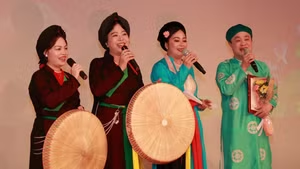
The two programmes, which were both grand and deeply humane, helped local residents and domestic and international visitors feel the cultural beauty of the mountains, national pride, and the vibrant life of the ethnic minority community.
To organise the two large-scale programmes, the team spent months working closely with artisans and local residents to ensure that every detail, from music and choreography to ritual sequences and costumes, truly reflected the culture of highland ethnic minority communities.
Chao Lao Ta, a young Red Dao man who performed in the “Thieng” programme, shared emotionally: “For many years, I have seen our culture gradually fading. There are many reasons, but partly because young people do not fully understand the beauty and value of our culture, so they easily overlook it or consider it a nuisance. The current programmes help us to look back and have more pride in our heritage.” He recounted that sacred rituals such as land-seeking, rain-praying, fire-kindling and “cap sac” are integral parts to community life, and when they are connected by stage language, lighting, and music, they become even more accessible.
“The created space is extraordinary, grand but still our own everyday life. I never imagined familiar things could be so beautiful,” he said.
May Vy, who served as the narrator in a programme, also has the unforgettable experience. A few months ago, during the harvest season, the scriptwriter and director brought their script to her commune for the villagers to review and prepare. Only those truly committed to cultural preservation would accept the role, as local people are extremely busy with daily labour. She affectionately refers to the scriptwriter and director as her “teachers” and proudly shared: “Not everyone gets to take part, only those who truly love culture. Our teachers told us so, and we felt very honoured.”
An elaborate and meticulous journey
Turning a concept into fully live art performance programmes is a meticulous and enduring journey that requires close coordination between artists, ethnic minority communities and flexible technological application. The production teams also faced Sa Pa’s harsh weather: heavy rain, dense fog, and sudden low temperatures. Tons of lighting, sound, and 3D mapping equipment were transported from Ha Noi to the highlands and installed over many cold and rainy days. Every technical detail was rigorously checked to ensure safety and visual effectiveness for performance space. Artisans are considered as cultural referees, verifying every detail, from costumes and props to dance movements and ritual practical, to ensure nothing was distorted or lost its sacred significance.
Art programmes such as “Thieng” and “Vu dieu duoi trang” are typical examples of how to combine local culture and art with modern technology to create profound and vibrant experiences. According to scriptwriter Ha Van Thang, a live action show needs three fundamental elements: cultural subjects, script, and the performance format.
Director Dang Xuan Truong added that the direct participation of local people and folk artisans in telling their own highland stories not only preserves original cultural values but also create empathy and pride. Regarding the script and artistic composition, it needs to be designed subtly to respect the original ritual and effectively convey the aesthetic message and visual experience for the audience.
“Programmes need to be built with a sustainable vision, transcending isolated thinking to become mechanisms for cultural dissemination. Only when implemented with respect, creativity, and in collaboration with the community can art naturally blend into culture and promote tourism development in the highlands,” director Dang Xuan Truong said.