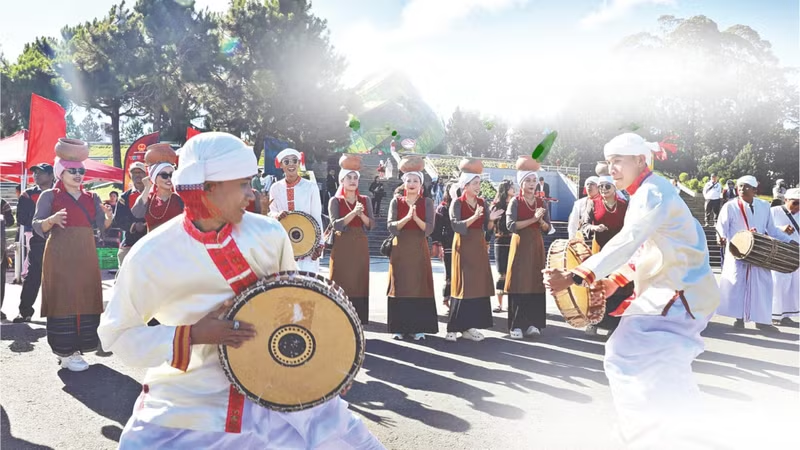
1. Though choosing the highlands as their habitat, the bond linking mountain ethnic groups with residents of the plains and coastal areas has never loosened. Coastal people of central Viet Nam, too, have for generations looked upstream. The inhabitants of the coastal plains may have abundant rice, sweet potatoes, fish and salt, yet forest products essential for building homes, making medicines and countless other needs have always depended on the mountains. Hundreds of years ago, highlanders travelled to the lowlands to exchange goods. The fresh water nourishing the plains originates from rivers and streams in the high mountains. Sharing one territory of Viet Nam, when there is a “flash at sea,” there will be “rain at the source”; whether in sweetness or hardship, siblings from the same root have always stood together. Whenever foreign invaders appeared, the legend of the “sacred sword” gained deeper meaning, the blade held by Central Highlands ethnic groups would be sheathed in the scabbard kept by Kinh people in the lowlands. Unity against common enemies has been a tradition for generations. The old verse of central people expresses affection, respect and connection between communities of sea and forest.
With a total natural area of nearly 88,000 km² and a population of nearly 13 million, the provinces of Lam Dong, Dak Lak, Gia Lai, Quang Ngai and Khanh Hoa (in the central–Central Highlands region) represent a region of remarkable cultural diversity, with values created by multiple cultural actors.
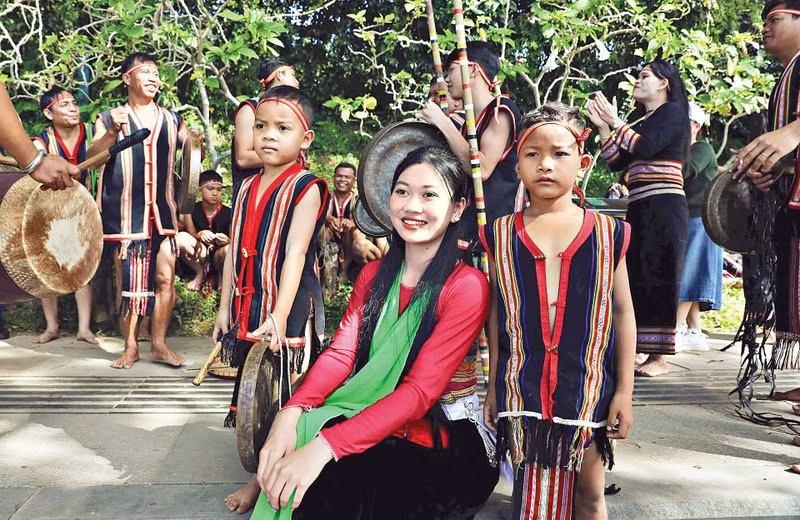
2. Vietnamese historical records clearly document the connection and exchanges between the sea and forest regions from the past. From early times, people from the plains travelled westward to connect with upland communities. In 1470, King Le Thanh Tong referred to territories under the influence of Potao Apui (Fire King) and Potao Ia (Water King) as Nam Ban and considered them a vassal state. Before raising the banner of rebellion in 1771, the Tay Son brothers crossed An Khe Pass to the Upper Region to establish bases, stockpile provisions and weapons, and train troops. The base of the “Three Tay Son Heroes” was located in the lands of the Ba Na and J’rai. Nguyen Nhac took Ba Na woman Do as a concubine and entrusted her with organizing upland logistics. During the Nguyen dynasty, relations between mountain leaders and the feudal state became more regular and close. The Nguyen court accepted tributes from Central Highlands leaders and dispatched officials to patrol forests, establish collection stations and levy taxes in upland regions. Administrative units called “nguon” (equivalent to a district in the plains) were formed there.
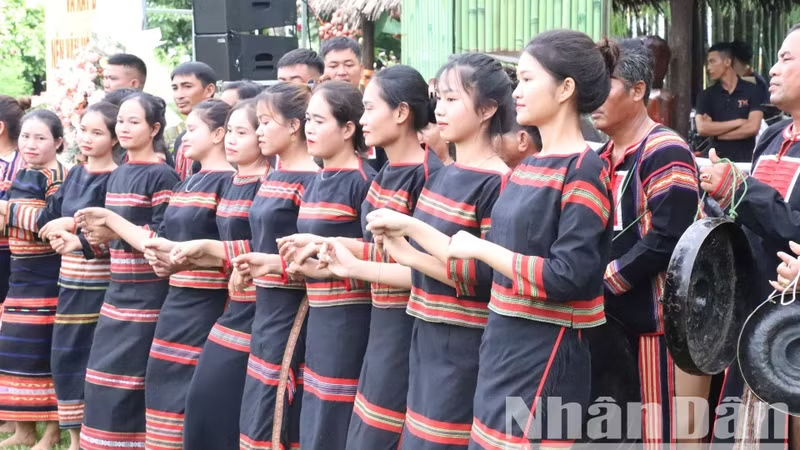
Cultural traces of Cham and Viet communities from the central coast also appeared early in the Central Highlands. Many Cham temples and towers are scattered across the vast forests. Epic tales, folklore and folk songs of the M’Nong, E De, Ba Na, Co Ho, Ma and Cham peoples all preserve evidence of interethnic relations from ancient times. The custom among highland minorities, journeys lasting months to coastal regions for exchange and trade, still exists. The Chu Ru, sharing linguistic roots with the Cham, were entrusted to worship Cham ancestors along the Da Nhim River.
In modern history, during resistance against French colonialists, uprisings led by N’Trang Long, Mo Co and Sam Bram included participation of Vietnamese and Cham fighters. Resistance bases against French colonialists and American imperialists were located in Central Highlands forests and villages.
3. Decades ago, researchers identified five landscape types: desert and semi-desert; mountains and plateaus; hills and midlands; plains; seas and coasts. Corresponding cultural subjects were associated with each landscape. The central coast and Central Highlands, specifically Quang Ngai, Gia Lai, Dak Lak, Lam Dong and Khanh Hoa, encompass nearly all these landscape types, each with distinct cultural actors.
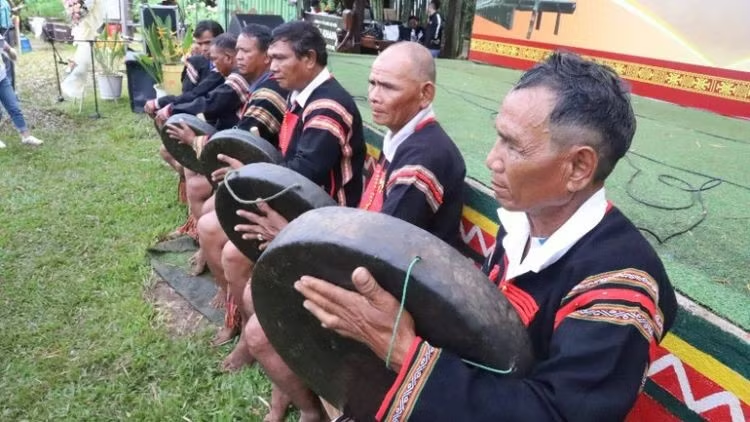
Historical destiny has long connected the highlands and coastal regions. Now sea and forest share one “common home.” This is an opportunity to shape a new portrait of the central-Central Highlands region, a unique geo-cultural area with advantages to promote established and evolving values. When forest culture intersects with sea culture, we imagine highland deities meeting in friendship. It is a metaphor for expanding cultural boundaries after administrative restructuring.
The Central Highlands today extend to the sea, and the coast gains new trade opportunities with the forest. The reorganization is a convergence of opportunity. Provinces expand their lists of ethnic communities, broaden cultural spaces and enrich collections of tangible and intangible heritage. Distinct sounds of each ethnic group and region harmonize into a shared symphony.
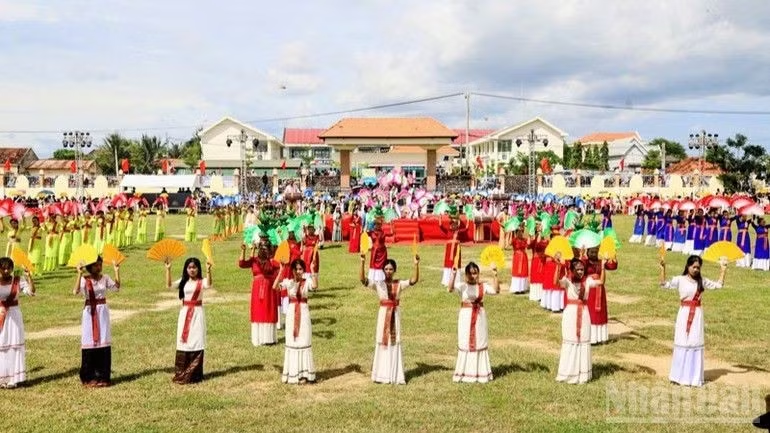
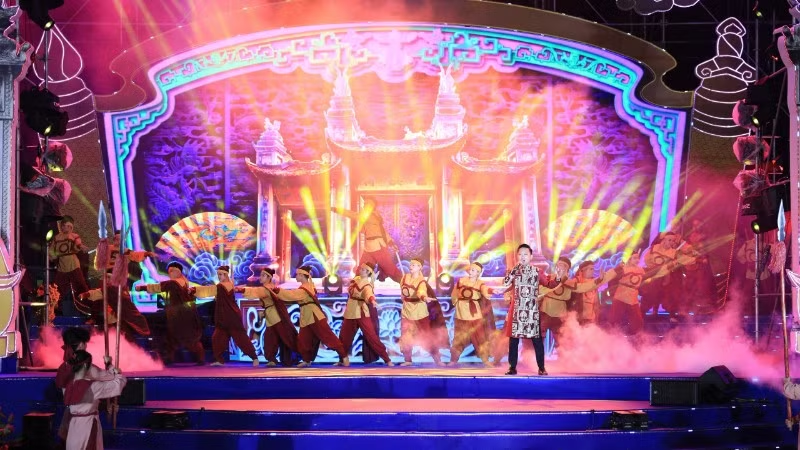
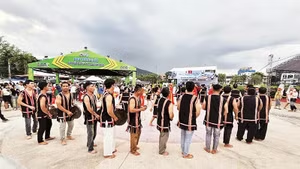
Encouragingly, since operating under new administrative units, provinces have organized numerous cultural and artistic events. Communities and ethnic groups that once rarely interacted now share one home and exchange precious cultural gifts. In joint festivals, amid Central Highlands forests one hears the soulful chant of a worship festival, lyrical folk songs and classical music performances. By the ocean, coastal residents are stirred by gong rhythms and circle dances performed by highlanders descending to join celebrations. During the recent International Gong Festival, people of Lam Dong were captivated by the sounds of drums, saranai horns and Cham folk melodies performed by compatriots who journeyed over mountains to Da Lat’s Xuan Huong Lake. Culinary exchanges, once limited to bamboo shoots and flying fish, now include gifts infused with highland flavors - coffee, pepper, cocoa, macadamia, durian, jackfruit, avocado, banana, artichoke - and countless seafood varieties from the sea. Festival meals today contain flavors of forest and ocean alike.
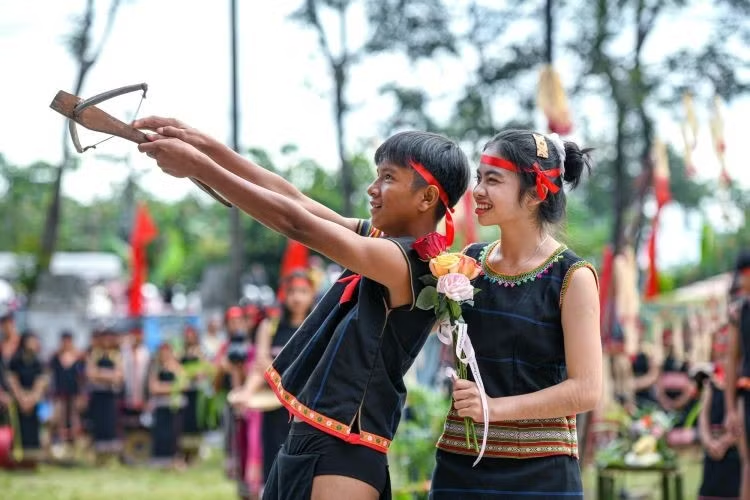
Culture exists in the genetic source of each ethnic group and in each region’s geo-cultural landscape. Expanding boundaries enriches cultural heritage systems. This is the foundation and pride that strengthens motivation for the development of this beautiful land within the homeland.


![[In Pictures] Procession of giant “Lord Pigs” weighing over 200kg at La Phu Village Festival](https://en-cdn.nhandan.vn/images/9f233ae74386156ace55673ec5a8ea373e7bb5df2274800bfd51bda6ec86d946ac1c392948518c6b0493c4028e062086d61e162f1bde5f06b033cfb48e759702e9025c2d7944d75148de8ee1664be9e4/ruoc-lon-la-phu-11-4212.jpg.avif)