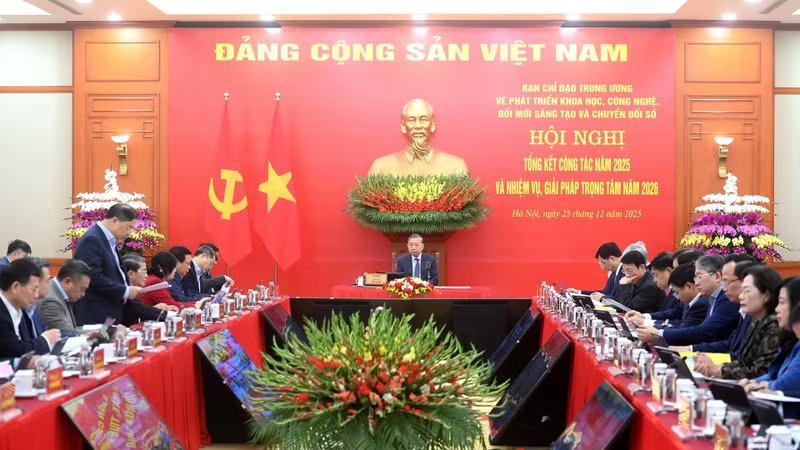
The Party chief, who is also Head of the Central Steering Committee for the Development of Science, Technology, Innovation and Digital Transformation, made the remarks while chairing the committee’s conference on December 25 to review its performance in 2025 and set key tasks for 2026.
Reports at the conference showed that Party, National Assembly and Government agencies have issued a large number of legal documents on science, technology, innovation and digital transformation, including groundbreaking policies that have helped remove institutional bottlenecks.
Resources for science, technology and digital transformation have been strengthened, with the state budget allocation reaching 3%. National digital transformation has continued to advance, with key platforms such as the National Population Database, the National Public Service Portal and the VNeID electronic identification application coming into operation and beginning to prove effective, especially as the two-tier local administration model is implemented.
The rate of online administrative dossiers has increased, while administrative procedures have been simplified, saving thousands of billions of VND for citizens and businesses and improving transparency and governance efficiency.
Science, technology and innovation have gradually taken a more systematic approach, aligned with global trends and priority sectors. International cooperation has expanded, and the participation of technology enterprises and investment funds has helped form initial drivers for the commercialisation of research results and the development of high value-added products.
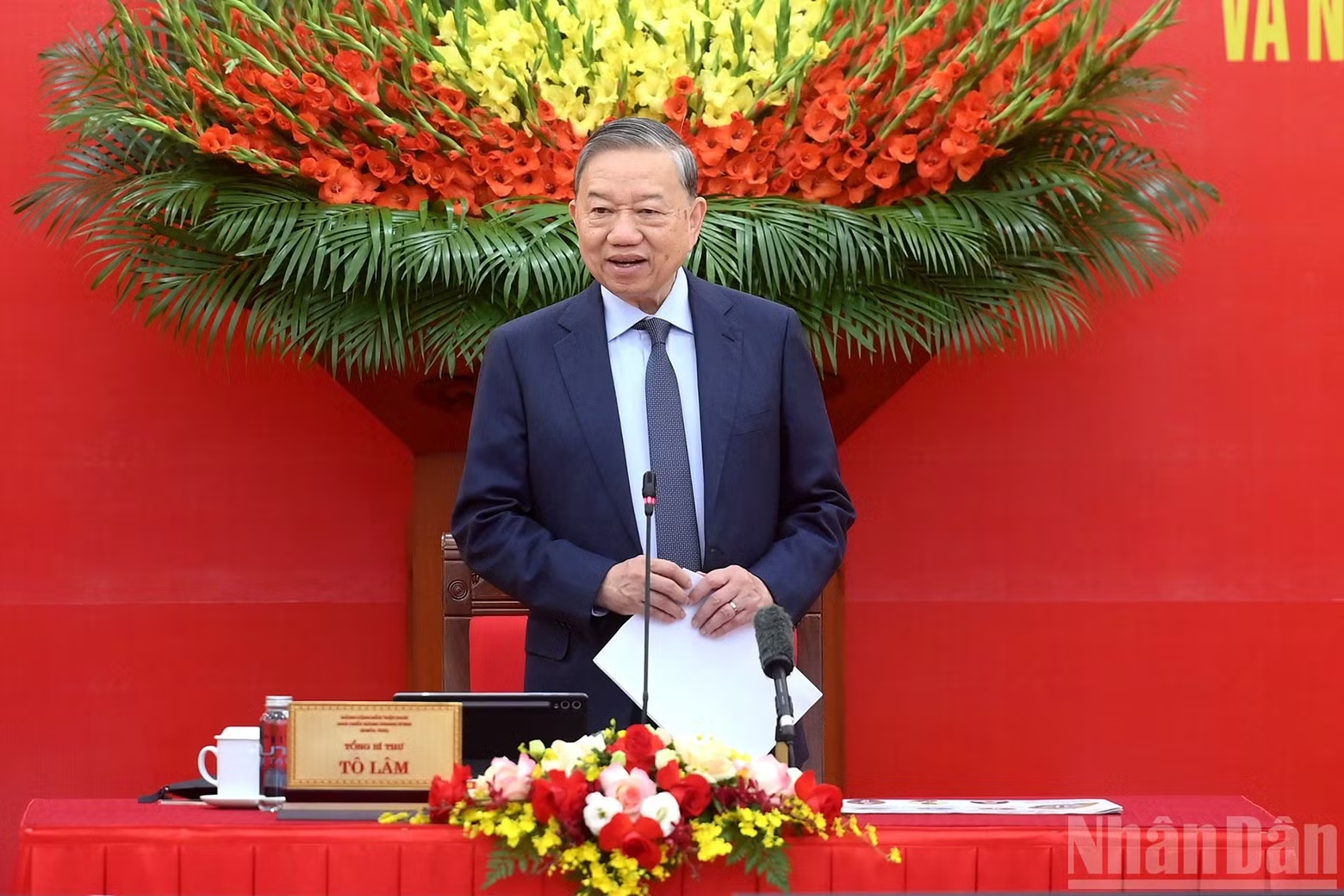
General Secretary Lam stressed that 2026 is of special significance as the first year of implementing the Resolution of the 14th National Party Congress. Early in the new term, the Party Central Committee will issue two strategic resolutions - one on transforming the national development model based on science and technology, and another on mobilising resources for double-digit economic growth.
This underscores the foundational and indispensable role of science, technology, innovation and digital transformation, which are no longer optional but mandatory for Viet Nam’s rapid and sustainable development, he said.
The Party General Secretary called on ministries, sectors and localities to seriously address remaining shortcomings and delays.
Implementation capacity, action discipline and concrete outputs will be decisive, he said, urging a transition from plan-based to goal- and product-based approaches, from progress reporting to effectiveness assessment, and from partial implementation to thorough completion.
Party Committees and heads of ministries, sectors, agencies and localities must take direct responsibility for progress and results, linking outcomes to evaluation, emulation and accountability mechanisms, he underscored.
Priority tasks include completing the national digital and data architecture frameworks, developing infrastructure and databases, deploying strategic technologies, building high-quality human resources, and improving digital skills across society. Relevant agencies must also ensure that guiding documents for laws passed in 2025 take effect no later than the first quarter of 2026.
General Secretary Lam emphasised the need to develop concrete applications and products serving socio-economic development and people’s needs, with public and business satisfaction as the ultimate measure. Digital transformation must be closely linked with administrative reforms, organisational streamlining and the effective operation of the two-tier local administration model.
He highlighted the importance of concentrating resources on strategic technologies and product commercialisation, strengthening linkages among the State, educational institutions and enterprises, and prioritising high-tech zones, innovation centres and smart cities as testing and diffusion spaces.
The State should play a facilitating role and act as the first customer for science and technology products, while ensuring cybersecurity, data security and digital sovereignty as prerequisites for sustainable development, General Secretary Lam noted.
The Party chief affirmed that the Politburo’s Resolution No. 57-NQ/TW has opened a new phase, placing science, technology, innovation and digital transformation at the centre of Viet Nam’s development strategy.
With institutional foundations laid in 2025, 2026 must deliver groundbreaking action and tangible results, turning policies into products and ideas into real value for people and businesses, contributing to Viet Nam’s rapid and sustainable growth, the leader stressed.