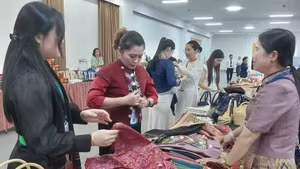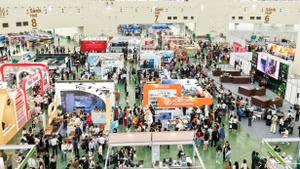
The seminar aimed to help the Indian business community gain a clearer understanding of the scale, role and potential of the Spring Fair 2026 one of Viet Nam’s major trade promotion events hosted by the Government and the Ministry of Industry and Trade while creating direct links between associations and enterprises of the two countries amid the reshaping of strategic supply chains in Asia.
Opening the event, Bui Trung Thuong, Trade Counsellor at the Vietnamese Embassy in India, said the Spring Fair 2026 taking place in Ha Noi in early next month will see the participation of more than 30 provinces and cities, along with numerous central ministries and agencies. The event is not merely a trade event but a comprehensive platform combining economic, service and cultural activities, offering international partners a broader view of Viet Nam’s investment and business environment.
Viet Nam hopes Indian enterprises will engage more deeply in value chains, not only as suppliers or buyers, but as long-term partners across stages from raw materials and components to production and export of finished products, he noted.
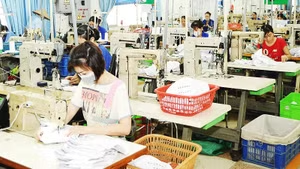
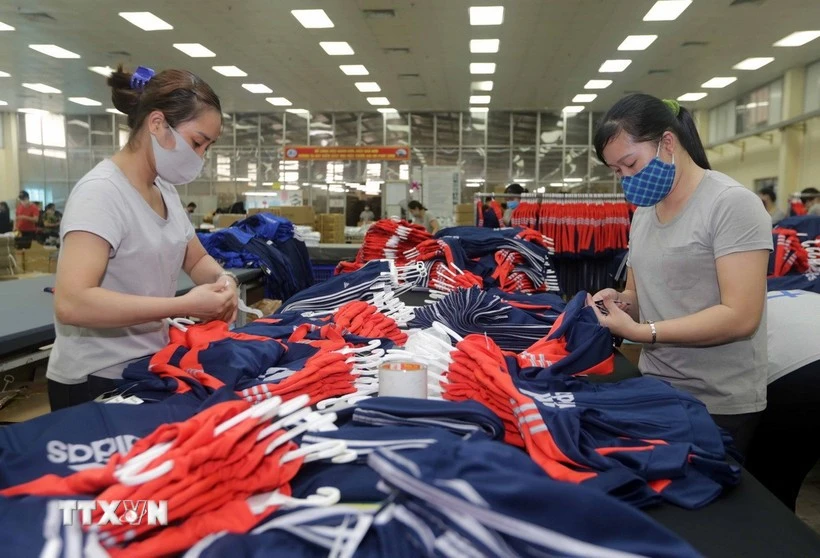
At the seminar, Mai Nguyen, a representative of the Viet Nam Textile and Apparel Association (VITAS), said Viet Nam’s textile and garment exports reached about 46 billion USD in 2025 and are targeting up to 49 billion USD. As Viet Nam still imports around 65% of raw materials, stronger cooperation with India a key supplier of cotton, yarn and synthetic materials would help reduce costs, diversify supply chains and better meet global sustainability standards.
In footwear, Do Kim Giang from the Viet Nam Leather, Footwear and Handbag Association (LEFASO) said exports reached around 29 billion USD in 2025. While Viet Nam excels in finished product manufacturing for global brands, India has strengths in leather, materials and components, creating strong complementarities for deeper cooperation.
From the Indian side, Chandrima Chatterjee, Secretary General of the Confederation of Indian Textile Industry (CITI), noted that Viet Nam and India are major Asian manufacturing hubs with complementary value chains, with India keen to expand cooperation in man-made fibres, technical textiles and sustainable materials.
Meanwhile, Ramesh Kumar, Chairman of the Council for Leather Exports of India (CLE), said India’s leather and footwear exports to Viet Nam reached about 92 million USD in 2024–2025, with ample room for growth, particularly in supplying leather and components.
In furniture, Rajesh Bhagat, Chairman of the Wadex Group, highlighted strong growth in India’s furniture market driven by urbanisation, real estate and tourism, presenting opportunities for Vietnamese firms with global strengths in wood and furniture exports.
Concluding the seminar, Trade Counsellor Bui Trung Thuong said the Spring Fair 2026 and related specialised exhibitions will serve as an important platform for enterprises of both countries to connect, seek partners, place orders and promote investment.
He called on Indian associations and businesses to take advantage of direct flights and support from the Vietnamese Embassy and Trade Office to explore the market, attend the fair and build long-term, sustainable partnerships.