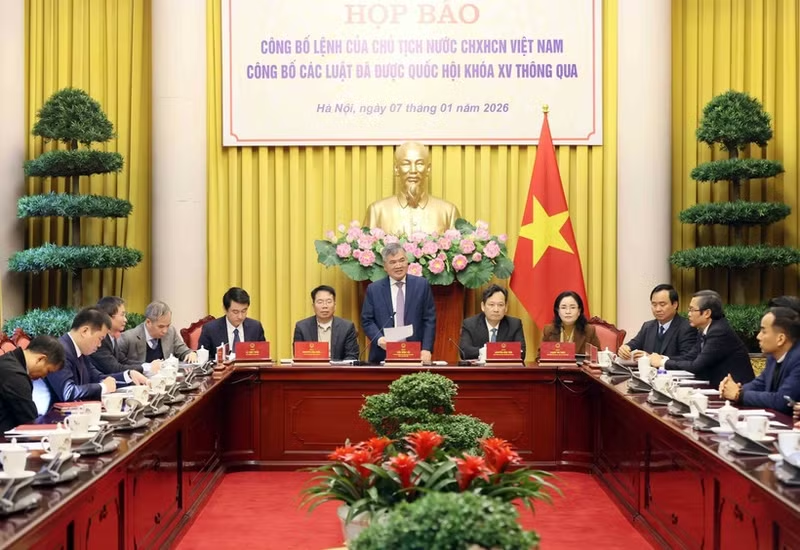
The laws cover a wide range of fields, including journalism, education, anti-corruption, judicial reform, agriculture, environment, international treaties and deposit insurance.
A key highlight is the Press Law, which comprises four chapters and 51 articles and will take effect from July 1, 2026. The law reaffirms the revolutionary nature and historical role of Viet Nam’s press, promoting the development of professional, humane and modern journalism. It also strengthens citizens’ rights, including the right to request corrections.
Notably, it introduces principles on media organisation models and the journalism economy, while expanding operational space for press development, particularly in the context of the streamlined organisational apparatus. It provides a legal framework for multimedia press agencies, specialised financial mechanisms, and the publication of journalistic products on digital platforms, while strengthening state management to ensure efficiency and effectiveness.
Significant attention was also given to education reform. The Law on amendments and supplements to several articles of the Law on Education institutionalises major Party orientations, including making secondary education compulsory and universalising preschool education for children aged three to six. The law promotes science, technology and innovation in education, encourages the controlled application of technology and artificial intelligence, advances comprehensive digital transformation, and establishes a national education and training database. It also introduces a unified national set of general education textbooks and a roadmap toward free textbooks.
The Law on Vocational Education, which comprises nine chapters and 45 articles, and the Law on Higher Education, which includes nine chapters and 46 articles, aim to modernise legal frameworks, enhance quality and effectiveness, and align training with labour market needs and international integration. These laws are expected to contribute to developing high-quality human resources and supporting Viet Nam’s strategic development breakthroughs in the new era. All three education-related laws took effect from January 1, 2026.
In the anti-corruption field, the Law on amendments and supplements to certain provisions of the Law on Corruption Prevention and Control refines evaluation criteria, enhance accountability, and adjust asset and income declaration thresholds to better reflect current realities.
The Law on amendments and supplements to several articles of the Law on Citizen Reception, the Law on Complaints, and the Law on Denunciations introduces online reception mechanisms, clarifies responsibilities of authorities, and improves procedures for handling complaints and denunciations. These two laws will come into force on July 1, 2026.
Other notable legislation includes the Law on Rehabilitation and Bankruptcy, effective March 1, 2026, which aims to facilitate business recovery, ensure timely bankruptcy procedures, unlock resources and improve the investment climate. The Law on Specialised Courts at the International Financial Centre, effective January 1, 2026, establishes a modern, professional judicial mechanism to resolve investment and business disputes in line with international standards, thereby enhancing investor confidence.
The Law amending and supplementing certain provisions of the Law on International Treaties further clarifies procedures for proposing, negotiating and approving treaties, strengthening coordination among relevant agencies. Meanwhile, the Laws amending and supplementing certain provisions of 15 laws in the agriculture and environment sectors, and the Law on Geology and Minerals focus on decentralisation, administrative reform and the removal of legal bottlenecks to support sustainable growth. These laws took effect from January 1, 2026.
Finally, the Law on Deposit Insurance, effective May 1, 2026, strengthens the protection of depositors’ legitimate rights and interests, contributes to maintaining the stability of the credit institution system, and supports the safe and sound development of banking activities.



![[Infographic] Key points from General Secretary and President To Lam’s opening remarks at the 14th PCC’S 4th plenum](https://en-cdn.nhandan.vn/images/j0QNt7m_5iy1OXpnUKiwG61aYhTv_B140GWhfriF26JwZbNNJ8LWetfvXUhz4Az6/1-8220.jpg.avif)