Enhancing destination value
Many years ago, the cave system in Phong Nha–Ke Bang did not attract much attention from visitors. However, since Oxalis began offering expedition tours to Son Doong or trekking trips to Hang En, the area has become a booming destination for adventure travel and cave tourism.
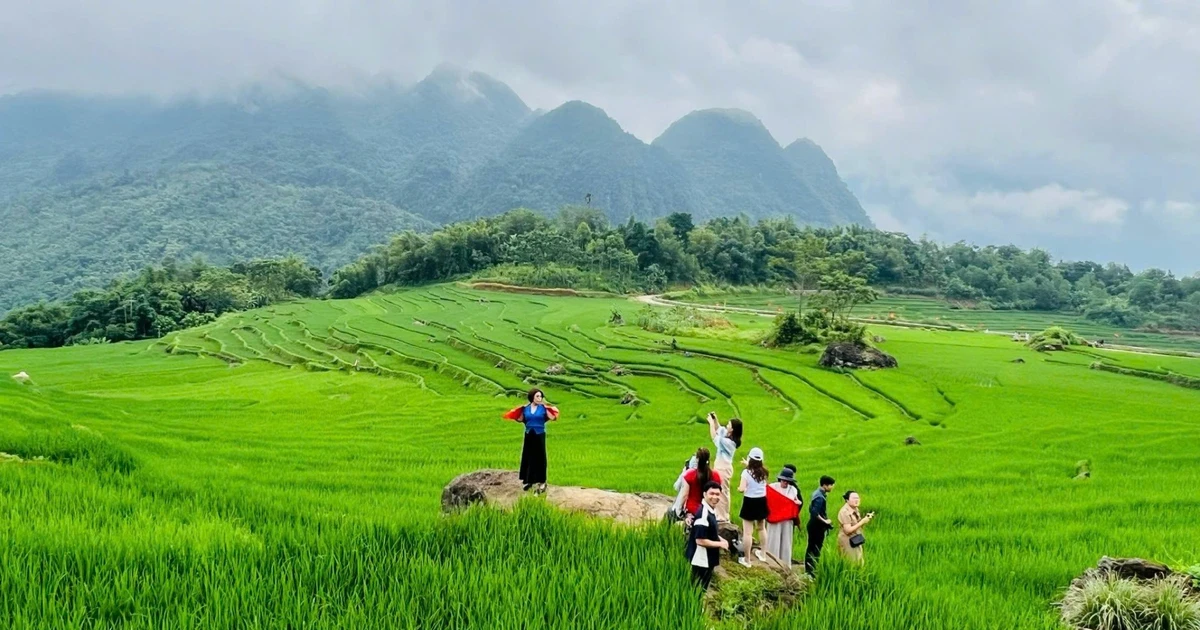
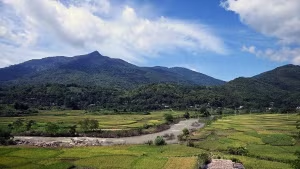
Mu Cang Chai is similar. Although it boasts magnificent terraced fields, it used to be only a small stopover. Only when “golden season” tours combined with exploration of local culture were strongly developed by tour operators did Mu Cang Chai truly become a “magnet” for visitors. Similarly, the Hoa Lo Prison Relic Site (Ha Noi) has seen a breakthrough in visitor numbers after partnering with tour operators to develop unique night tours.
Notably, beyond developing products integrated with promotion campaigns and market connections, tour operators also demonstrate their role in shaping tourism consumption trends. For example, the introduction of green tours with no single-use plastic waste and respect for local cultural identity shows how tour operators shape a trend towards environmentally and socially responsible tourism.
According to the Viet Nam Tourism Association, as of November 2025, Viet Nam had 4,775 international tour companies and 2,150 domestic tour companies, employing around 150,000 direct workers. Vu The Binh, Chairman of the Viet Nam Tourism Association, noted that although accounting for only about 10% of direct tourism labour, tour operators, with their dynamism and comprehensive engagement, are the pioneering force driving the entire sector forward.
This is why many experts believe that, to ensure Viet Nam’s tourism develops rapidly and sustainably in the new era, the starting point must be leveraging the leading, innovative role of tour operators.
Changing mindsets and actions
Visitors increasingly prefer to research, book services, and travel independently. According to Ha Van Sieu, Deputy Director-General of the Viet Nam National Authority of Tourism, tour operators must change their business mindset, product models, and customer-approach methods, shifting from providing traditional tours to providing value, designing in-depth experiences, and offering services that visitors cannot do on their own or cannot do well. This is the space where tour companies can create new competitive advantages.
Businesses can develop flexible modular packages that allow customers to choose each component according to their needs, from accommodation, transport, and local experiences to guides and essential services for specialised activities such as trekking, culinary tourism, and rural tourism.
Dr Nguyen Anh Tuan, Director of the Institute for Tourism Development Research, noted that the boom of online travel platforms, the outdated nature of traditional tour selling models, and the rising demand for sustainable, responsible travel are creating internal challenges and highlighting gaps between business capacity and customer needs.
These challenges include limited digital capability, as most tour companies stop at digitising information rather than undertaking strategic digital transformation; barriers in capital and human resources for investing in essential customer-data management systems; and difficulties in providing green offerings, which prevents the development of high-end products. These bottlenecks must be addressed to adapt to new consumer behaviour.
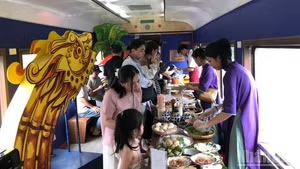
Tour operators need to reposition their role, becoming value advisers in the digital and sustainable era; invest in customer-data management systems and digital platforms to regain initiative in reaching visitors; and, more importantly, specialise products by developing exclusive, highly sustainable experiential products such as culinary tours, adventure tourism, and storytelling heritage tours.
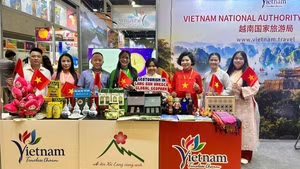
Recently, Viet Nam Travel Day 2025 took place for the first time in Quang Ninh, attracting more than 400 domestic tour and travel service businesses and nearly 120 international buyers from China, the Republic of Korea, Japan, Singapore, Indonesia, Thailand, and India.
From practical business experience, Pham Ha, Chairman of Lux Group, affirmed that the sustainable direction that creates strong momentum for tour operations and a competitive advantage for Viet Nam’s tourism is a focus on cultural tourism. When travel is no longer simply about seeing–photographing–passing through, but a journey of learning–understanding–connecting–feeling, Viet Nam cannot compete on price but must compete on cultural identity and authentic experiences.
This approach increases visitor spending, length of stay, and emotional engagement, while enhancing national soft power. It requires tour operators to regard culture as a key driver for developing the tourism economy.
Meanwhile, Phung Quang Thang, Chairman of the Viet Nam Green Tourism Sub-Association, particularly emphasised that tour operators must take the lead in changing both their mindset and operating methods towards greener practices.
![[Video] Viet Nam among Top three Asian destinations for return visitors](https://en-cdn.nhandan.vn/images/nyM650OGFWrOVWc-xajqN-rTZ68Rlmc1fiGJOhBRYHErj-E25MBpvJqrpphXazfrpe9t-fYCGuQU4CN0yXo3Rg/du-lich-vietnam.jpg.avif)