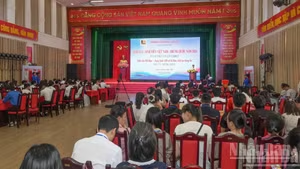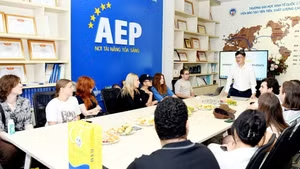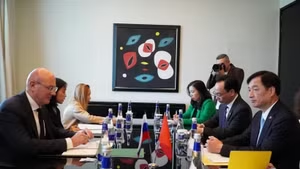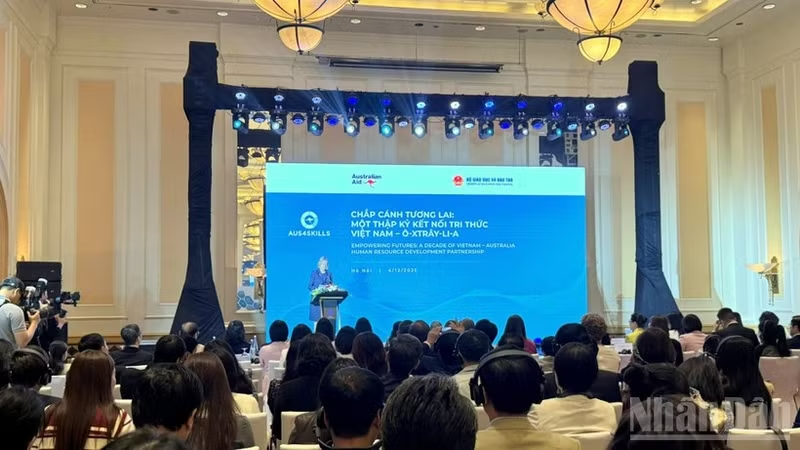
The conference underscored the essential role of Aus4Skills in improving workforce quality, promoting inclusive education, and meeting Viet Nam’s evolving human resource development needs.
Implemented since 2016, Aus4Skills has received a total of 63.1 million USD for activities in Viet Nam and 147 million AUD for implementation costs in Australia.
It has become one of the most notable cooperation initiatives between the two countries in human resource development.
In higher education, Aus4Skills has supported capacity building in university governance, institutional autonomy, quality assurance, and accreditation aligned with international standards for around 1,000 administrators, leaders, and lecturers from universities.
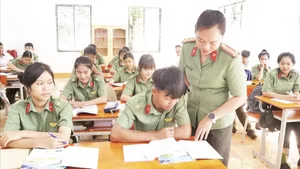
In vocational education, the programme has made significant contributions to developing competency-based training and assessment models, strengthening linkages with enterprises, and enhancing vocational skills, particularly in the field of logistics.
Nguyen Thu Thuy, Director of the MOET’s International Cooperation Department, highly appreciated the efforts of Australian partners in promoting gender equality and social inclusion, with women accounting for 58% of trainees, as well as a noteworthy proportion of people with disabilities, ethnic minority groups, and those from disadvantaged areas.
Australian Ambassador to Viet Nam Gillian Bird affirmed that Aus4Skills has become more than a programme, it is a bridge connecting people, ideas, and opportunities between the two nations.
She said that Aus4Skills has supported more than 500 scholarship recipients, many of whom now hold leadership positions in government agencies, universities, and enterprises.
The programme has also helped improve governance and quality assurance in higher education, benefiting more than 40,000 students.
The Australian diplomat emphasised that these achievements reflect the shared commitment of the two countries to building a skilled, adaptable, and future-ready workforce.
She reaffirmed that Australia will continue to accompany Viet Nam in developing human resources for a modern, dynamic, and resilient economy.
Expressing gratitude to the Australian government, Thuy expressed the hope that both sides would continue to enhance cooperation and develop the next phase of Aus4Skills in a practical and sustainable direction aligned with Viet Nam’s educational reform goals.
Viet Nam also hopes that Australia will continue to support English-language training and share knowledge on AI, digital transformation, and suitable digital learning platforms in line with Australia’s strengths.