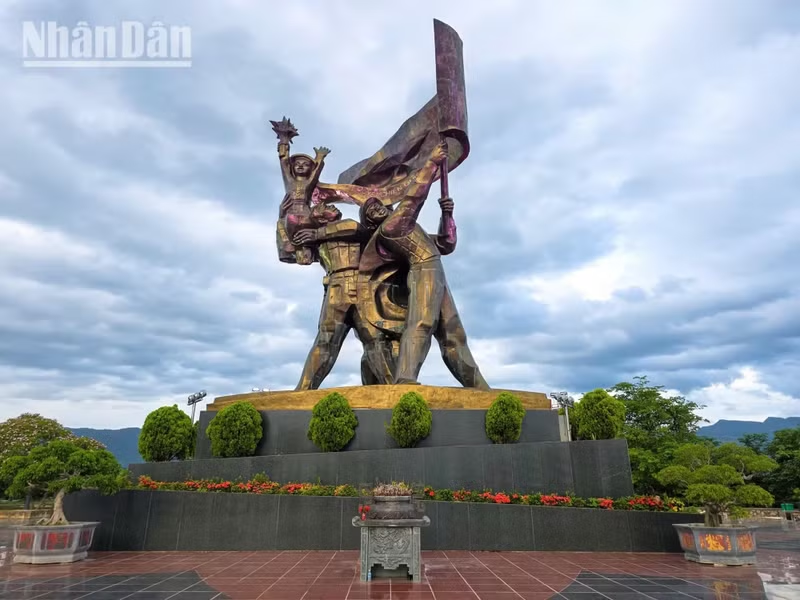
In an interview with a Nhan Dan Newspaper reporter, French Ambassador to Viet Nam Olivier Brochet shared his perspective on turning Dien Bien Phu from a place of wartime memory into a “symbol of hope and peace”.
The conversation explored the pillars of cultural diplomacy, heritage preservation and sustainable tourism development, affirming the strong will of France and Viet Nam to close the past and jointly build a new journey of peace and prosperity.
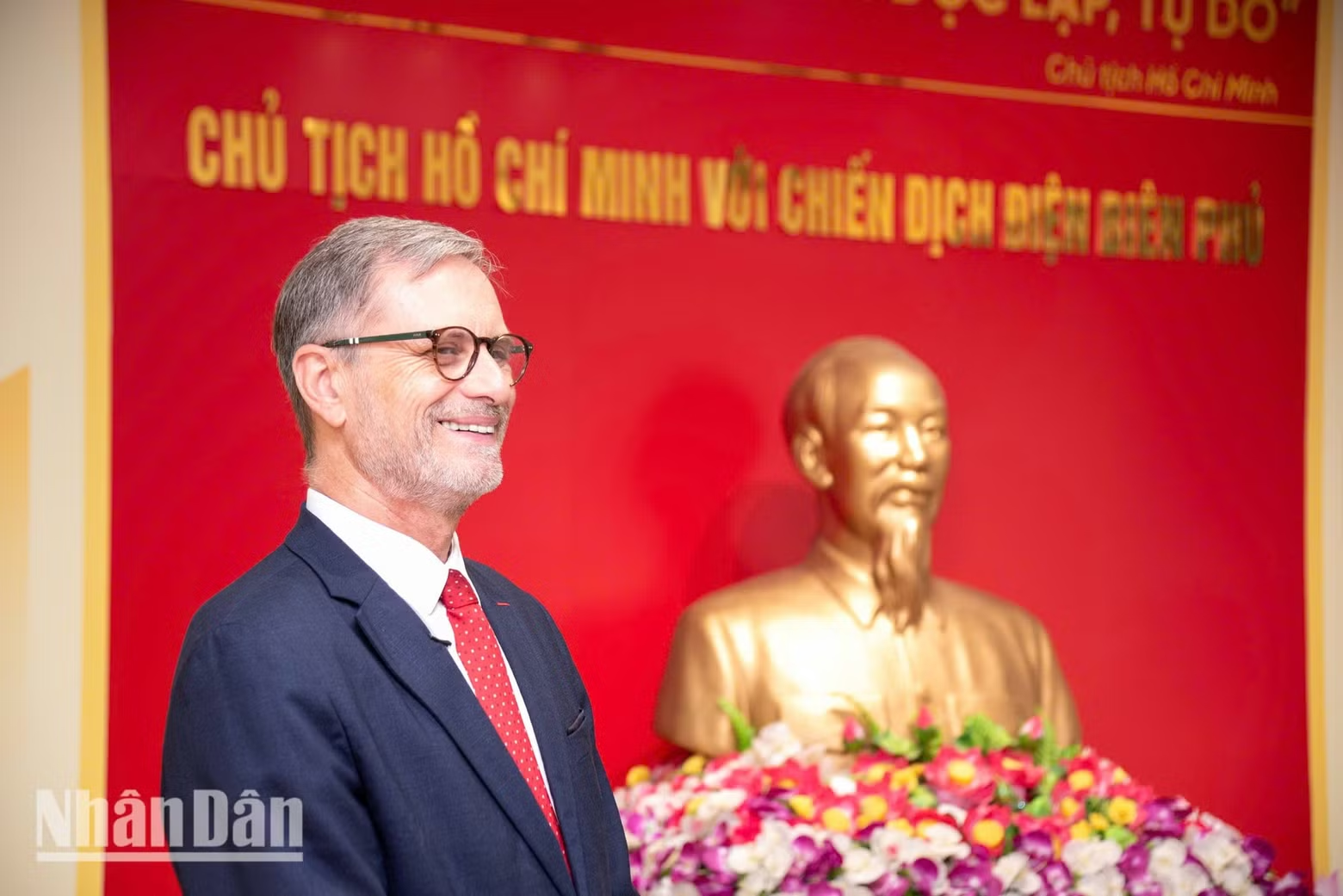
Q: Could you share the strategic goals and deepest significance of the cooperation project between the Caen Memorial Museum and the Dien Bien Phu Victory Museum in the current context?
A: The main goal of this cooperation project in Viet Nam is to strongly promote cultural and museum cooperation between the two countries. We expect the working delegation to create new progress in connecting cultural institutions, especially through sharing international standards in museum preservation and operation.
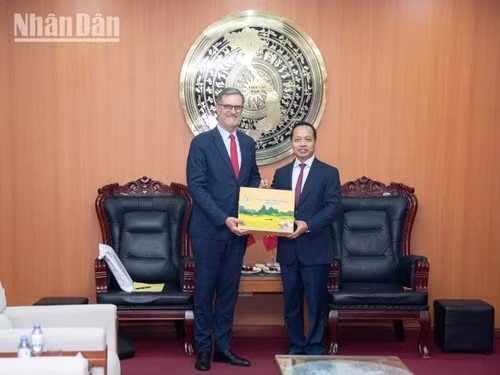
The cooperation project between the Caen Memorial Museum and the Dien Bien Phu Victory Museum carries great symbolic significance for bilateral relations, conveying a strong message about the connection between the peoples of the two countries through a multidimensional and objective view of history.
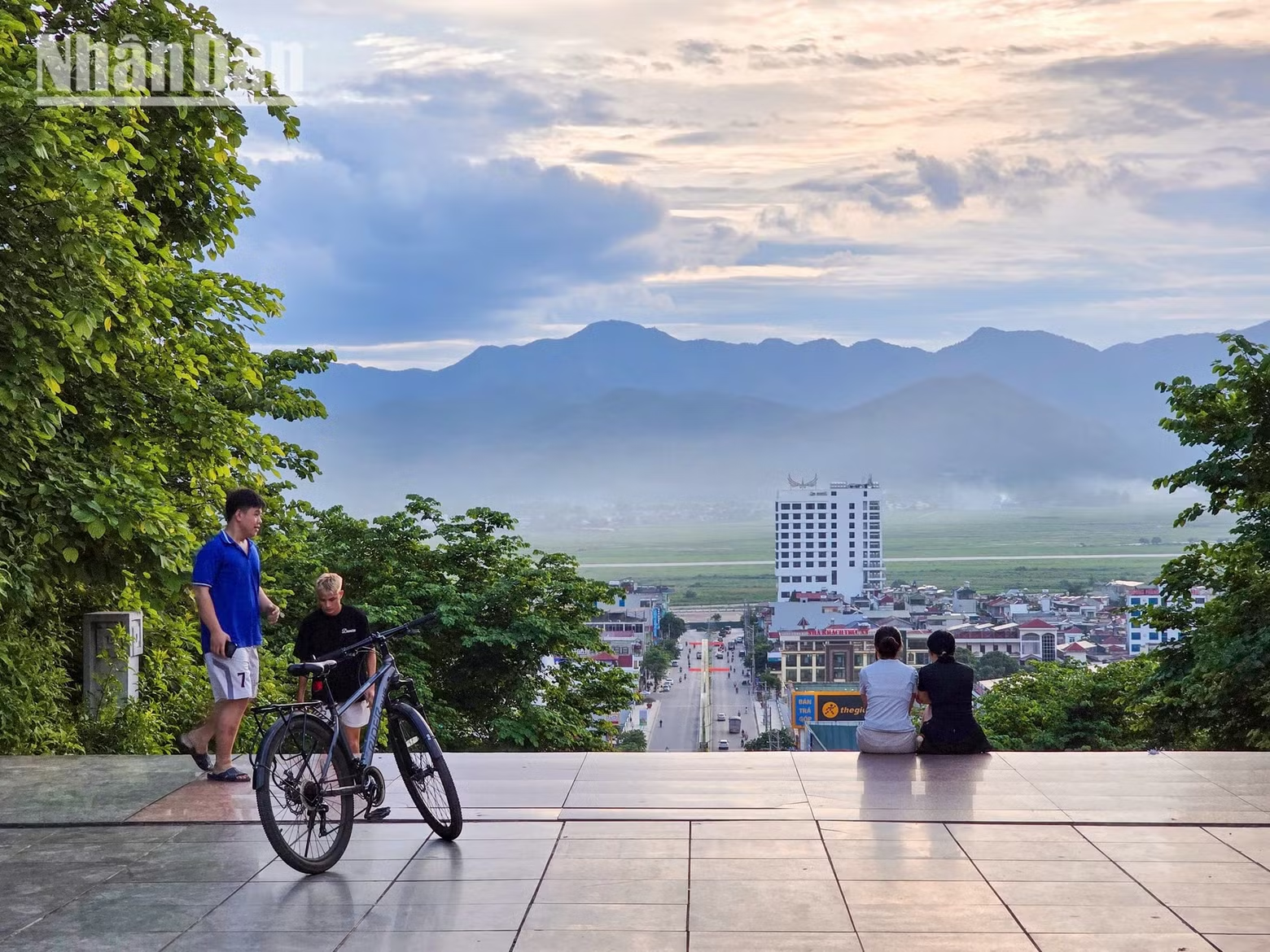
Today, instead of being only a symbol of a period of fierce struggle, Dien Bien Phu is gradually becoming a place of “hope and peace”, promoting mutual understanding and the shared will to turn memory into a driving force for development.
This is part of efforts to strengthen friendship and cooperation between France and Viet Nam after more than 70 years of history. The French Embassy believes that respect for shared history is the firmest foundation for building a strategic partnership. The cooperation project between the two museums of the two localities will demonstrate that the wounds of the past can be healed through culture.
We are very proud to see this project receiving strong support from the authorities and people of both countries. Ultimately, our goal is to leave a meaningful legacy for future generations about the spirit of reconciliation.
Q: What new developments are there in the study of the shared history between the two peoples, especially in the way we view the memory of the Battle of Dien Bien Phu?
A: The shared history between France and Viet Nam is a long flow with many different periods. Over the past decades, the two countries have worked closely together to ensure access to valuable historical sources. At present, the national archives agencies of Viet Nam and France regularly exchange and support each other professionally. In particular, colonial-era archives at the national archives centre in Aix-en-Provence, southern France, are being digitised to help the Vietnamese side gain easier access for research. This is an effort to promote a fuller understanding of history and serve museum work.
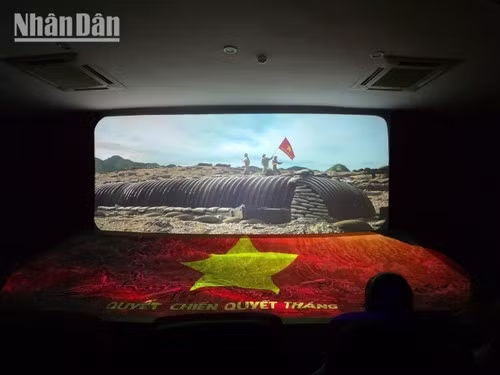
Moreover, Dien Bien Phu is a milestone in the heroic history of the Vietnamese people and also a source of inspiration for movements for struggle and national liberation around the world. The position of this battle in world history makes it even more important for both peoples to take joint action to preserve historical heritage for future generations.
Over the years, visits by French veterans to Dien Bien Phu have been proof of the spirit of reconciliation and friendship: they return not to evoke old painful memories, but to seek peace of mind and express friendship with the Vietnamese people. The tears of French veterans when they revisit the old battlefield carry a message of appreciation for life and peace.
Cooperation between historical experts and museum managers from Viet Nam and France helps both sides overcome barriers of old thinking and move towards a shared understanding of the past.
We highly value Viet Nam’s openness in accessing sources from France. Studying history in a scientific and objective manner is the best way for us to respect the generations who fell. This cooperation can be seen as a dialogue between the two peoples, between the past and the present, so that younger generations can better understand the value of independence and freedom.
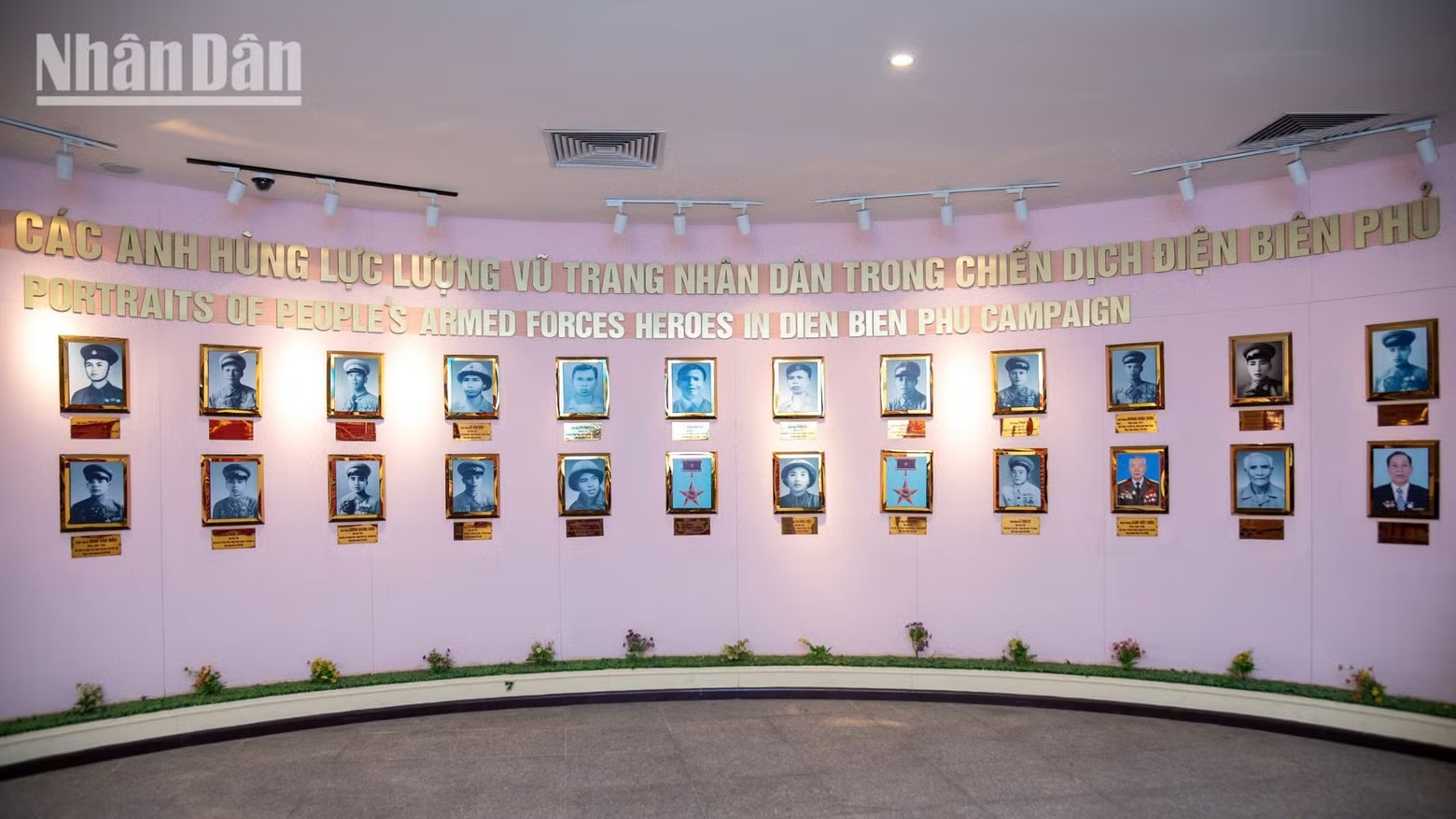
Q: How do you assess the educational role of museums for younger generations and current youth exchange programmes between the two countries?
A: Museums play an especially important role as educational spaces, where memory is preserved for future generations, connecting historical knowledge on the page with real stories, events and artefacts. As historical witnesses gradually pass away over time, museums become the only bridge helping young people access historical values.
In France, museums are an effective “support tool” for teachers in teaching history in a lively way. From the knowledge they have learned, students can interact directly with real artefacts, behind which are emotional stories. The museum system in France regularly encourages intergenerational educational activities, where grandparents and parents can visit with their children and grandchildren and share their stories or understanding.
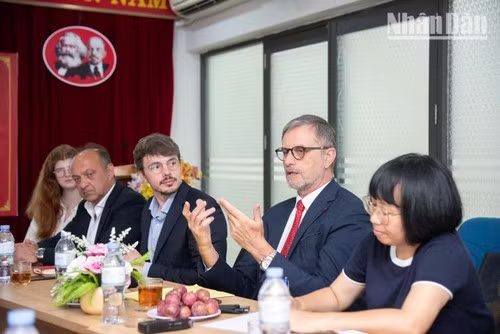
In addition, we are actively implementing exchange programmes, summer study programmes and extracurricular activities for students and young people. For example, the Alexandre Yersin French High School in Ha Noi organised a trip for students to Dien Bien Phu to learn about the campaign. Similarly, a high school in the Bretagne region, in eastern France, has also organised field trips for students to Viet Nam for many years. These activities help French and Vietnamese students understand each other’s culture and history in the most natural way.
The French Embassy in Viet Nam and the Vietnamese Embassy in France jointly support and serve as bridges for establishing twinning agreements between educational institutions and localities of the two sides, with Ha Noi, Hai Phong and Ho Chi Minh City taking the lead with promising commitments to friendship and cooperation.
Cultural and educational cooperation is not only about imparting knowledge, but also about learning how to be open in a diverse world. We hope that each museum visit will inspire Vietnamese and French students studying at French educational institutions with a passion for discovery, national pride, awareness of heritage preservation and appreciation for peace.
Q: France is a country that has succeeded in developing its tourism sector. How can the two sides coordinate to promote heritage preservation alongside sustainable tourism development in Viet Nam?
A: France is proud to be one of the world’s leading tourist destinations, with more than 100 million visitors each year. France is also willing to share this development experience with Viet Nam.
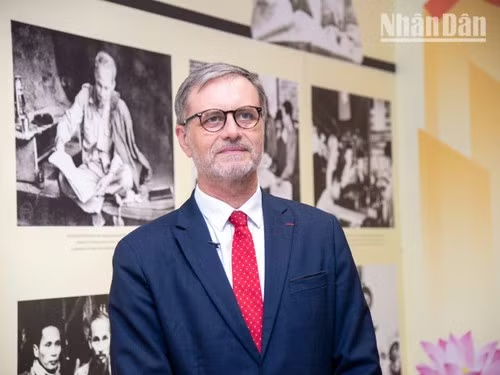
With its long-standing strength in restoring and promoting the value of historical architectural works for economic development, France is actively supporting Viet Nam in projects to restore old architectural heritage. These include the consultancy project to restore the Hai Phong Opera House, as well as other iconic works in Ha Noi such as Long Bien Bridge and the University of Pharmacy. We believe these heritages are not only symbols of a period in the past, but also valuable assets for the future, especially for the tourism sector.
However, we also want to share the issue of sustainable tourism to avoid overloading heritage sites. France is also facing the challenge of how to harmonise economic benefits from tourists with ensuring the lives of local people. We need solutions to develop tourism in a balanced way among regions, provinces and cities, avoiding excessive concentration on a few “hot spots”. At the same time, heritage preservation must go hand in hand with preserving the identity and living environment of communities.
France and Viet Nam can work together to find green and humane solutions for the “smokeless industry”. This is a highly promising field of cooperation in the current context of globalisation.
Q: In the overall cultural diplomacy strategy of France in Viet Nam, what significance does this cooperation project between the expert delegation from the Caen Memorial Museum and the Dien Bien Phu Victory Museum hold? How can local cooperation become a sustainable pillar of relations between the two countries?
A: Cultural diplomacy is not a new concept. France has also implemented this policy for many decades in Viet Nam, and Viet Nam has done so in the opposite direction, to strengthen mutual understanding between the two peoples. The core goal of this strategy is to promote exchanges, share professional experience and jointly build common projects for the benefit of the people of both countries.
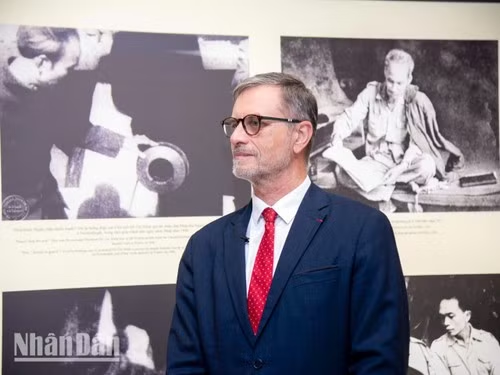
The project between the two museum units is one of the diverse and long-standing cultural cooperation programmes between the two countries. Previously, the French side also carried out similar projects with the Viet Nam Museum of Ethnology in Ha Noi and the Vietnamese Women’s Museum.
In addition, there is also an archaeological cooperation project at the Thang Long Imperial Citadel, aimed at promoting and introducing the heritage values of the Thang Long Imperial Citadel to French visitors, including residents of Toulouse, and attracting people from Toulouse to Ha Noi.
Cooperation between the Thang Long Imperial Citadel and the ancient town of Provins in France, as well as between Ha Noi City and authorities in the Ile-de-France capital region, has also been maintained and promoted very effectively over the years.
The French Embassy in Viet Nam has also proposed the idea of twinning Dien Bien Province with Calvados Province and the city of Caen in France in the coming time. This combination will open up major cooperation opportunities not only in museums but also in tourism development.
Another typical example is in the fields of cinema and animation. France has also actively supported young Vietnamese talents in affirming their voice and artistic identity at world film festivals.
The French embassy expects that the cooperation project between the two museums will become a representative model of modern cultural diplomacy. It is not only about preserving the memory of the past, but also about investing in the cultural and creative industries of the future. Everything can begin with the first “bricks” such as an exhibition, a language class or an artistic exchange performance programme.
We hope Dien Bien Phu will not only be mentioned as a battlefield of the past, but also as a cultural centre, a meeting place of peace and hope, contributing to strengthening the Comprehensive Strategic Partnership between France and Viet Nam in the new era.
Thank you very much!