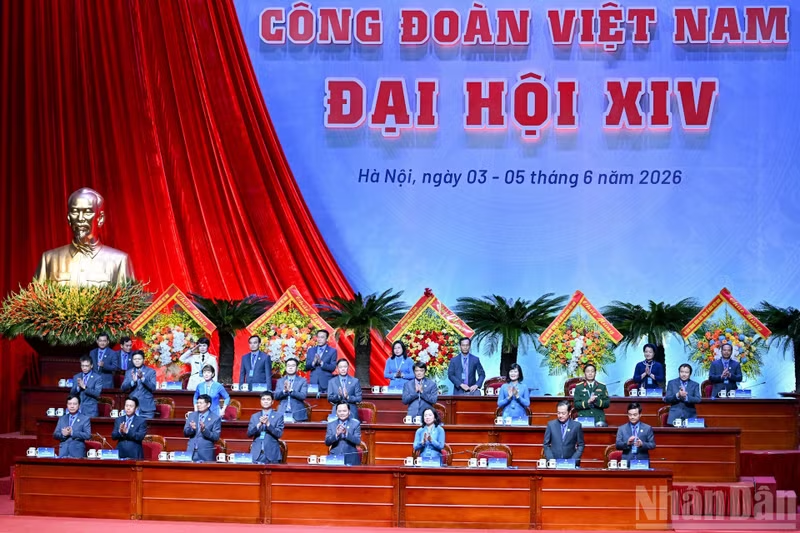
In the 2023–2026 period, with complex upheavals both internationally and domestically, and particularly unprecedented challenges following the COVID-19 pandemic and the global economic downturn, the Viet Nam Trade Union has demonstrated resilience, proactively innovated, and adapted flexibly, successfully fulfilling its mission as a “trusted companion” of enterprises and a “reliable support” for union members and workers.
The Viet Nam Trade Union’s core function — representing, caring for, and protecting the lawful and legitimate rights and interests of union members and workers — has been continually reaffirmed and has recorded new marks of achievement.
Humane, practical programmes such as “Reunion Tet”, “Trade Union Shelters” and “Workers’ Month” have not remained mere slogans but have been realised in millions of gift packages and thousands of social houses being handed to disadvantaged trade union members and workers.
At the macro level, the Trade Union has proactively and actively participated in shaping legislation, contributed to the National Wage Council, proposed increases to regional minimum wages, and ensured social security, helping workers remain confident in and committed to their enterprises and workplaces.
The Viet Nam Trade Union has demonstrated resilience, proactively innovated, and adapted flexibly, successfully fulfilling its mission as a “trusted companion” of enterprises and a “reliable support” for union members and workers.
The Viet Nam Trade Union has also been a focal point for mobilising patriotism and the strong creativity of the direct labour force. The emulation movements launched by trade union organisations at all levels have become launchpads for hundreds of thousands of initiatives which have been applied in practice.
These contributions have saved the State and businesses tens of thousands of billions of Vietnamese dong, improved national labour productivity, and supported modernisation, professionalisation and high competitiveness in the digital era.
Moreover, the Viet Nam Trade Union has made a strategic contribution to macroeconomic stability through its leading role in building harmonious, stable and progressive labour relations. By promoting workplace dialogue, negotiating and signing collective labour agreements that include provisions more favourable to workers, the Trade Union has eased conflicts of interest and minimised spontaneous labour disputes.
This stability helps Viet Nam maintain a safe, attractive investment environment, strongly drawing domestic and foreign capital and promoting sustainable economic growth.
Across the country, the entire system has recently focused on streamlining the Trade Union’s organisational apparatus at all levels, linked to staff reductions in accordance with the Party’s guideline and aligned with the new organisational model of the political system. Through this restructuring, the Trade Union’s apparatus has been streamlined and, initially, is operating to meet the requirements of the new model, concentrating on resolving arising difficulties and inadequacies and maintaining effective activities.
The results outlined above have made an important contribution to the nation’s overall achievements, helped strengthen the political system, and further brightened the proud traditions of the Trade Union and the working class.
These accomplishments stem from assorted factors: the Party’s attentive leadership and close direction; close coordination from the State, authorities at all levels, the Viet Nam Fatherland Front and socio-political organisations; and the cooperation of employers. Above all, they have resulted from the proactive spirit, effort, perseverance, continuous renewal and creativity of trade union officials, trade union members and workers across the country.
In the new context, the Trade Union is not only a school for political education and class resolve for workers but also an active component in state management and economic and social governance.
The Fourth Industrial Revolution, the trend of digital transformation, the green economy and the implementation of a new generation of free trade agreements present entirely new demands and challenges for trade union organisations.
The emergence of new forms of work requires the Viet Nam Trade Union to continue to innovate more vigorously in organisation, modes of operation and approaches; to place workers at the centre; and to focus primarily on grassroots organisations as the operational base.
In the new context, the Trade Union is not only a school for political education and class resolve for workers but also an active component in state management and economic and social governance.
Welcoming the 14th Congress, trade union officials, trade union members and workers across the country are determined to unite, innovate and be creative, overcoming all difficulties to build a stronger Viet Nam Trade Union. At the same time, they will strive to successfully implement the Congress’s Resolution, making practical achievements to celebrate historic milestones: the 100th anniversary of the founding of the Viet Nam Trade Union; the 100th anniversary of the founding of the Communist Party of Viet Nam; and the 100th founding anniversary of the nation.
Through these efforts, they affirm their role as a pioneering force, making an important contribution to the goal of transforming Viet Nam into a developed, high-income, prosperous, strong and happy country by the middle of the 21st century.