The Politburo’s adoption of Resolution No. 80-NQ/TW on January 7, 2026, on “Developing Vietnamese culture” marks a significant step forward in the Party’s awareness and actions regarding this strategically important field. The resolution not only inherits the spirit of Resolution No. 33-NQ/TW but also represents a significant advancement, meeting the new demands of the country’s renewal and international integration.
Over a decade ago, Resolution No. 33-NQ/TW dated June 9, 2014, on “Building and developing Vietnamese culture and people to meet the country’s sustainable development requirements” set out the principle that culture stands on equal footing with the economy, politics, and society. Today, Resolution No. 80 elevates culture to a higher position, requiring it to take the lead and illuminate the path for development.
This is not merely symbolic phrasing; it is a clear affirmation of culture’s role as a crucial “regulator,” ensuring the nation develops in the right direction—sustainably, humanely, and without being trapped in a growth-at-all-costs trajectory. As the country enters a new phase of development, culture’s role goes beyond mitigating the negative consequences of reform; it must actively guide, orient, and provide a solid spiritual foundation for long-term growth.
One notable innovation in Resolution No. 80 is the identification and unified implementation of four core value systems: national values, cultural values, family values, and the standards of the Vietnamese individual. While previously these values were mainly presented in a guiding manner, they are now concretely defined for practical application in social life.
These four value systems form a coherent and closely interlinked framework: the family nurtures the individual; the individual shapes culture; culture builds national strength; and national strength, in turn, drives cultural development. This forms a vital foundation for the Party to effectively implement the work of building social ethics, restoring virtuous values, and fostering the cultural resilience of Viet Nam in the new era.
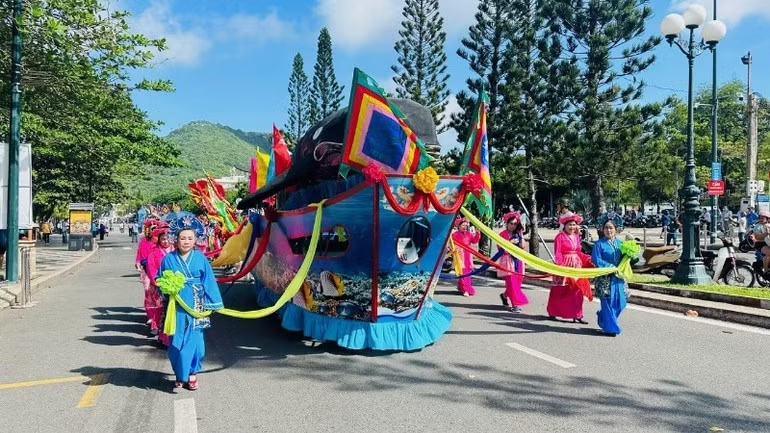
Beyond traditional approaches, Resolution No. 80 also opens a new direction by making the construction of culture in the digital space a core task. For the first time, the development of a digital cultural ecosystem, digitalisation of all tangible and intangible cultural heritage, and modernisation of cultural institutions are included in the strategic orientation.
In the context of rapid technological development, cyberspace has become an inseparable part of social life. Taking proactive steps to occupy this space is crucial to ensure Vietnamese culture does not lag behind and can spread more widely to the international community. Alongside this, the goal of placing Viet Nam among the world’s top 30 countries in soft power by 2045 reflects the Party’s strong determination to enhance national prestige through culture.
Another important highlight is the recognition of cultural industries as a pillar of the creative economy. Whereas cultural industries were once considered important sectors, they are now defined as key economic sectors, with targets to contribute 7% of GDP by 2030 and 9% by 2045. This demonstrates the Party’s proper recognition of the enormous potential of cultural resources, creative forces, artists, content producers, cultural enterprises, and the creative community. With proper guidance and support, cultural industries can contribute not only economically but also to the global dissemination of Vietnamese values.
In parallel with elevating the role of culture and cultural industries, Resolution No. 80 introduces a breakthrough regarding resources. The policy to allocate at least 2% of the annual State budget to culture is clearly stated. This demonstrates the Party and State’s strong commitment to ensuring resources for cultural development commensurate with its position and requirements in the new period.
Alongside this, the shift in mindset from “cultural management” to “cultural governance” opens up a modern approach, strongly promoting public-private cooperation and socialisation of resources, while encouraging community initiative and creativity in participating in and spreading cultural activities.
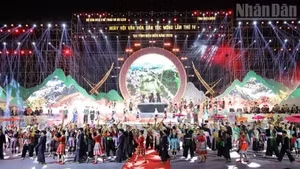
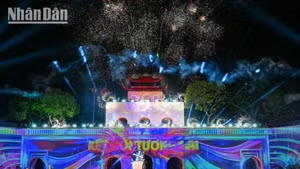
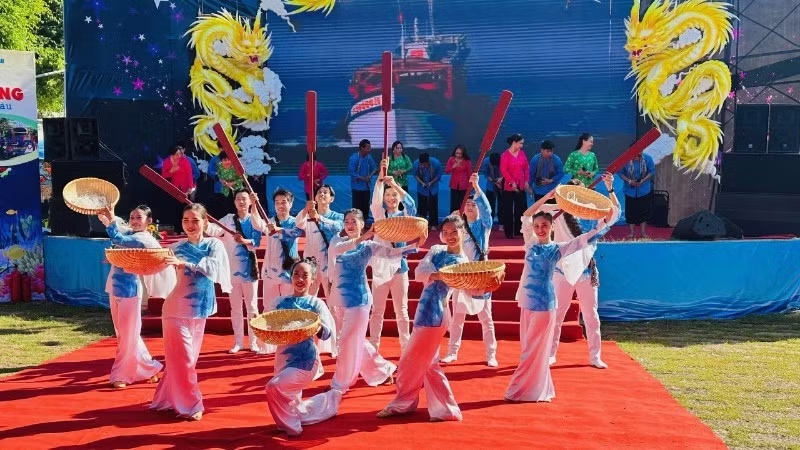
Notably, the resolution emphasises the annual observance of Viet Nam Culture Day (November 24) as a deeply meaningful event to promote traditional values, foster national pride, and raise individual responsibility for preserving cultural identity. This is not merely a festive activity but also an opportunity to review, evaluate, and orient cultural activities nationwide.
Although a strategic vision and core values have been established, the key issue now is how to effectively implement Resolution No. 80-NQ/TW in social life, transforming it into a sustainable internal driver for national development. This requires synchronised solutions that are focused, long-term, and responsive to urgent practical needs.
First and foremost, the thorough internalisation and institutionalisation of Resolution No. 80 must be placed at the core of leadership and direction by Party committees and authorities at all levels. Culture can only truly “light the way” when it is translated into concrete development programmes and plans aligned with the socio-economic strategies of each sector and locality.
Accordingly, the formulation of action programmes for cultural development must avoid formalism and fragmentation. Instead, they should clearly define objectives, roadmaps, resources, and the specific responsibilities of each stakeholder. In particular, indicators for cultural development and human development need to be incorporated into the system for assessing the performance of political tasks by cadres and Party members, especially those in leadership positions.
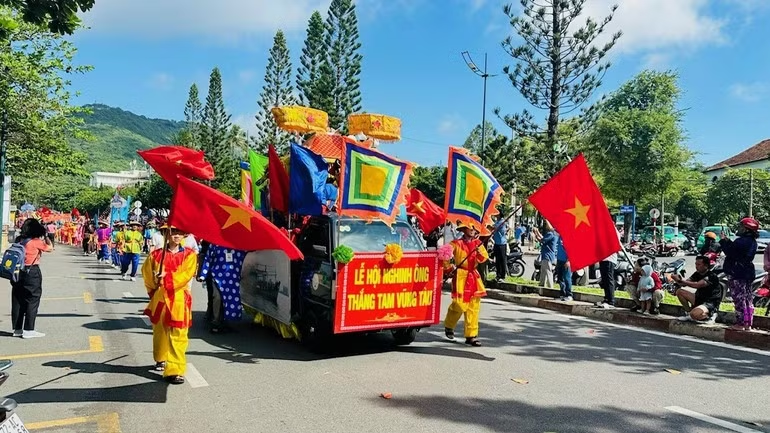
Second, the building of the Vietnamese people in the new period must be placed at the centre of all cultural policies. The four value systems identified in Resolution No. 80 need to be translated into concrete standards of social behaviour, public service ethics, and professional culture. Education plays a foundational and long-term role in this process; there must be a strong renewal of content and methods in the teaching of culture, history, ethics, and lifestyles in schools, with a focus on character formation, nurturing aspirations to contribute, and fostering a sense of social responsibility. At the same time, greater attention must be paid to the role of the family and community in cultivating human values, recognising them as the “root cells” of the national culture.
Third, proactive and well-directed efforts are required to develop and govern the digital cultural space. The digitalisation of heritage and the development of a digital cultural ecosystem are not only aimed at preserving traditional values, but also at expanding public access — especially for younger generations — to healthy, distinctive cultural products. In parallel, State management capacity in the digital environment must be strengthened, with resolute action against harmful and deviant content that erodes the foundations of cultural values and social ethics. Cyberspace must become a space for disseminating Vietnamese values, not a “low-lying area” of culture.
Fourth, the development of cultural industries should be regarded as a strategic pillar of the new growth model. To achieve the goals set out in Resolution No. 80, the State needs to refine institutions and policies that encourage creativity, protect intellectual property rights, and support cultural and creative enterprises — particularly start-ups in digital content, design, cinema, music, and the performing arts. At the same time, cultural innovation centres and “cultural industry clusters” linked to the comparative advantages of each region and locality should be established, thereby connecting cultural preservation with economic development, and artistic creativity with the market.
Fifth, ensuring resources for culture must go hand in hand with renewing the methods of resource allocation and utilisation. The policy of earmarking a minimum of 2% of the State budget for culture is an important step forward, but the key lies in using these resources effectively, avoiding dispersion and formalism. Priority should be given to investment in grassroots cultural institutions and in remote, disadvantaged, border, and island areas. At the same time, socialisation should be promoted, mobilising resources from businesses and communities on the basis of harmonising the interests of the State, the market, and society.
Finally, mechanisms need to be established to regularly and substantively monitor and evaluate the implementation of Resolution No. 80. The organisation of Viet Nam Cultural Day should not only serve as an occasion for honouring cultural values, but also as an opportunity to review, assess, and adjust policies, and to promptly identify bottlenecks and shortcomings in implementation. Through this process, a culture of self-examination and self-correction can gradually be formed in cultural leadership and management, ensuring that resolutions do not remain mere slogans but genuinely permeate social life.
With such a comprehensive set of solutions, Resolution No. 80-NQ/TW will not only mark a milestone in thinking, but will also become a powerful driver of action, contributing to the building of an advanced Vietnamese culture imbued with a strong national identity, and providing a solid spiritual foundation for the country to rise in the new era.
Resolution No. 80-NQ/TW is therefore regarded as an important strategic orientation and a spiritual anchor for the entire Party, people, and armed forces to uphold the nation’s fine cultural traditions, ignite a strong and sustainable aspiration for development, and move forward with confidence. When culture truly becomes a guiding light; when the Vietnamese people are fully nurtured in both character and capability; and when national soft power is harnessed to its full potential, the country will have a firm foundation to stride into a new era — an era of integration, self-reliance, and prosperous development.