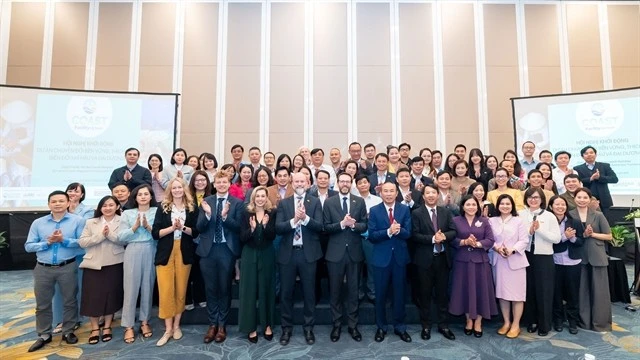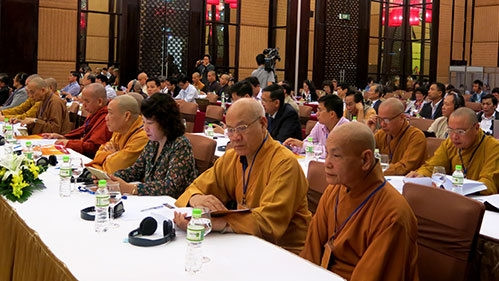
The event, which runs from November 8-9 and was jointly organised by the Institute of Philosophy and the Vietnam Buddhist Institute, features delegates from countries with strong Buddhist traditions like Japan, Thailand, Laos, Cambodia and Taiwan (China).
Most Venerable Thich Duc Nghiep said that in recent years, Buddhism in Asia – Vietnam in particular – has adapted itself to modern life to help improve the lives of people in these countries and territories.
Throughout history, Buddhism and local cultures have had a symbiotic relationship, said Nguyen Xuan Thang, chairman of the Vietnam Academy of Social Sciences.
He elaborated, saying that Buddhism makes local cultures more diverse while local cultures in turn enrich Buddhism’s already extensive system of beliefs.
During the more than 2,000 years since it was first introduced in Vietnam, Buddhism has accompanied the nation’s high points as well as the low ones, becoming an integral part of Vietnamese culture, stressed Thang.
Most Venerable Thich Duc Nghiep shared Thang’s view that Buddhist philosophy, ethics and lifestyle have made significant contributions to the formation of the Vietnamese cultural identity.