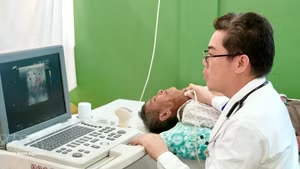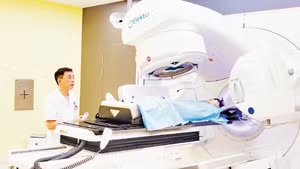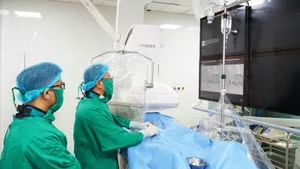
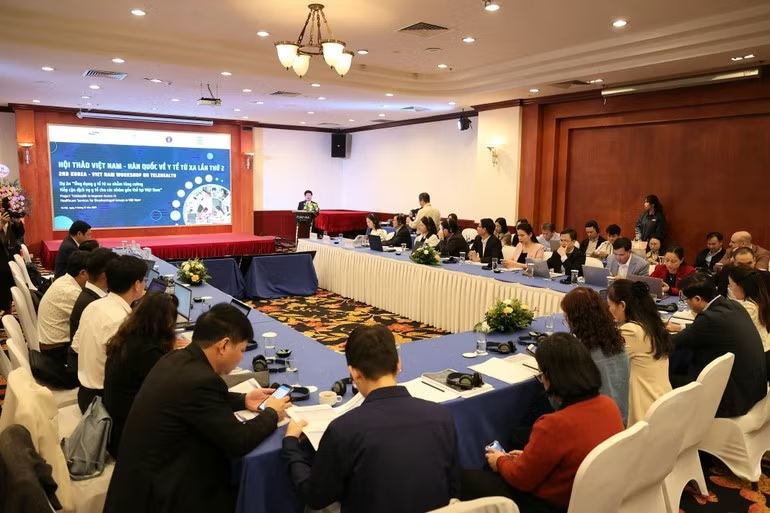
On the morning of December 11, the Viet Nam Administration for Medical Services (VAMS) of the Ministry of Health, in collaboration with UNDP, KOFIH, and Kangbuk Samsung Hospital of the Republic of Korea (RoK), held the second Viet Nam–RoK Telemedicine Conference as part of the project “Telemedicine applications to improve access to healthcare services for vulnerable groups in Viet Nam”.
Professor Dr Tran Van Thuan noted that telemedicine is not merely a technical solution but a method of reorganising healthcare services around the patient. It reduces geographical barriers, facilitates the sharing of professional expertise, and strengthens the capacity of grassroots healthcare systems.
However, he stressed that sustainable telemedicine development cannot stop at connectivity alone. The greatest challenges lie in data standardisation, information security, digital trust-building, and designing long-term operational mechanisms.
Viet Nam also faces the challenge of limited standardised Vietnamese-language datasets for developing large Vietnamese-language models.
According to experts, while telemedicine offers significant benefits for both individuals and society, it also introduces broader cybersecurity risks and challenges relating to personal data protection. Therefore, safeguarding medical data, personal information, and patient privacy requires synchronised implementation across all aspects of telemedicine — technology, operational procedures, legal regulations, and public awareness.
Nguyen Truong Nam emphasised that legal frameworks governing the use of artificial intelligence in healthcare must be completed to ensure effective AI management. The Ministry of Health will develop regulations on the evaluation, licensing, and quality monitoring of AI systems used in medical examination and treatment, ensuring that only AI technologies meeting required standards are applied in clinical settings.
To improve the quality of medical data and protect patient information, the Ministry of Health will work with relevant agencies to ensure that AI systems strictly comply with data security requirements and prevent the leakage of personal information.
An important component of this effort is the Ministry’s forthcoming ethical guidelines for AI in healthcare, which will clearly outline the responsibilities of all stakeholders. All final clinical decisions must remain under the supervision and confirmation of medical doctors, ensuring professional accountability and safeguarding patients’ rights.