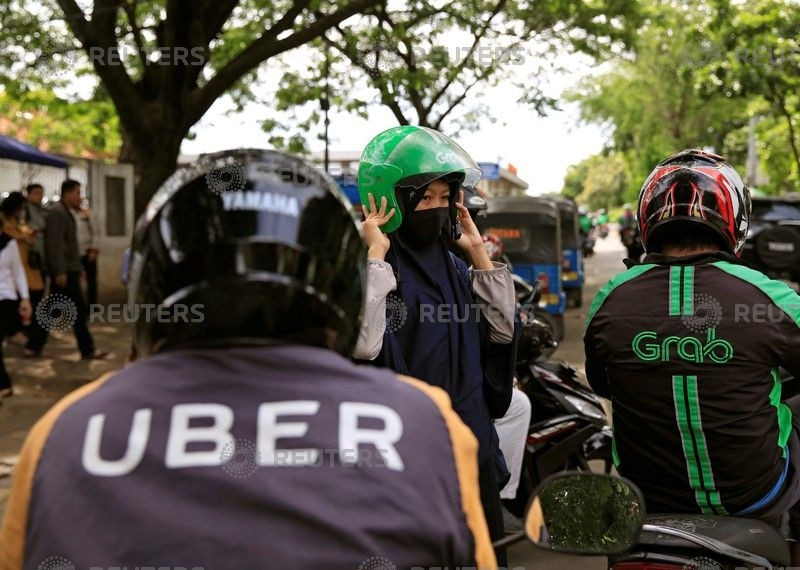
A shake-up in Asia's fiercely competitive ride-hailing industry became likely earlier this year when Japan-based SoftBank Group Corp's Vision Fund made a multi-billion US$ investment in Uber. SoftBank owns stakes in most major global ride services companies, and executives have indicated they favored consolidation.
SoftBank already had investments in Grab and India's Ola, and Vision Fund Chief Executive Rajeev Misra had urged Uber to focus less on Asia and more on profitable markets such as Latin America, a person familiar with the matter said.
Grab President Ming Maa told Reuters that SoftBank CEO Masayoshi Son was "highly supportive" of the deal, which he called "a very independent decision by both" Grab and Uber.
Uber will take a 27.5 percent stake in Singapore-based Grab and Uber CEO Dara Khosrowshahi will join Grab's board. Grab was last valued at US$6 billion after a financing round in July.
The Competition Commission of Singapore (CCS) said it has the mandate to review whether any mergers will result in a "substantial lessening of competition" and take any action to intervene in the deal, but it has yet to receive notice from the companies.
Uber, which is preparing for a potential initial public offering in 2019, lost US$4.5 billion last year and is facing fierce competition at home in the United States and across Asia, as well as a regulatory crackdown in Europe.
Uber invested US$700 million in its Southeast Asia business.
Uber previously sold operations in China and Russia to local rivals under former CEO Travis Kalanick. The deal with Grab is the first operations sale by Khosrowshahi, who started in September.
Uber includes the United States, Australia, New Zealand and Latin America among its core markets – regions where it has more than 50 percent market share and is profitable or sees a path to profitability.