Ensuring the full implementation of the ceasefire, moving towards a future free from gunfire and creating conditions for the reconstruction of the territory, requires absolute compliance by both Israel and Hamas with the ceasefire agreement, as well as greater collective assistance from the international community.
After Israel and Hamas reached agreement on a ceasefire to end the war in Gaza, mediators have been intensifying efforts to ensure that the second phase of the deal, scheduled to begin in early 2026, proceeds smoothly.
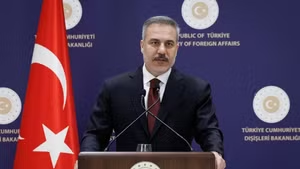
While significant differences between Israel and Hamas continue to hamper the full enforcement of the ceasefire, mediators from the US, Egypt, Qatar and Turkey are continuing negotiations to remove obstacles to the next phase.
The first phase of the agreement has achieved some progress in the distribution of humanitarian aid, the release of hostages, the partial withdrawal of Israeli forces from Gaza and a reduction in hostilities.
Talks on the second phase focus on establishing a new administration in Gaza to protect civilians and maintain public order, promote trade with neighbouring countries and develop infrastructure.
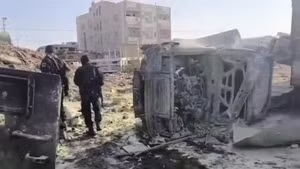
The ceasefire in Gaza remains under severe strain, with more than 400 Palestinians reportedly killed since it came into effect. Israel and Hamas have accused each other of violating the truce.
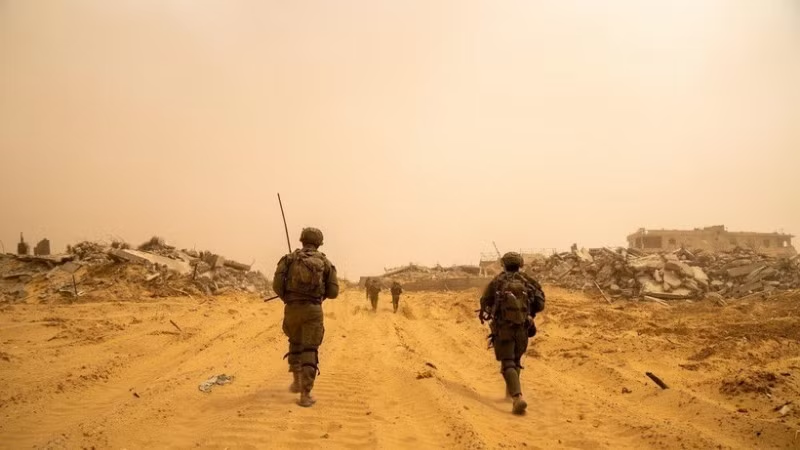
Meanwhile, the second phase stipulates that Israeli troops will continue to withdraw from positions in Gaza, that an interim authority will be established to govern the territory, that an international security force will be deployed, and that Hamas will be disarmed.
One issue currently attracting considerable public attention is the plan to establish an International Stabilisation Force (ISF) in the Gaza Strip, as the US steps up behind-the-scenes diplomatic efforts, viewing the formation of the ISF as a key step in shaping Gaza’s post-conflict future.
However, this remains a thorny issue. Despite expressing political support, most countries are willing only to contribute financially, provide training or offer logistical assistance, rather than deploy troops directly. The prospect of countries agreeing to send forces to Gaza is highly challenging, given concerns about potential confrontation with Hamas or unintended clashes with the Israeli military.
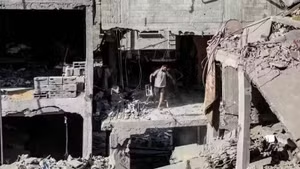
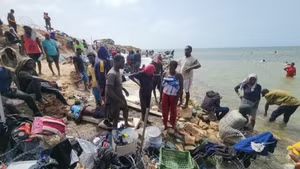
At the same time, efforts to rebuild Gaza face mounting difficulties, as the Palestinian territory has been devastated after years of conflict.
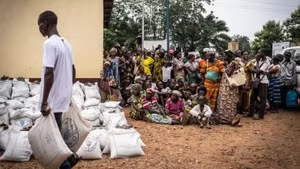
The food situation in Gaza continues to be assessed by the United Nations as extremely severe. Although the peak of the famine has passed, the entire Gaza Strip remains classified as being in an emergency situation.
Around 70% of the population are living in temporary shelters, facing prolonged hunger, winter flooding and falling temperatures. It is estimated that between now and mid-April 2026, around 1.6 million people in Gaza will continue to suffer from severe food insecurity.
Shortages of clean water, poor sanitation and an overstretched healthcare system are also increasing the risk of disease outbreaks. More than 96% of Gaza’s agricultural land has been destroyed or rendered inaccessible, leaving the territory with virtually no capacity for self-recovery.
Palestinian President Mahmoud Abbas has affirmed that the Palestinian Authority stands ready to work with US President Donald Trump to achieve a comprehensive and just peace, in line with international resolutions and the Arab Peace Initiative.
President Abbas stressed the urgency of implementing his US counterpart’s plan and UN Security Council Resolution 2803 by enforcing the ceasefire in Gaza, facilitating the delivery of humanitarian aid, preventing forced displacement, ensuring Israel’s withdrawal, enabling the Palestinian Authority to assume its responsibilities and accelerating reconstruction efforts in Gaza.
The atmosphere surrounding Christmas and the New Year 2026 across the Palestinian territories has taken place amid improved security in many areas, yet deep scars remain from the war in Gaza. Efforts to bring this conflict to a complete end need to be intensified, paving the way for a sustainable, comprehensive and lasting peace in the Middle East.