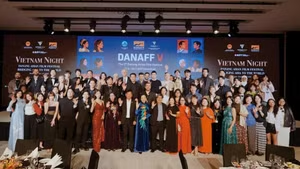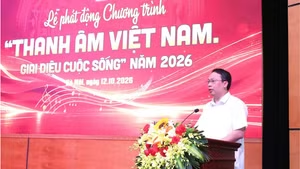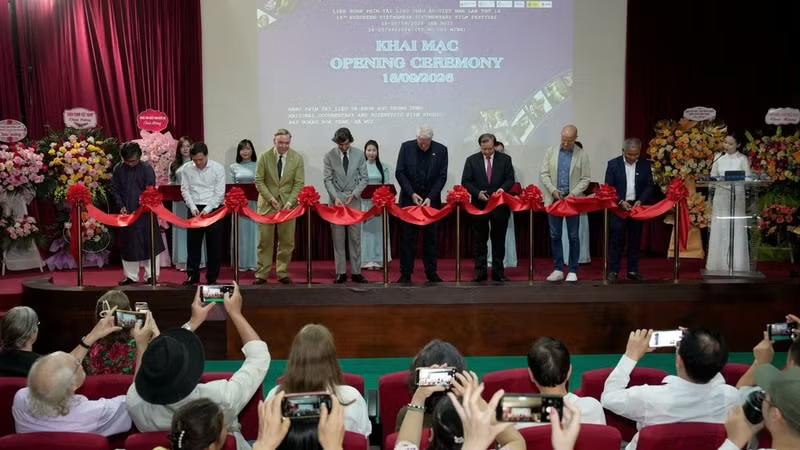
Speaking at the opening ceremony, Meritorious Artist Trinh Quang Tung, Deputy General Director in charge of the Central Documentary and Scientific Film Studio, said that the European–Viet Nam Documentary Film Festival is an annual film and cultural event, held for the 16th time in coordination with the network of the European Union of National Institutes for Culture (EUNIC) in selecting and introducing European works.
“Through this event, we have an opportunity to learn about, explore, and gain a better understanding of one another's cultures, people, lives, environmental issues, and sustainable development in each country. Documentary films will serve as a cultural bridge, bringing us closer together. This will help strengthen cooperation in the cultural field while promoting multifaceted cooperation between European countries and Viet Nam,” Trinh Quang Tung stressed, highlighting the significance of the event.
Over the years, European countries have selected many high-quality works to introduce at the festival, including films that have been honoured at international film festivals. Viet Nam has also selected artistically valuable works that have won domestic awards to participate in the programme.
A distinctive feature of the festival is its format of pairing a Vietnamese film with a European film in each screening session. Through this arrangement, stories told in different cultural settings have an opportunity to engage in dialogue on the same screen.
James Shipton, Vice-President of EUNIC in Viet Nam and Country Director of the British Council in Viet Nam, said this format had become a distinctive feature of the festival over its 16-year history.
This year's film selection takes audiences into a variety of stories associated with memories, traditions, and changes in daily life. The characters portrayed include artists, activists, people who preserve cultural values, and individuals seeking their own paths in a rapidly changing society. The selection also demonstrates the ability of documentary films to open dialogue beyond geographical boundaries. Each film begins with a specific story; however, the issues it raises may resonate with audiences from different cultural backgrounds.
Speaking at the ceremony, Ta Quang Dong, Deputy Minister of Culture, Sports, and Tourism, affirmed that Viet Nam has in recent years become a gathering place for many international film festivals, creating a diverse and highly connected cinematic space. Among them, the European–Viet Nam Documentary Film Festival, through its 16 editions, has gradually established its place in Viet Nam's film landscape, helping bring Vietnamese and European documentary works closer to the public while creating opportunities for exchanges and cooperation among filmmakers.
This year's festival brings together works from various European countries alongside Vietnamese films, with diverse themes and forms of expression. Each work offers its own story and perspective, creating a space for audiences to explore, reflect on, and engage in dialogue about issues in contemporary life. By introducing works, connecting talents, and encouraging creative ideas, the film festival motivates Vietnamese cinema to develop in a professional, creative, and internationally integrated direction.
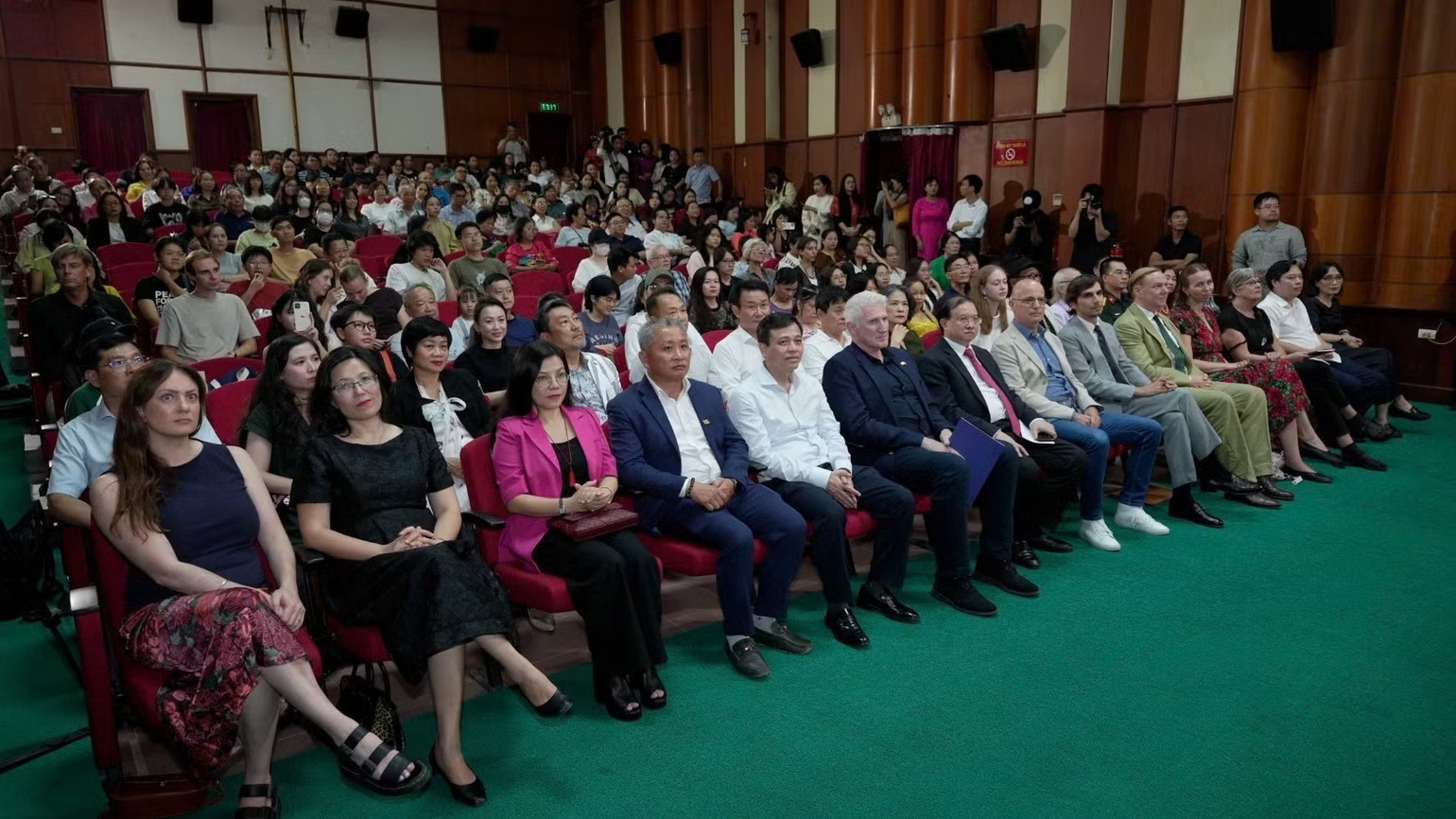
Immediately after the opening ceremony, audiences enjoyed two films: the Vietnamese film “Professor Hoang Xuan Sinh,” directed by Do Thi Huyen Trang, and the Swedish film “Sara with All Her Beings,” directed by Gunilla Bresky.
The 16th European–Viet Nam Documentary Film Festival features nine EUNIC members, including the Wallonie-Bruxelles Delegation in Viet Nam, the British Council, the Embassy of Austria, the Embassy of Spain, the Embassy of Italy, the Embassy of Sweden, the Embassy of Finland, the Embassy of Norway, and the French Institute, together with host country Viet Nam.
The festival takes place in Ha Noi and Ho Chi Minh City from September 18 to 26. Each evening, audiences can watch one Vietnamese film and one European film. Over the 16 editions, this paired-screening format has continued to provide Vietnamese audiences with opportunities to become familiar with European documentary cinema, while giving Vietnamese works an additional platform to be introduced to international audiences.