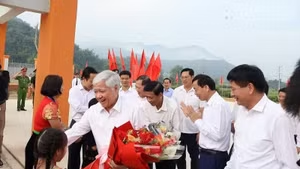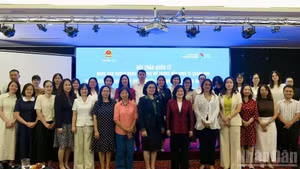
Binh, who also serves as Chairman of the Advisory Council for Amnesty, commended ministries, agencies, localities and detention facilities for their close coordination in implementing the amnesty policy and supporting the released individuals in reintegrating into their families and communities.
Amnesty is a major policy that reflects the humanitarian spirit and cultural tradition of Viet Nam. It represents both the strictness of the law and the State’s profound compassion toward offenders who demonstrate remorse, actively make self-improvement, and strive to become good citizens, he said.
Over the past eight decades, Viet Nam has granted early release to hundreds of thousands of inmates. Since 2009, more than 100,000 individuals have benefited from amnesty decisions by the State President.
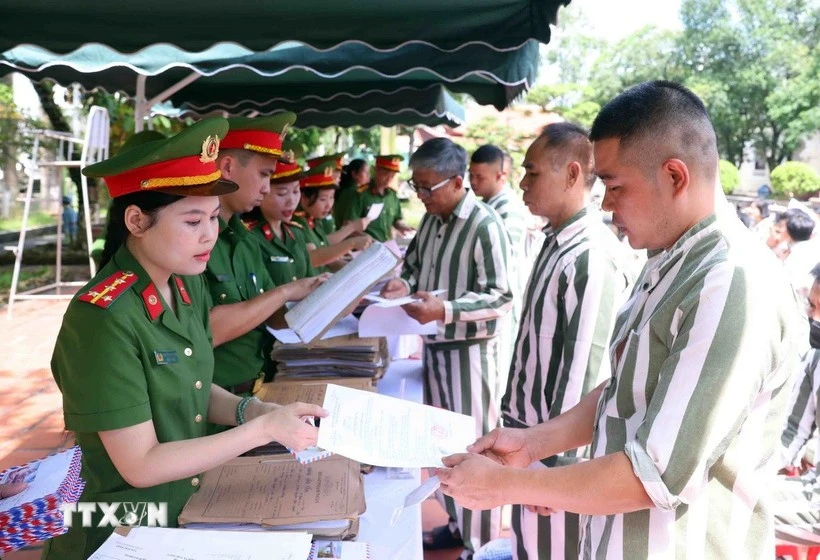
In 2025, the Advisory Council proposed the State President grant early release to 22,086 inmates on the occasion of the National Reunification (April 30) and National Day (September 2) anniversaries. According to the Ministry of Public Security, only seven of them have reoffended (0.03%).
Despite tight timelines from the policy approval to implementation, the Advisory Council and relevant ministries, especially detention facilities and judgement enforcement agencies under the Ministry of Public Security and Ministry of National Defence, completed procedures swiftly and rigorously. The amnesty review process was conducted carefully, transparently and in strict accordance with the law.
Highlighting several successes, the Deputy PM said that amnesty reflects the Party’s leniency policy, adding it has been implemented effectively and will continue in coming years.
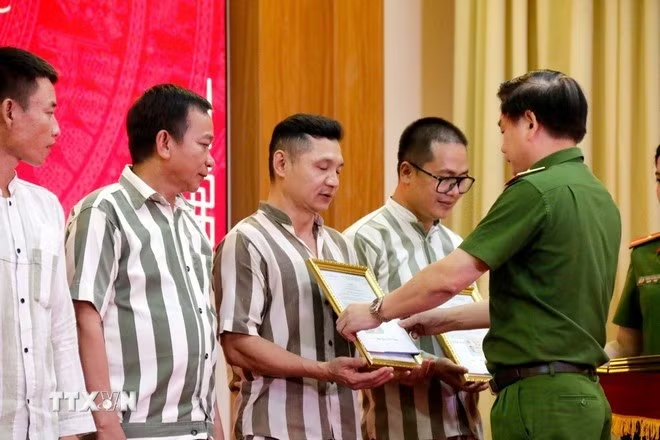
In addition, the policy helped boost social sentiment during major national anniversaries and reinforced public trust in the Party’s leadership. It encouraged prisoners to improve themselves in hopes of benefiting from future amnesty opportunities. The programme also helped spread the values of forgiveness, support, and solidarity for individuals seeking to rebuild their lives.
Through amnesty, Viet Nam continued to properly carry out other humanitarian policies including vocational training, credit access and job placement support for the released individuals. Implementing the amnesty policy also reflected the strong contributions by the police to inmate management, education and rehabilitation, while helping reduce pressure on detention facilities. It also demonstrated the effective coordination among relevant forces to ensure the success of the policy implementation, according to the Deputy PM.
To further improve amnesty implementation and reintegration efforts, he urged ministries, agencies, and localities to thoroughly grasp the Party’s policies and the State’s laws on amnesty; ensure democracy, fairness, objectivity, transparency and adherence to laws; and intensify communications to counter misinformation and hostile narratives.
Local authorities and relevant agencies, organisations and businesses were asked to develop plans to receive and support the amnesty beneficiaries, help them stabilise their lives, and effectively carry out the related decisions on credit access for former inmates.
He emphasised that grassroots police must play a key role in advising local administrations about the management of and assistance for the released individuals to help them overcome stigma, and guide them toward a positive and lawful path forward.



![[Video] Renewal and growth milestones of Ha Noi through the lens](https://en-cdn.nhandan.vn/images/1XgBTSIw0KyfD4abQsg-hd4ly6fBUHXC7_OAKyN4YwPfAhBw0Xs6rVX3rF0up9Tr6rLNn30Muc4bzp90E7yOqg/10-10-hanoi-cover.jpg.avif)