Extension services at the heart of transformation
According to the Ministry of Agriculture and Environment, more than two years into the programme, the cultivated area of high-quality, low-emission rice has reached 354,839 hectares—equivalent to 197% of the planned target.
Statistics show that the high-quality, low-emission rice production model reduces greenhouse gas emissions by an average of 25%–44% compared with traditional farming methods; lowers costs by 5%–13% depending on the season; increases rice productivity by around 12%; and raises average profits by approximately 6 million VND per hectare per season.
Alongside this, models of high-quality, low-emission rice production organisations have been established in specialised regions and value chains, with 1,129 cooperatives and cooperative groups participating. Of these, 600 cooperatives and groups have implemented production–consumption linkages with enterprises, covering 60%–70% of the project’s participating area.
The agricultural extension system has played a pivotal role in achieving these outcomes by promoting the formation of concentrated, sustainable rice production zones.
Hoang Tuyen Phuong, Head of the Crop and Forestry Extension Department at the National Agricultural Extension Centre under the Ministry of Agriculture and Environment, explained that the extension system helps disseminate the project’s policies, objectives, and benefits, thereby shifting the production mindset of farmers, cooperatives, and enterprises.
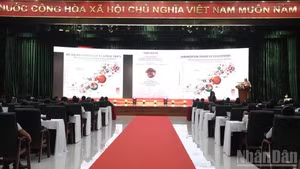
It also organises training courses, train-the-trainer (ToT) programmes, and farmer and cooperative workshops on cultivation techniques, measurement, reporting and verification (MRV) in high-quality, low-emission rice farming, by-product treatment, digital technology application, communication skills, and community organisation. This has created a widespread extension network that serves as the backbone of sustainable rice production.
In addition, the extension system transfers advanced cultivation processes in a synchronised manner, applying technological innovations to improve efficiency and sustainability. It supports farmers and cooperatives in reorganising production along value chains, linking with enterprises and markets, and advises on building concentrated rice raw material areas that meet export standards, adapt to climate change, and reduce emissions.
Pilot models showcase sustainable practices
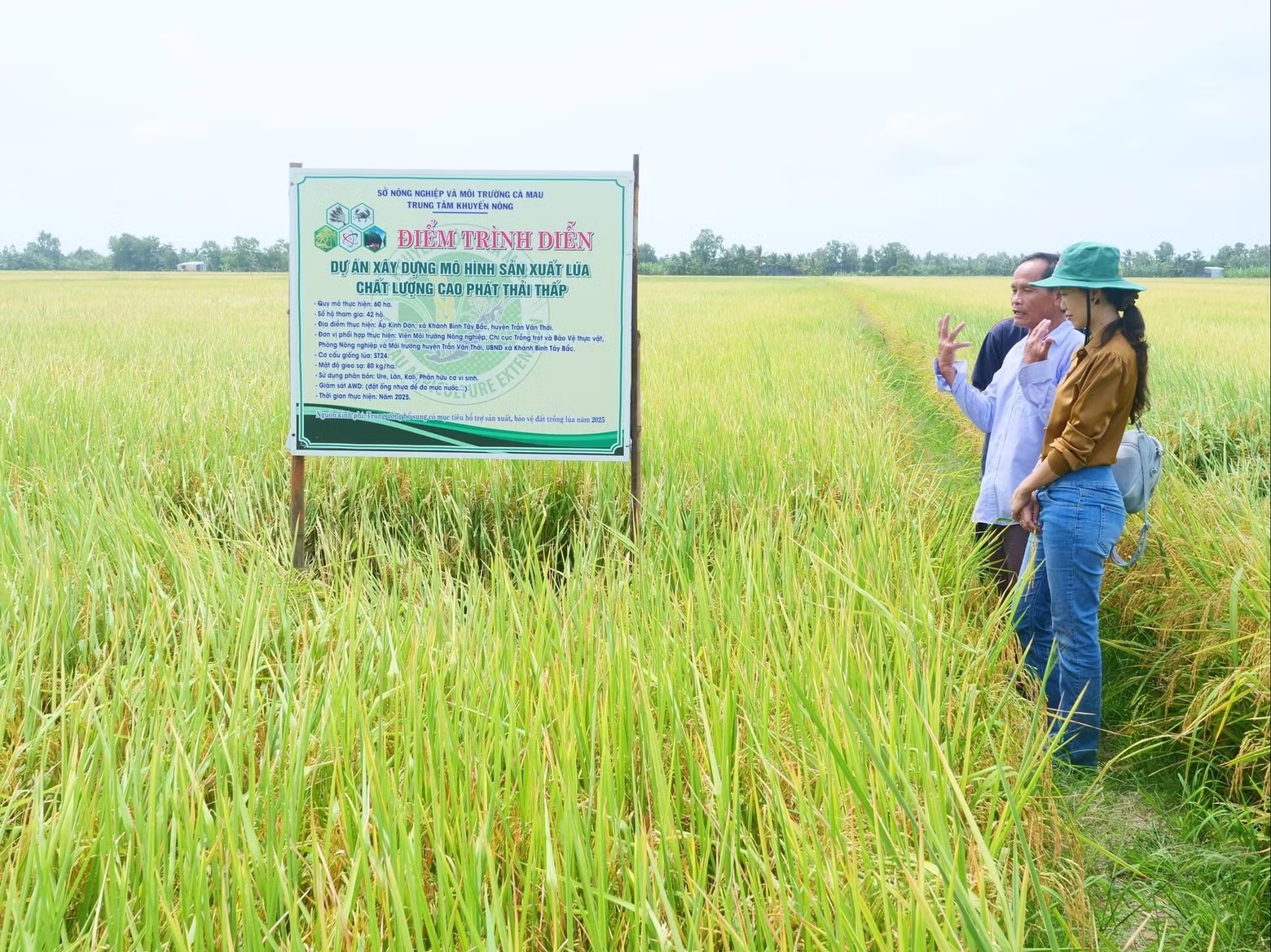
During the 2024–2025 period, the National Agricultural Extension Centre coordinated with the Plant Production and Protection Department, International Rice Research Institute (IRRI), provincial departments of agriculture and environment, and other relevant units to implement seven pilot models in Can Tho city and the provinces of Vinh Long, Dong Thap, and An Giang.
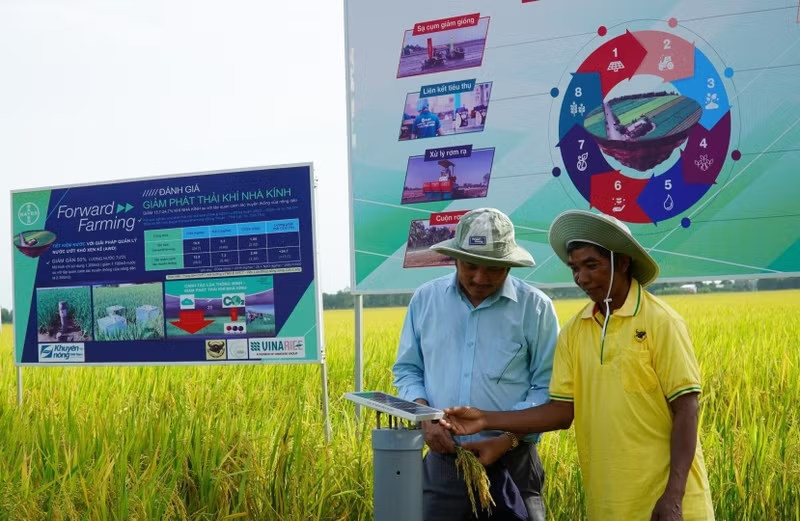
The pilot models have demonstrated notable results as they reduced seed sowing rates to 70–100 kg per hectare and cut irrigation water use by 20% compared with traditional farming.
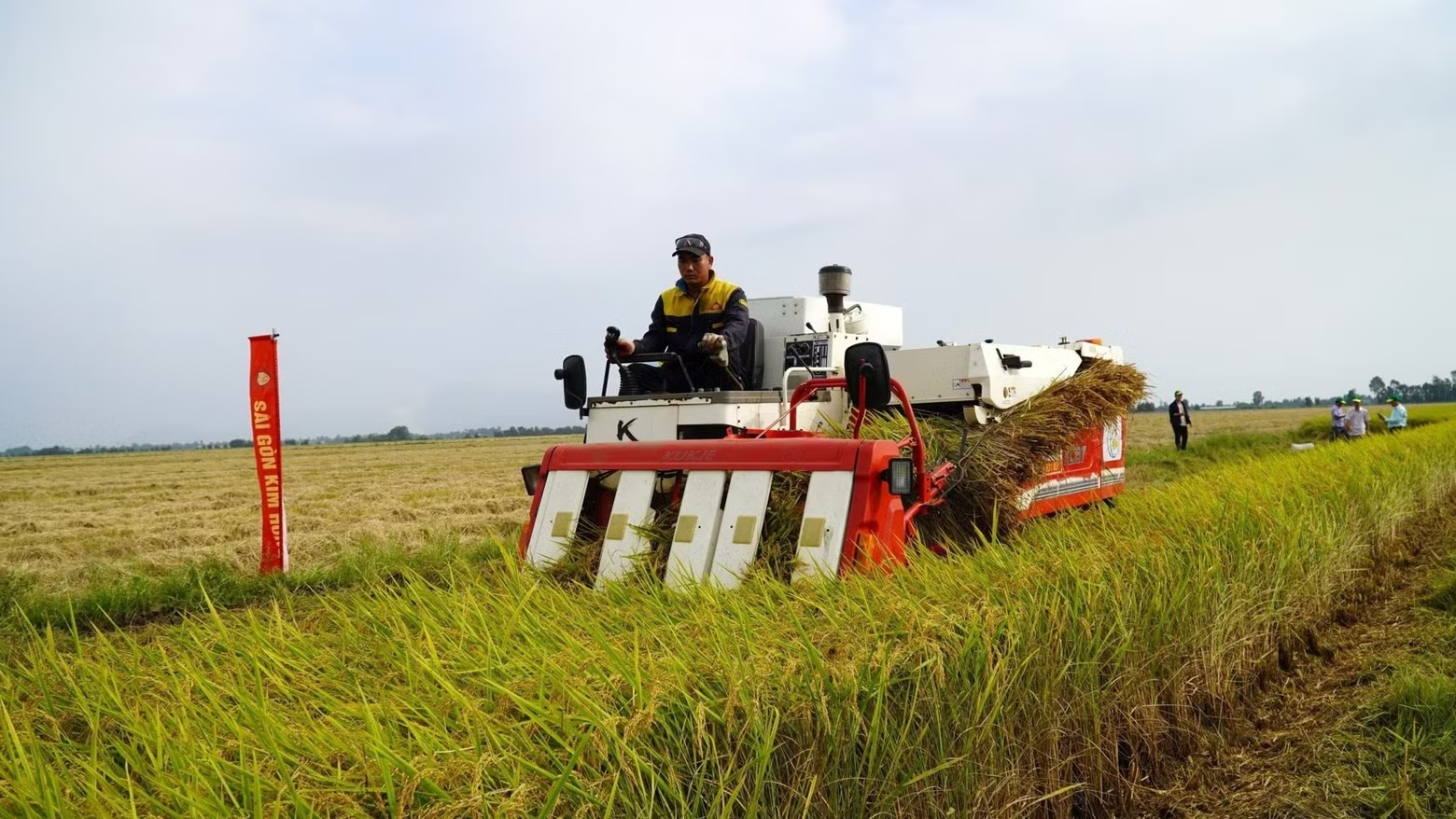
All farmers participating in these pilot models joined production through cooperatives, implemented value chain linkages from input supply to product consumption, and more than 200,000 farming households adopted sustainable cultivation processes. Around 70% of rice straw from the winter–spring crop was reused for mushroom cultivation, fertiliser, or sold to traders.
Notably, Viet Nam now has low-emission rice available for export, including to markets with strict requirements.
Agricultural extension and community-based activities have driven a clear shift in farmers’ production mindset—from small-scale, traditional methods to value chain organisation linked to markets and emission reduction.
Over the past two years, agricultural extension and community-based activities have driven a clear shift in farmers’ production mindset—from small-scale, traditional methods to value chain organisation linked to markets and emission reduction.
This has strengthened connections between farmers, cooperatives, and enterprises, while promoting the establishment of concentrated raw material areas. The coordinated application of technical solutions has reduced agricultural input use, limited rice straw burning, and cut greenhouse gas emissions.
Looking ahead, the National Agricultural Extension Centre will continue to intensify dissemination to localities, cooperatives, and farmers on high-quality, low-emission rice production processes and MRV. It will organise communication campaigns on rice straw treatment, water-saving irrigation, and product consumption linkages, while emphasising field training, online sessions, digital transformation, and AI applications for farmers.
At the same time, it will strengthen technology transfer, scale up models, and expand raw material areas by continuing to implement extension projects and public–private partnership (PPP) models in high-quality, low-emission rice production, recommending and replicating them across the Mekong Delta region.